

For the coolest poolside surface, look at light-toned coated concrete, light natural stone like travertine, porcelain pavers, and cool-finish composites or porous pavers. They stay cooler because higher solar reflectance and thermal emissivity, combined as the Solar Reflectance Index (SRI), keep less heat in the surface. Appearance, cost, and upkeep differ, and the details follow.
TL;DR:
- A reflective coating can refresh a sound slab, but results depend on color, sun, and substrate; request test data, warranty terms, and a sunlit sample.
- Travertine needs periodic sealing and a textured or honed finish near water; it typically costs more than coating an existing sound concrete slab.
- Porcelain’s low water absorption and consistent finish cost more to buy and install; choose textured pavers with documented slip resistance for pool edges.
- Map sun exposure and consider shade before upgrading materials; include sealing or recoating in lifecycle quotes, and repair drainage or substrate problems before installation.
Table of Contents
- Which cool deck materials make the shortlist?
- How do cool coatings on concrete work?
- Is travertine a good cool deck option?
- How do porcelain pavers stay cool?
- Do composites and porous pavers run cooler?
- How do you choose the right cool deck approach?
- Who is behind these recommendations?
- What do most cool deck guides get wrong?
- How can we help you build a cooler deck?
- FAQ
- Sources
Which cool deck materials make the shortlist?
Here is the quick version, so you can jump to the material that fits your priorities.
- Coated concrete: cool coatings and reflective pigments cut surface heat on the slab you already have.
- Travertine and light natural stone: pale color and natural texture give a comfortable barefoot feel.
- Porcelain pavers: consistent manufacturing, very low water absorption, and cool factory finishes.
- Porous and open-grid pavers, plus shade: airflow and shade lower what the surface absorbs.
- Cool-finish composites: light-colored caps and ventilated builds can lower foot temperatures.
Each approach trades off appearance, cost, and maintenance, so none wins on every count.
How do cool coatings on concrete work?
Three properties explain why a coated slab stays cooler. Solar reflectance is the share of sunlight a surface bounces back. Thermal emittance is how efficiently it releases heat it did absorb. SRI combines the two, and federal cool roof guidance explains that reflective pigments and coatings raise both. The same physics applies to a pool deck.
Coatings use white or special reflective pigments, and a Department of Energy transcript notes that chemistries such as water-based, silicone, and urethane differ in durability. Reflectance is also evaluated again after three years, which tells you how a coating ages. For reflectance claims, CoolRoofs registry documentation describes how SRI testing is validated.
Consumer kits, such as a cool pool deck coating bundle, advertise significant heat reduction on concrete. Treat that as a vendor claim, not a guarantee, since sun angle, color, and substrate all matter.
What to ask any contractor:
- How will the substrate be cleaned and repaired before coating?
- Can you share SRI or reflectance data for this product?
- What slip rating does the finish carry near the pool edge?
- What does the warranty cover, and when is recoating expected?
Pro Tip: Ask for a sample panel in full afternoon sun and walk on it barefoot before you commit.
If your slab is cracked or flaking, read our guide on when you can resurface a concrete patio first.
Is travertine a good cool deck option?
Light natural stone is a classic poolside choice. Its pale color reflects more sunlight than dark pavement, and its natural texture tends to feel comfortable barefoot on a summer afternoon.
Here is what to weigh:
- Looks: warm, natural tones suit most pool landscapes and add visual depth.
- Upkeep: stone is porous, so periodic sealing protects it from stains and water absorption.
- Grip: choose honed or textured finishes rather than polished ones near the water.
- Installation: a flat, stable, well-drained base matters, because stone shows every flaw beneath it.
- Cost: it usually costs more than a coated slab you already own, and the price depends on the stone and the layout.
If you want the look of stone but already have a sound slab, coating may fit your budget better.
How do porcelain pavers stay cool?
Porcelain pavers absorb very little water and hold their color for years. Factory finishes in lighter tones can run cooler than darker surfaces, and the consistent manufacturing means fewer surprises from piece to piece.
The installation method changes how the deck behaves:
- Pedestal systems lift the pavers and leave gaps below, so air moves under the surface.
- Bonded installs set pavers on a solid base for a seamless, firm surface.
- Sand-set installs allow small joints and easier repairs.
Porcelain may need less maintenance than natural stone, and sealing requirements depend on the product. The tradeoff is cost, since material and skilled installation add up. Choose a textured, slip-rated finish for the pool edge.
Do composites and porous pavers run cooler?
Engineered products can be specified to stay more comfortable. Composite boards with light-colored caps absorb less heat than dark boards, and ventilated framing lets air move beneath them. For help choosing boards, see our guide to the best composite decking by site, and plan for upkeep with our composite deck maintenance advice.
Open-grid and porous pavers take a different route. Heat island guidance lists reflective surfaces, open-grid paving, and added landscape shading among the ways to reduce surface heat.
- Composites: watch for fading over time and pick a textured grain for wet feet.
- Porous pavers: airflow and stormwater drainage are the main advantages, best on patios and walkways around the pool.
- Shade: it works with any material, and our deck shade solutions show practical ways to add it.
If you are also weighing exterior color choices, a vetted exterior contractor’s siding page shows how finish and sample selection affect what you see in direct sun.
How do you choose the right cool deck approach?
Work through these steps in order, and you will either decide or arrive at a contractor meeting with sharp questions.
- Map your sun. Note which hours the deck gets direct sun and when you actually use it.
- Rank your priorities. Decide whether comfort, appearance, or low maintenance comes first.
- Ask for numbers. Request SRI or reflectance data when available, and documented slip ratings for pool edges.
- Compare lifecycle cost. Ask quotes to include installation plus recoating or sealing over time.
- Decide who does the work. Hire a professional for substrate prep, drainage fixes, and stone or paver layout, and consider a DIY kit only for a sound slab in good shape.
Who is behind these recommendations?
You deserve to know where this advice comes from.
- Experience: This advice draws on experience with outdoor structures.
- Credentials: ask us about our builders’ qualifications and insurance.
- Capabilities: we build decks, pour and finish concrete, and resurface surfaces, with a focus on sustainable materials.
- Process: a professional quote covers a site visit, a clear scope of work, and transparent pricing before we start.
The shotcrete guidance in ACI’s pool construction guide stresses that material selection, substrate preparation, and workmanship determine how long concrete pool installations last. That aligns with the guidance.
What do most cool deck guides get wrong?
Most advice treats coolness as a single number, but the surface you pick is a daily-use decision, not a lab result. A coating with a great reflectance rating may still feel unsuitable if it is slick near the water, clashes with your house, or begins peeling.
My view: start with shade and color, then pick the material. A light surface in partial shade may feel cooler than a premium material in full sun, and adding shade may cost less than some upgrades. Next, protect the base. Cracks, poor drainage, and weak prep ruin coatings and pavers alike, so spend money there before spending it on finish.
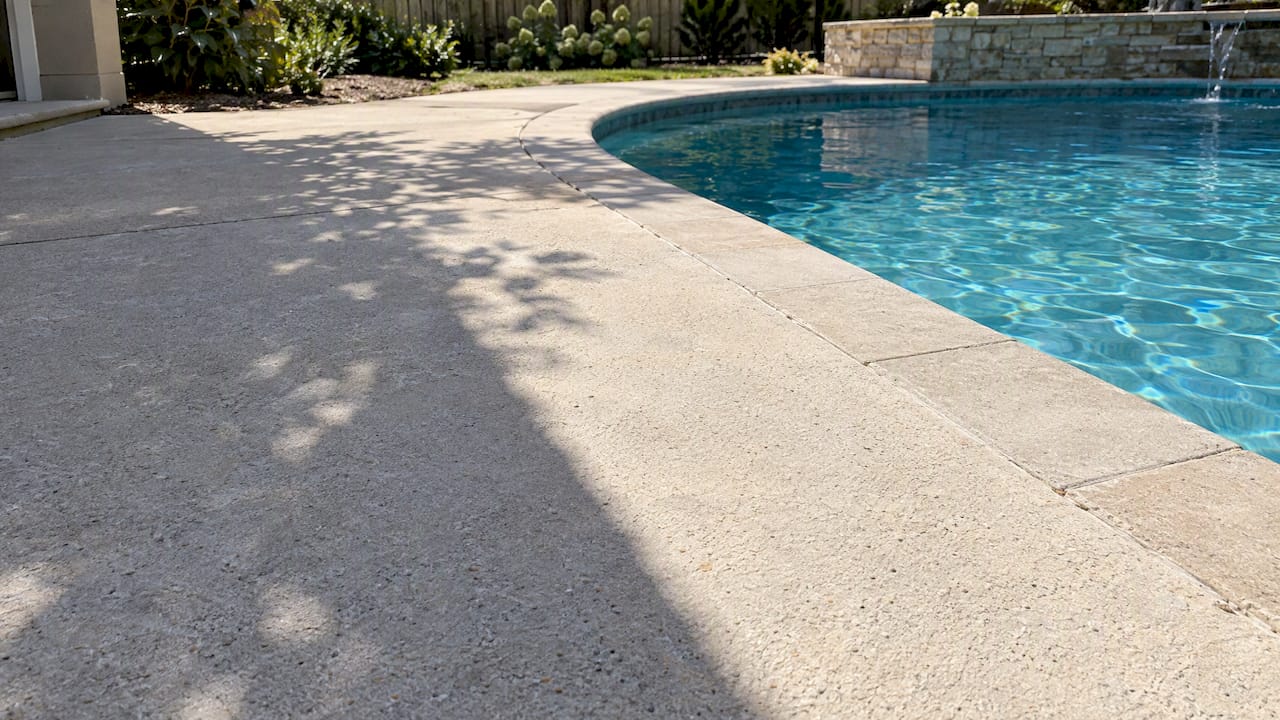
I would also be skeptical of any heat-reduction claim without conditions attached. Vendor figures describe ideal tests, not your yard. Ask for samples, try them in sunny conditions, and trust your feet.
Last, resist choosing on looks alone. A good cool deck is one you can walk on barefoot comfortably.
— Abraham
How can we help you build a cooler deck?
If you want a deck that stays comfortable in July, we can plan and build it with you.

- Decks: new builds and replacements
- Concrete pouring, paving, finishing, and resurfacing
- Masonry, landscaping, and pressure washing to keep the whole space looking right
For a quote, bring site photos, rough dimensions, a note on where shade falls, and the surface type you prefer. We will walk through options and pricing with you. Request your free estimate and tell us what is heating up your feet.
FAQ
What is the coolest decking material for a pool?
Light-colored surfaces with high reflectance, such as coated concrete, travertine, and porcelain pavers, can help keep a pool deck cooler. Shade and airflow improve any material. Surface temperature depends on your climate and exposure.
How much does a cool deck coating cost?
Cost depends on slab size, repair needs, and the product. We do not publish a flat price, so request a free quote and we will price your actual surface. Lifecycle cost should include recoating.
What is a cool deck made of?
Most cool decks are concrete topped with a reflective coating, though stone, porcelain pavers, and cool-finish composites also qualify. Reflective pigments and good emissivity are what lower surface heat, as federal guidance explains.
Are cool deck coatings worth it?
They can be, especially on a sound slab that is too hot in summer. Results vary with color, texture, and prep, so ask for a sample and a warranty before you decide.
Sources
- Guidelines for Selecting Cool Roofs
- Cool Roofs
- Coolroofs
- 506.8-24: Shotcrete Use in Pool Construction—Guide
- Encore Coatings Cool Pool Deck Coating – 200 sq. ft. …