
Keep your composite deck swept clear of debris, wash it a couple of times each year with mild soap and water, and treat spots the moment you see them. Pressure-washing stays a last resort, used sparingly and only within manufacturer limits. Call a professional when stains won’t lift, water pools under the boards, or you spot structural damage.
TL;DR:
- Sweep between boards weekly to prevent trapped debris from holding moisture against the framing, and wash with mild soap twice yearly, increasing frequency in shade.
- Follow the manufacturer’s cleaner guidance and pressure limits; if pressure washing is allowed, use a wide fan nozzle and keep it moving to avoid etching.
- Blot grease before scrubbing, test rust remover on a hidden area, and allow tannin stains 8 to 10 weeks to weather before judging permanence.
- Check fasteners, flashing, and drainage yearly; soft board edges near the house can point to water problems beneath the surface rather than stains.
Table of Contents
- Step-by-step routine cleaning: daily, weekly and seasonal actions
- Safe products and tools: recommended cleaners and what to avoid
- Pressure washing: safe practice and when to avoid it
- Targeted stain and mildew removal: step-by-step fixes
- Preventive maintenance to preserve appearance and performance
- Contractor perspective: field-tested advice from our maintenance calls
- What composite deck care actually comes down to
- Schedule a deck maintenance visit
- FAQ
- Sources
Step-by-step routine cleaning: daily, weekly and seasonal actions
A consistent routine beats an occasional deep clean, and most of it takes minutes rather than hours. Start by moving furniture and planters off the surface, then sweep or use a leaf blower to clear leaves and dirt from the gaps between boards. Debris trapped there holds moisture against the material and is one of the most common causes of surface staining, according to Decks.
For the actual wash, follow this sequence:
- Mix warm water with a small amount of mild dish soap, or follow the dilution ratio printed on a commercial composite deck cleaner.
- Apply the solution with a medium-stiff nylon brush and scrub with the grain, working in small, manageable sections.
- Rinse each section thoroughly before it dries so no soap film is left behind.
- Let the deck air dry, then replace furniture once the boards are fully dry.
A light sweep once a week keeps grit from grinding into the cap layer underfoot. Plan on a couple of deeper washes each year, typically in spring and fall, and increase that frequency if your deck sits in heavy shade, near the coast, or sees daily foot traffic.
Pro Tip: Rinse from the top of the board down toward the gaps so loosened dirt washes into the drainage space instead of re-settling on clean boards.
Safe products and tools: recommended cleaners and what to avoid
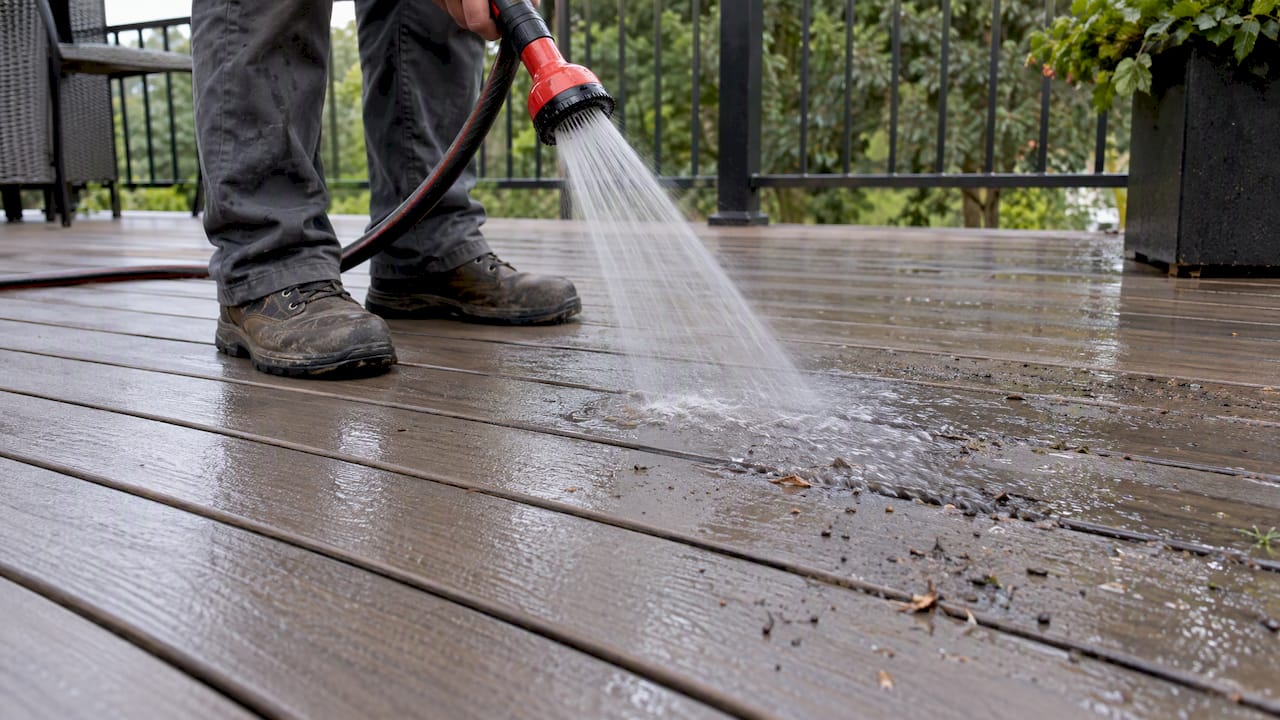
The cap layer that gives composite decking its finish and color resistance can be dulled or scratched by the wrong products. Stick to cleaners built for the material.
- Use pH-neutral detergents or plain mild dish soap for routine washing.
- Avoid ammonia, undiluted bleach, paint thinners, and other solvents that can strip or discolor the capping.
- Skip abrasive powders and anything marketed as a heavy-duty degreaser unless a manufacturer specifically approves it.
- Choose medium to stiff nylon bristle brushes; never use metal brushes or scouring pads, which scratch the surface.
Before reaching for a store-bought deck cleaner, check your manufacturer’s care guide. TimberTech’s own care and cleaning guide specifies approved cleaners and brush types for its product lines, and using something outside that list can affect your warranty coverage.
Pressure washing: safe practice and when to avoid it
Pressure washing feels like the fastest fix, but it is also the easiest way to damage a composite surface if done carelessly. Many manufacturers permit only a light rinse or low-pressure pass with a fan tip rather than a full power wash, since concentrated pressure can etch or gouge the cap layer, as noted in TimberTech’s guidance and echoed by Decks.com.
If you do use a pressure washer:
- Fit a wide fan nozzle, never a narrow jet or turbo tip.
- Hold the wand at a consistent distance and keep it moving, following your manufacturer’s maximum pressure rating.
- Never hold the nozzle in one spot, which is what causes visible etching.
- Favor manual scrubbing or an oxygen bleach solution first; save pressure washing for stubborn, widespread grime.
For a closer look at technique, see our guide to pressure-washing a deck the right way, and for broader containment and eco-friendly practices, this homeowner’s guide to deck pressure washing covers the setup side well.
Targeted stain and mildew removal: step-by-step fixes
Different stains call for different responses, and treating them quickly almost always beats letting them set.
- Food and grease: Blot and absorb as much as possible first, then scrub the area with warm soapy water or a deck-specific cleaner.
- Rust: Test a rust remover on a hidden section of board before applying it to the stain, and follow the product’s instructions exactly.
- Tannin bleed: This blotchy discoloration from nearby wood or plant matter is usually temporary. Clean the spot, then give it 8 to 10 weeks of weathering before assuming the mark is permanent, per TimberTech’s care guide.
- Mold and mildew: Scrub with a mild detergent or an oxygenated bleach solution, rinse thoroughly, and repeat if any discoloration remains.
Oxygen-based cleaners are generally preferred over straight chlorine bleach for mildew, since they handle organic growth without the harsher surface effects of full-strength bleach, according to Decks.com.
Preventive maintenance to preserve appearance and performance
Most long-term deck problems start below the surface, not on top of it. Keeping airflow and drainage working is the single best thing you can do between cleanings.
- Clear leaves and debris from board gaps and joist areas regularly, since trapped moisture is a leading cause of mold and slip hazards, as Fine Homebuilding notes.
- Use furniture pads instead of rubber mats, which can trap moisture against the boards and leave discoloration.
- Trim back nearby plants and redirect sprinklers away from the deck surface.
- Inspect fasteners, flashing, and under-deck drainage at least once a year.
Pro Tip: Walk the perimeter each spring and press on any board edges near the house; soft spots or dark staining there often point to drainage issues rather than a cleaning problem.
When drainage, joist flashing, or staining go beyond surface level, that is the point to bring in a professional rather than keep treating symptoms. Our guide to under-deck drainage solutions covers what that kind of fix involves.
Contractor perspective: field-tested advice from our maintenance calls
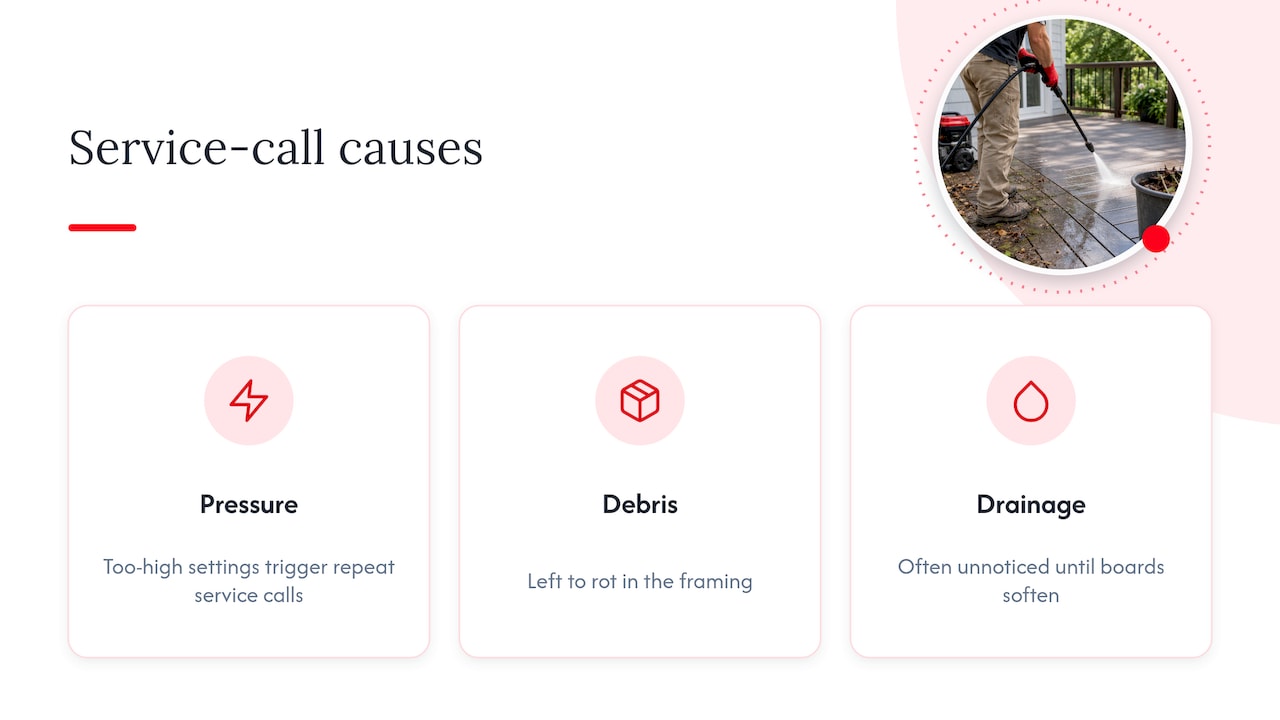
Across 20-plus years of licensed, insured deck work, the most common service calls trace back to a few repeat issues: pressure washing at too high a setting, debris left to rot in the framing, and drainage problems nobody noticed until boards started softening. A professional visit catches both the cosmetic fix and the structural cause in one trip.
What composite deck care actually comes down to
The maintenance advice around composite decking tends to oversell the complexity. Homeowners read about specialty cleaners and assume they need a cabinet full of products, when a bucket of warm water, mild soap, and a nylon brush handles most of the work most of the year. The bigger blind spot is drainage, not dirt. People will scrub a stain for an hour but never check whether water is actually draining out from under the boards, and that’s the issue more likely to shorten a deck’s life.
If you prioritize one habit over all others, make it keeping the gaps between boards clear. It’s less satisfying than a deep scrub, but it does more to prevent the mold, staining, and framing damage that actually cost money to fix. Treat pressure washing as an occasional tool, not a routine step, and read your manufacturer’s care guide once before you buy any cleaner. That single habit prevents more warranty disputes than anything else on this list.
— Abraham
Schedule a deck maintenance visit
Between seasonal cleanings, a professional set of eyes catches what’s easy to miss, from a pressure washer set too high to drainage that’s been quietly failing under the boards. Professional teams can handle safe pressure washing, deep cleaning, repairs, and under-deck drainage work for composite and wood decks alike, providing both a cosmetic refresh and structural checks in one visit.

A maintenance visit typically covers a full inspection of fasteners, flashing, and drainage alongside the cleaning itself, allowing small issues to be caught before they turn into board replacement. If your deck needs more than a seasonal wash, from repairs to a full rebuild, our deck services page outlines what we handle, and our services overview covers everything else we build and maintain outdoors. Reach out for a free quote and we’ll walk you through what your deck needs right now.
FAQ
How do you clean composite decking?
Sweep the surface clear of debris, then scrub it with warm water and mild dish soap using a medium-stiff nylon brush, working with the grain in small sections. Rinse thoroughly so no soap residue remains, and repeat this process roughly twice a year, more often in shaded or high-traffic areas, per Decks.com.
How long will composite deck boards last?
Lifespan depends on the brand, the cap type, and how consistently the deck is cleaned and drained, so there’s no single number that applies to every product. Composite boards generally hold up longer than untreated wood when debris is cleared regularly and drainage under the boards stays clear, as explained in NADRA’s guide to under-deck waterproofing. For a closer look at how materials compare, see our breakdown of deck lifespan by material.
Is Dawn dish soap safe for composite decking?
A mild dish soap diluted in warm water is a safe, commonly recommended option for routine composite deck cleaning. It cuts through dirt without the harsh effects of ammonia or undiluted bleach, which can dull or damage the cap layer over time.
What should you avoid using on composite decking?
Skip ammonia, undiluted bleach, solvents, paint thinners, and abrasive powders, since all of these can dull or scratch the protective cap layer. Metal brushes and narrow-jet pressure washer nozzles cause similar damage, so stick to nylon brushes and wide fan tips instead.
How do you remove mold or mildew from a composite deck?
Scrub the affected area with a mild detergent or an oxygenated bleach solution, then rinse thoroughly and let the deck dry. Oxygen-based cleaners are generally preferred over straight chlorine bleach for this kind of organic growth, and repeating the treatment once or twice usually clears any remaining discoloration.