

Wood costs less to install and looks like the real thing. Composite costs more up front but needs no sealing or staining and tends to last longer. For most North Texas homeowners who plan to stay put for 15 years or more, composite is the lower-hassle choice. If your budget is tight, or you love natural grain and want the option to refinish, a well-built wood deck is still a sound decision. The rest of this guide shows where each material wins, and where the marketing runs ahead of reality.
TL;DR
- Upfront cost: pressure-treated pine is the cheapest option. Composite runs several times more per square foot for materials.
- Upkeep: wood needs regular sealing or staining. Composite needs washing and the occasional spot cleaning.
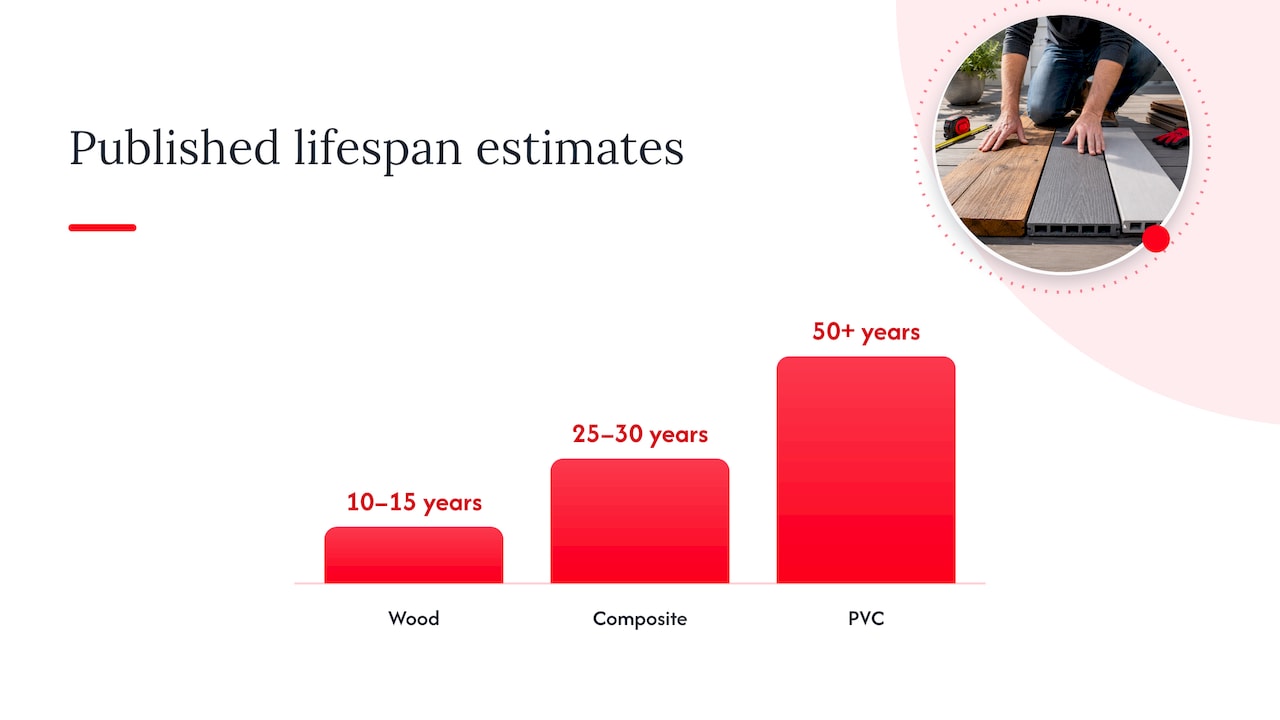
- Lifespan: wood is often cited at 10 to 15 years, composite at 25 to 30, and PVC at 50 or more, per one manufacturer’s comparison.
- Texas sun: composite can get hotter underfoot than wood, so board color and shade matter.
- Structure: composite is for the surface boards only. The frame underneath is still wood or steel.
Table of Contents
- What you are actually comparing
- Cost: upfront versus over the life of the deck
- Maintenance: what each deck asks of you
- Lifespan and what actually fails
- Heat, comfort and the Texas sun
- Looks, feel and repairs
- Sustainability: not as simple as it sounds
- Cedar vs composite, and PVC vs composite
- Side-by-side summary
- Our perspective
- Before you build: permits in Fort Worth
- How to decide in five questions
- Get a quote from a builder who sells both
- FAQ
- Sources
What you are actually comparing
“Wood” usually means one of two things: pressure-treated pine, the budget standard, or a naturally durable species like cedar. Both are real lumber. They move with humidity, take stain well, and can be sanded and refinished.
“Composite” means boards made from wood flour or fiber blended with a thermoplastic. Two things about that definition matter when you shop.
First, not all composites are equal. Older or uncapped boards leave the wood content exposed to moisture. Newer capped boards wrap a protective shell around the core. Industry sources stress this distinction because capped and uncapped products behave very differently outdoors.
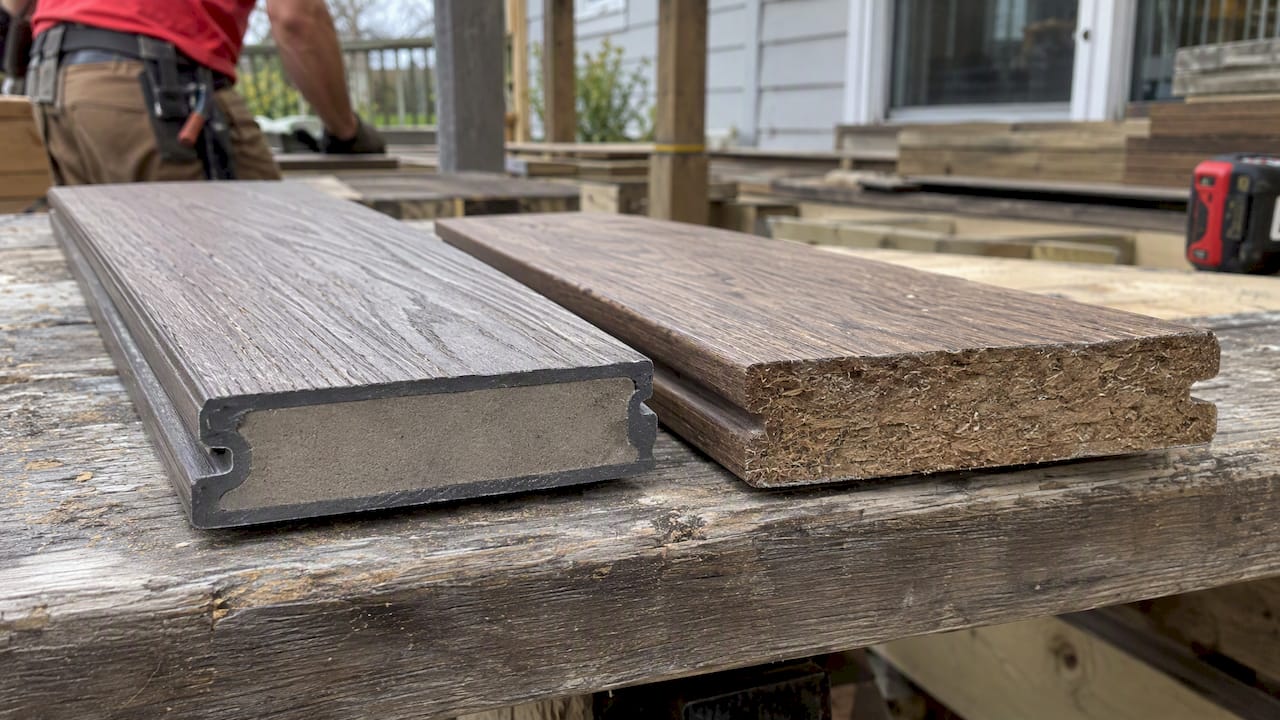
Second, composite is not a structural material. Forest Service research notes that these products lack the stiffness and strength of solid wood, so they belong on the surface, not in the joists. A composite deck is still built on a frame, and that frame needs to be done right.
Cost: upfront versus over the life of the deck
Consumer Reports puts pressure-treated wood at roughly $1.50 to $2.50 per square foot for the boards, against about $3.00 to $11.00 per square foot for composite. Those are material-only figures. Labor, footings, framing, railings, stairs and permits come on top, and they are similar for both materials.
Here is what that does to a 300 square foot deck, boards only:
| Material | Per sq ft (boards) | 300 sq ft deck, boards only |
|---|---|---|
| Pressure-treated pine | $1.50 to $2.50 | $450 to $750 |
| Composite | $3.00 to $11.00 | $900 to $3,300 |
The board price is only part of a finished deck, so the gap in your final quote will look smaller than the table. For a broader picture of what goes into a total price, see our deck cost guide and our deck replacement cost breakdown.
The cost of keeping wood looking good
Wood’s low sticker price comes with a recurring bill. Sealing or staining is the main one, whether you pay a crew or give up a few weekends. Add board replacement as pieces split, cup or rot, and the gap narrows over time. Whether it closes completely depends on how long you keep the house, how much of the upkeep you do yourself and which composite tier you pick. Anyone who tells you composite “always pays for itself” is guessing.
Maintenance: what each deck asks of you
Wood needs regular sealing or staining to hold its appearance and fight decay. In North Texas, where summer sun is hard on finishes, plan on a refinishing cycle rather than a one-time job. Our guide to washing a deck the right way covers how to clean wood without gouging the surface.
Composite skips the stain. Capped boards resist rot and insects, and cleaning is mostly soap, water and a soft brush. Low maintenance is not no maintenance, though. Mildew can still grow in shaded, damp spots, and debris trapped between boards holds moisture. We cover the routine in composite deck maintenance.
Lifespan and what actually fails
Manufacturer-published comparisons cite about 10 to 15 years for wood, 25 to 30 for composite and 50 or more for PVC. Treat those as ranges from interested parties, not guarantees. Real lifespan depends on the installation, drainage, ventilation under the deck and how the surface is cared for.
Composite has its own failure modes. Moisture is the main enemy of wood-plastic composites, and Forest Service researchers note that even boards with a cap layer can crack or delaminate with weathering, which weakens the moisture protection the cap was supposed to supply. That is one reason to compare warranties and read what they cover, including fading and staining, before you buy. Our piece on deck lifespan by material lists the questions worth asking.
Wood fails more visibly and more gradually: soft spots, splinters, loose fasteners, rot at the ends of boards and at the ledger. The good news is that a few bad wood boards are cheap to swap out.
Heat, comfort and the Texas sun
This is the section most national comparison pages gloss over, and it matters in Fort Worth.
Composite today is cooler than earlier generations, but it can still get warmer than wood in direct sunlight, so local climate and which way the deck faces should drive your choice. Retailer guidance also lists heat as a downside of composite. Dark colors on a south or west facing deck with no shade can be uncomfortable for bare feet in July and August.
Practical ways to deal with it:
- Choose lighter, mid-tone boards for sun-exposed decks.
- Plan shade before you build, not after. See our deck shade solutions guide.
- If the deck surrounds a pool, look past the heat rating on a spec sheet. Our article on cool pool deck materials explains why a single number does not tell you how it feels.
- Walk on a full-size sample board left in the sun for an afternoon before you commit.
Cedar and pine also get hot in direct sun, just usually less so. Wood’s lighter tones help.
Looks, feel and repairs
The choice often comes down to authenticity versus practicality. Composite is promoted for its longevity and low upkeep, but many homeowners and builders still prefer the warmth, texture and refinishing ability of real timber.
Both views are fair:
- Wood can be sanded, restained in a new color and patched invisibly. It ages to a silvery gray if left alone, or stays rich if you keep up the finish.
- Composite holds its color from day one, doesn’t splinter, and looks consistent board to board. You cannot change its color later, so pick carefully. Fading in the first year or two is normal for many products, and sample boards that have already weathered tell you more than a showroom card.
Sustainability: not as simple as it sounds
Both sides make green claims, and both need a closer look.
Manufacturers now offer 100% recyclable wood-plastic composites, though recyclability can be limited by the manufacturing process, particularly co-extrusion. Wood from certified sustainable sources is often cited as the most naturally renewable choice. If that matters to you, ask for proof rather than a label: our guide on verifying FSC certified wood explains how chain-of-custody codes work. The honest trade-off is that a longer-lived board means less replacement, while a renewable board means a lower-impact raw material. Neither wins on every measure.
Cedar vs composite, and PVC vs composite
Cedar sits between pine and composite on price and looks. It is naturally more resistant to decay than pine, handles the sun well, and has the classic grain people want. It still needs a finish to keep its color, and it still moves and checks with weather.
PVC (cellular PVC) decking is a fully synthetic board with no wood content. It is cited as the longest-lived option and is rot and insect resistant. The same TimberTech comparison says composite is typically cheaper upfront than PVC, so PVC makes sense where moisture is constant, such as near water or in a very shaded, damp yard. For a typical backyard deck, capped composite usually gives you most of the benefit at a lower price.
If you want a closer look at how to pick a composite product for your yard, our composite decking guide walks through choosing by site conditions.
Side-by-side summary
| Pressure-treated pine | Cedar | Capped composite | PVC | |
|---|---|---|---|---|
| Upfront cost | Lowest | Mid | Higher | Highest |
| Staining or sealing | Yes | Yes | No | No |
| Cited lifespan | 10 to 15 years (wood) | 10 to 15 years (wood) | 25 to 30 years | 50+ years |
| Refinishable | Yes | Yes | No | No |
| Heat in direct sun | Moderate | Moderate | Can run hotter | Can run hotter |
| Best for | Tight budgets, big decks | Natural look | Low upkeep | Wet, shaded sites |
Lifespan figures come from the manufacturer comparison cited above, which groups cedar and pine together as wood.
Our perspective
We have built decks in North Texas for over 20 years, and the question we hear most is “which one should I buy?” The honest answer starts with a different question: how do you actually use the deck?
If it is a place you want to enjoy rather than maintain, and you plan to stay in the house, we usually steer people toward capped composite on a well-built frame. If your deck is large, your budget is firm, or you like the look and feel of real wood and don’t mind a refinishing schedule, we build wood decks that hold up well too. We would rather you pick the material you will take care of than the one with the better brochure.
What we see decide a deck’s life is less the board than the build: footings, flashing at the ledger, spacing, drainage and airflow underneath. A great composite board on a poor frame fails early, and a carefully built wood deck can outlast expectations. We tailor each project to the property and the budget, and we would rather tell you where money matters (the structure) than where it doesn’t.
— Abraham
Before you build: permits in Fort Worth
Material choice does not change the paperwork. The City of Fort Worth states that decks over 6 inches above grade require a building permit, and location rules vary by the zoning of your property. Other North Texas cities have their own rules, so check with yours. Our overview of deck building permits explains what to prepare, and our deck design ideas help with sizing and layout before you talk to a builder.
How to decide in five questions
- How long will you stay? Under 7 or 8 years, wood’s lower cost often wins. Beyond 15, composite’s saved upkeep counts for more.
- How sunny is the deck? A south or west facing deck with no shade pushes you toward lighter colors, shade planning or wood.
- Who will do the upkeep? If staining every few years sounds like a chore you will skip, choose composite. Skipped upkeep ruins wood faster than anything.
- What is the total budget? Compare finished quotes, not board prices. Framing, railings and stairs cost the same either way.
- Do you want to change the look later? Only wood can be refinished in a new color.
Get a quote from a builder who sells both
We build decks and handle the surrounding work, from concrete and masonry to landscaping and pressure washing. Our builders are licensed and insured, and we offer free quotes with transparent pricing. Tell us the size, the sun exposure and your budget, and we will show you wood and composite options side by side for your deck. If a deck is part of a larger outdoor project, see all our services.
FAQ
Is composite decking better than wood?
It depends on what you value. Composite wins on upkeep and typical lifespan, while wood wins on upfront cost, natural look and the ability to refinish. Neither is better in every situation.
Does composite decking cost more than wood?
Yes, upfront. Consumer Reports lists composite at about $3.00 to $11.00 per square foot against $1.50 to $2.50 for pressure-treated wood, before labor. Over many years, saved sealing and staining narrows the gap.
Does composite decking get too hot in Texas?
It can. Composite may run warmer than wood in direct sun, and dark boards are the worst offenders. Lighter colors, shade and a sample test on your own property reduce the surprise.
Can I use composite for the whole deck?
Not the whole structure. Composite lacks the stiffness of solid wood, so it is meant for surface boards, not joists. The frame underneath is built from other materials.
How do I clean each type?
For wood, wash gently and reseal on schedule. For composite, use soap, water and a soft brush, and keep gaps between boards clear. Our guides on washing a deck and composite upkeep give the details.
Sources
- Ultimate Decking Buying Guide, Consumer Reports
- PVC vs. Composite Decking: Benefits and Differences, TimberTech
- PVC Decking, TimberTech
- Wood Thermoplastic Composites, US Forest Service
- Co-Extrusion of WPCs with a Clear Cap Layer, US Forest Service
- Composite vs wood decking, Ideal Home
- Comparing Composite vs Wood Decking, Lowe’s
- Wood decking vs composite, Homebuilding
- Differences between PVC and composite decking, Decks.com
- Residential Permitting, City of Fort Worth