Xeriscaping is a design approach that groups plants by water need and trims thirsty turf so your yard uses far less water without losing its curb appeal. The first move is practical, not botanical: walk your lot, note sun, shade, slope and drainage, then sketch hydrozones on paper before you buy a single plant. Even drought-tolerant species need regular watering the first year or two while roots establish.
TL;DR:
- Use drip or microirrigation for beds and reserve spray heads for compact turf; controllers that adjust for weather can prevent watering during storms.
- New plantings need deep soaks two to three times weekly for the first few months, then weekly or less as roots spread; retune emitters.
- Native plants generally suit unamended soil, while nonnative ornamentals may need compost; apply 2 to 4 inches of organic mulch, since rock can overheat roots.
- Get utility rebate preapproval and inspection before removing turf, because programs may reject applications after work begins; convert one zone at a time.
Table of Contents
- Seven Xeriscape Principles and How to Map Your Yard
- Practical Plant and Groundcover Choices by Exposure
- Irrigation Best Practices: Drip, Controllers and WaterSense Tips
- Soil, Mulch and Slope Management That Keeps Water Where Plants Need It
- Reduce Turf and Add Hardscape That Still Looks Good
- Establishment Timeline and Realistic Budgeting
- When to Hire a Pro and What to Ask
- A Field Perspective on Phased Xeriscape Conversions
- Action Fence and Deck: Support for Your Drought-Tolerant Conversion
- FAQ
- Sources
Seven Xeriscape Principles and How to Map Your Yard
Xeriscaping rests on seven principles first codified by Denver Water and now used by water utilities nationwide, including the Albuquerque Bernalillo County Water Utility Authority. Each one gives you a concrete task, not just a concept.
- Planning and design: sketch your lot, mark sun, shade, slope and drainage before buying plants.
- Soil improvement: test drainage and texture so water soaks in rather than runs off.
- Efficient irrigation: choose drip or microspray over broadcast sprinklers wherever beds replace turf.
- Plant selection: pick species suited to your rainfall and soil, not just your climate zone.
- Practical turf areas: keep lawn only where it earns its water, like a small kids’ play patch.
- Mulch: cover bare soil to slow evaporation and block weeds.
- Appropriate maintenance: water, prune and weed in a way that keeps plants efficient rather than needy.
You can map sun, shade, slope and existing plants in a single afternoon by walking the yard at three points in the day (morning, noon, late afternoon) and marking shadows on a rough sketch. Group areas with similar sun exposure and soil moisture into hydrozones, since EPA’s WaterSense program notes that hydrozoning (clustering plants by water need) is what makes irrigation design and drip systems actually efficient. A bed of lavender next to a thirsty hydrangea forces you to overwater one or starve the other.
Practical Plant and Groundcover Choices by Exposure
Once your hydrozones are marked, matching plants to each zone gets much simpler. Full sun and dry soil call for different choices than a shaded, rocky slope, and knowing the difference up front saves replanting later.
- Full sun, dry soil: agave, Russian sage, lavender and ornamental grasses like blue fescue tolerate heat and skip supplemental water once established.
- Part shade or rocky ground: sedum, creeping thyme and epimedium handle lower light and thin soil where turf struggles anyway.
- Slopes and erosion control: deep-rooted natives paired with pollinator-friendly perennials hold soil while feeding bees and butterflies.
- Lawn alternatives: buffalo grass or low-growing moss mixes work in the right climate where a green patch is still wanted.
Hydrozoning, grouping plants by similar water need, is what makes irrigation design and drip systems actually efficient, so pairing the wrong plant into the wrong zone undercuts every other step in this guide. USDA hardiness zones only tell part of the story. Local soil, rainfall timing and microclimate matter just as much, so cross-check specific cultivars against a university extension plant list or your state’s cooperative extension office before you commit to a palette.
Irrigation Best Practices: Drip, Controllers and WaterSense Tips
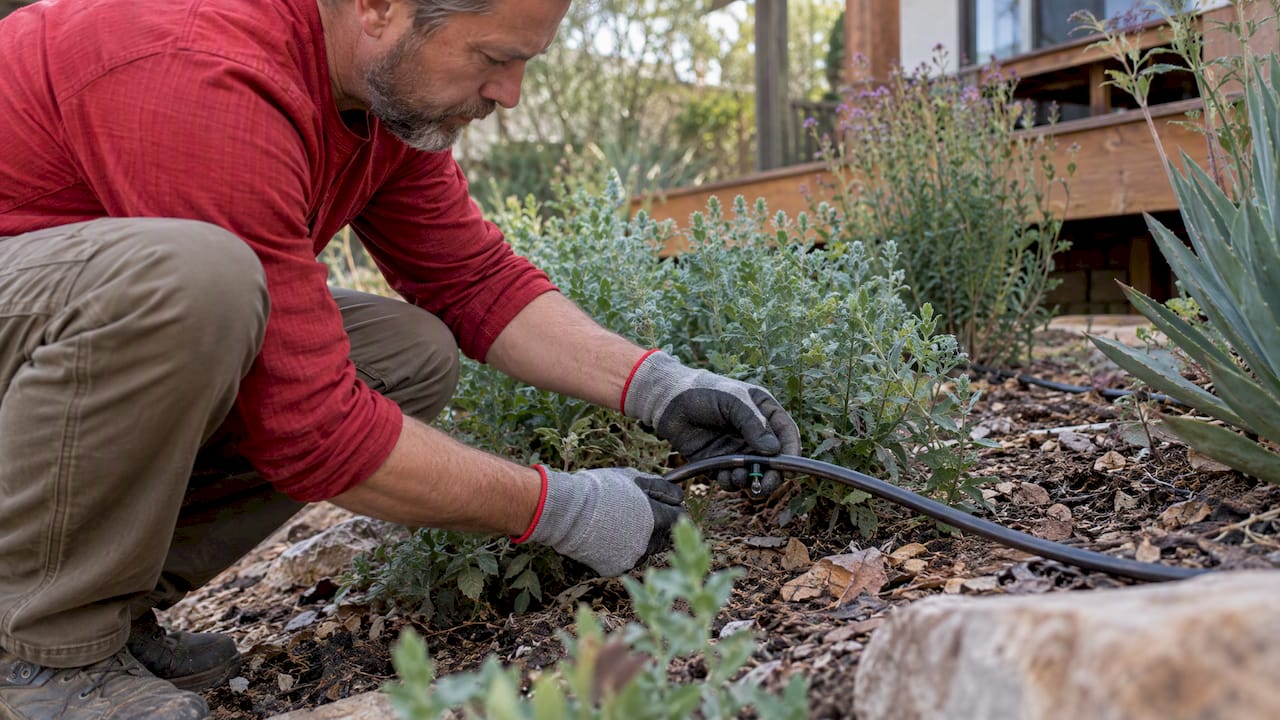
Drip or microirrigation delivers water straight to the root zone with far less evaporation than spray heads, which makes it the default choice for xeric beds. Spray can still make sense for small turf patches or dense groundcover where drip lines are impractical to install.
- Drip for beds: use drip emitters or microspray for shrubs, perennials and specimen plants.
- Spray for turf: reserve spray heads for the small lawn areas you keep.
- Weather-based controllers: a controller that adjusts to rainfall and evapotranspiration meets WaterSense criteria and avoids watering during a storm.
Establishment watering runs deeper and more frequent than mature-plant watering. New plantings typically need a deep soak two to three times a week for the first few months, tapering to once a week or less as roots spread. University of Arizona Cooperative Extension notes that even drought-tolerant species need that first-year attention and that drip emitters should be retuned as root systems expand, especially during severe drought stretches.
Pro Tip: Check emitters every spring, since clogged or shifted drip lines are the most common reason an otherwise well-designed xeric bed still struggles.
Soil, Mulch and Slope Management That Keeps Water Where Plants Need It
Native plants generally thrive in unamended native soil, since that is what they evolved for. Non-native ornamentals often need compost worked in to improve structure and hold moisture, so decide your amendment plan based on what you’re actually planting rather than treating every bed the same.
- Organic mulch: apply 2 to 4 inches around beds to slow evaporation and moderate soil temperature.
- Rock mulch: use sparingly, since it can raise root-zone heat and stress plants that aren’t desert-adapted.
- Slopes: favor deep-rooted plants and consider terracing to slow runoff and hold soil in place.
Grading and drainage work on a slope is where a lot of DIY xeriscape plans run into trouble, and proven slope landscaping strategies built around deep-rooted plant coverage can prevent erosion before it starts.
Reduce Turf and Add Hardscape That Still Looks Good
Lawn isn’t off the table entirely. It just needs to earn its spot. Keep small, clustered turf areas (a single rectangle rather than scattered strips) so one irrigation zone covers it efficiently instead of three disconnected sprinkler runs.
- Cluster remaining turf into one compact, usable patch instead of thin strips along borders.
- Replace side yards and transition zones with permeable pavers, decomposed granite or gravel paths.
- Add a dry streambed or rain garden in a low spot to catch runoff and turn a drainage problem into a design feature.
- Anchor the layout with a focal point, like a specimen agave or a boulder grouping, so the eye has somewhere to land.
- Edge beds cleanly with steel, stone or brick to keep gravel and mulch from migrating into turf.
Photo-led examples from Colorado State University Extension show that phased turf removal, permeable walks and layered plant palettes hold curb appeal through the transition rather than leaving a yard looking stripped. If you’re reworking the space around an existing deck, pairing new plant beds with the structure you already have is often simpler than starting the whole yard from scratch, and a few landscaping moves that work around decks can tie the two together.
Establishment Timeline and Realistic Budgeting
The first one to three years are the highest-maintenance stretch of any xeriscape conversion, even though the long-term goal is less work.
- Year 1: deep, frequent watering during establishment, regular weeding before young plants fill in, and a mulch check each season.
- Year 2: taper irrigation frequency, retune or replace drip emitters as roots expand, and top up mulch where it has thinned.
- Year 3 and beyond: watering drops to occasional deep soaks during extended dry spells, with maintenance mostly limited to pruning and mulch refresh.
Cost drivers include irrigation conversion (removing spray heads and installing drip), plant size at installation, and how much hardscape you’re adding. Drip-line maintenance and emitter tuning is a recurring cost many contractors build into a one- to two-year establishment visit, and that follow-up materially improves how well new plantings survive. If you plan to pursue a utility rebate for turf removal, get pre-approval and inspection first. Many programs disqualify homeowners who rip out turf before the paperwork is filed.
When to Hire a Pro and What to Ask
Some parts of a xeriscape conversion are reasonable weekend projects. Grading a slope, rebuilding an irrigation main line, or installing a retaining wall for a terraced bed usually are not, and getting them wrong costs more to fix than hiring it out the first time.
- Site grading and drainage: a contractor can correct slope and runoff issues before planting instead of after.
- Irrigation rebuilds: converting spray zones to drip often means retrofitting valves and controllers, not just swapping heads.
- Retaining walls and terraces: these carry structural requirements that go beyond a DIY weekend.
- HOA paperwork and rebate submittals: a contractor familiar with local programs can handle pre-approval documentation.
When you do bring in help, ask for an establishment watering plan in writing, a clear irrigation warranty, and a defined scope for any drainage or retaining work. We have experience with drought-tolerant conversions as part of landscaping and hardscaping work, focusing on eco-friendly materials and customized solutions.
A Field Perspective on Phased Xeriscape Conversions
The biggest mistake we see is homeowners ripping out an entire lawn in one weekend, then losing half the new plants to inconsistent watering because the irrigation wasn’t ready. A phased plan, one zone at a time, protects both your budget and your plants. Irrigation rebuilds and drainage work are where a contractor earns their fee. The rest, you can absolutely handle yourself.
— Abraham
Action Fence and Deck: Support for Your Drought-Tolerant Conversion
Landscaping and hardscaping services are commonly involved in xeriscape projects, including drainage work, retaining walls, and irrigation conversions.

A consultation can start with a site assessment, covering rebate and HOA paperwork where applicable, and typically includes supplying a written establishment plan outlining watering and maintenance expectations for year one. If better drainage, a retaining wall, or a smarter irrigation layout is part of your plan, request a free quote through our services page and we’ll walk the property with you.
FAQ
How do you design a drought-tolerant landscape?
Start by mapping sun, shade, slope and drainage, then group plants into hydrozones based on water need. From there, apply the seven xeriscape principles: improve soil where needed, install efficient irrigation, choose drought-adapted plants, limit turf to functional areas, mulch everything, and maintain with watering and pruning suited to each zone.
What is a good drought-tolerant ground cover?
Creeping thyme and sedum are reliable choices for sunny, well-drained spots, while epimedium handles shadier, rockier ground. All three spread to fill bare soil and need little water once established.
What is drought-resistant landscaping called?
It’s most commonly called xeriscaping, a term built around seven water-conserving design principles including efficient irrigation and hydrozoning. Some regions also call it water-wise or low-water landscaping, though the underlying approach is the same.
How much does drought-tolerant landscaping cost?
Cost depends heavily on how much turf you’re removing, whether you’re converting spray irrigation to drip, and plant sizes at installation, so a price is best confirmed with a site visit. Free quotes are typically provided so that itemized pricing can be reviewed before committing to any conversion work.
Do drought-tolerant plants still need regular care?
Yes, especially in the first one to two years while roots establish, when deep, consistent watering is still necessary. After establishment, care shifts mostly to occasional watering during dry spells, mulch top-ups and routine weeding.
Sources
- Xeriscape how-to guide — Albuquerque Bernalillo County Water Utility Authority
- WaterSense: Water-smart landscape design — EPA
- Water conservation guidance — University of Arizona Cooperative Extension (2024)
- Front yard xeriscape ideas with photos — Colorado State University Extension (2025)