Pressure-treated wood typically lasts 10 to 15 years before major work, cedar and redwood run 15 to 20, and tropical hardwoods like ipe can push 30 to 50 years or more with proper care. Capped composite decking generally holds up 25 to 30 years, and capped PVC often reaches 25 to 50 years. Aluminum and concrete decking can outlast all of them. But none of that matters if the substructure underneath fails first, which is exactly what happens on a large share of decks torn out early.
TL;DR:
- Tropical hardwoods like ipe can last over 50 years with proper maintenance, but installation and cost are higher than other materials.
- The lifespan of the framing and fasteners often dictates deck longevity more than the decking surface itself, especially in challenging environments.
- Proper installation, including high-quality hardware and vented, well-drained structures, significantly extends a deck’s useful life.
- Regular inspection and maintenance, such as cleaning, sealing, and upgrading framing materials, can add years to a deck’s service life.
- Cost comparisons should account for long-term maintenance and resurfacing, as mid-tier composites may become more economical than pressure-treated wood over 20 years.
Table of Contents
- Deck Lifespan by Material: What to Expect From Each Option
- What Factors Change These Lifespan Ranges?
- How Do You Know If a Deck Needs Repair or Replacement?
- How Do You Extend a Deck’s Real Lifespan?
- How We Recommend Materials on Real Projects
- Request a Deck Quote That Actually Compares Fairly
- Sources
- FAQ
Deck Lifespan by Material: What to Expect From Each Option
The boards you walk on aren’t always the reason a deck gets replaced. Framing, fasteners, and flashing decide the real timeline more often than the decking surface does. Still, material choice sets the baseline, and the differences are large enough to change how you budget for the next two decades.
Pressure-treated (PT) wood is the budget standard, and for good reason. Expect 10 to 15 years of solid service on a conservative timeline, stretching to 20 years if you stain and seal every two to three years without skipping a cycle. Splintering, graying, and surface checking show up first; most homeowners resurface or replace the boards well before the framing gives out.
Cedar and redwood carry natural oils that resist rot better than PT pine, so they tend to land in the 15 to 20 year range with regular color maintenance. Skip the yearly oiling and they’ll silver out faster, though the wood itself often stays structurally sound longer than it looks.
Tropical hardwoods like ipe and cumaru are the outliers. Properly installed and maintained, ipe decking commonly reaches 30 to 50-plus years, with some sources citing 50 to 75 years under ideal conditions. You can oil it periodically to keep the reddish tone or let it silver naturally, which some owners actually prefer. The trade-off is installation: these woods are dense enough to require pre-drilling and specialized fasteners, which drives up labor cost.
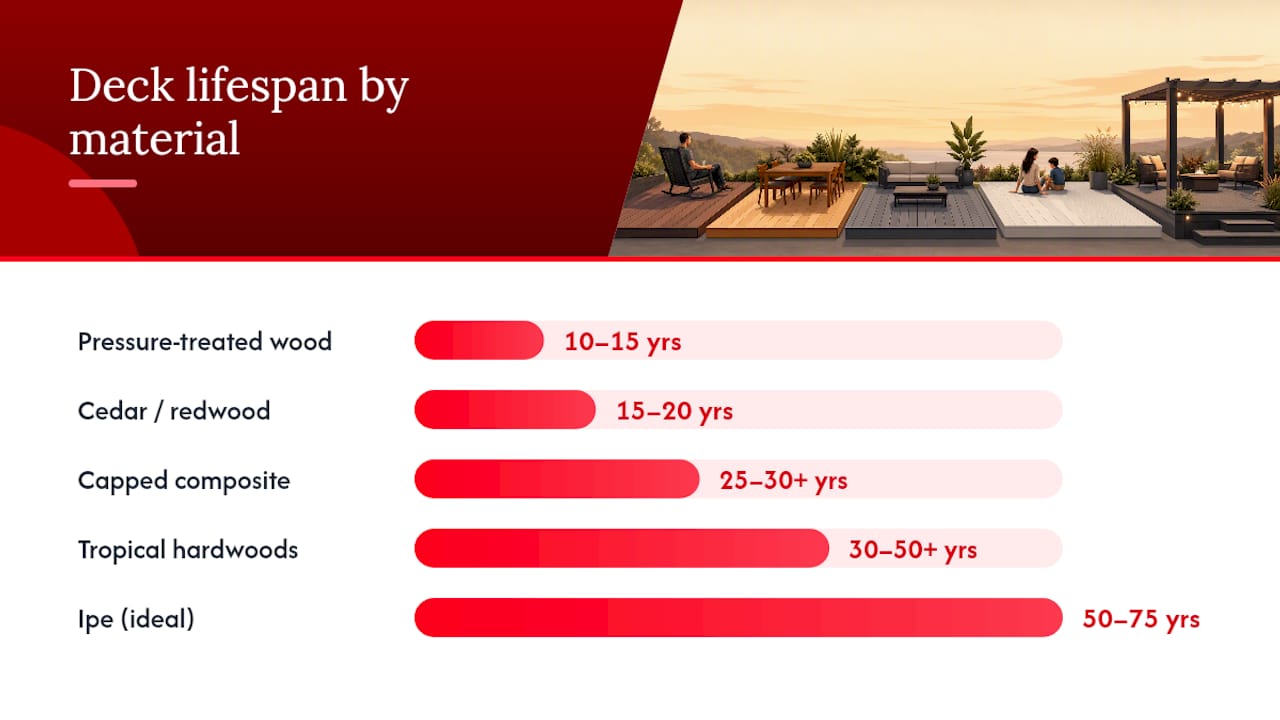
Composite decking splits into two tiers that matter a lot. Uncapped composite, an older wood-plastic blend, absorbs moisture at the core and can swell or mold over time. Capped composite wraps that core in a protective polymer shell and typically runs 25 to 30-plus years, backed by manufacturer warranties that often reflect that same window. Always confirm which type you’re buying; the price difference is smaller than the lifespan gap.
Capped PVC contains no wood fiber at all, so it shows near-zero water absorption in ASTM D570 testing. That makes it the strongest choice for pool surrounds, ground-level patios, and coastal properties where moisture does most of the damage. Expect 25 to 50 years, with some product lines warrantied for the full 50
Aluminum and concrete decking sit at the top of the durability chart, often exceeding 50 years with minimal upkeep. They cost more upfront and show up less often on residential decks, but they’re the go-to for waterfront properties or anyone who wants to stop thinking about deck maintenance entirely.
| Material | Realistic Lifespan | Main Maintenance Need |
|---|---|---|
| Pressure-treated wood | 10 to 20 years | Stain/seal every 2 to 3 years |
| Cedar/redwood | 15 to 20 years | Annual oiling or staining |
| Tropical hardwoods (ipe, cumaru) | 30 to 50+ years | Occasional oiling, specialized fasteners |
| Capped composite | 25 to 30+ years | Periodic washing, no sealing |
| Capped PVC | 25 to 50 years | Rinse and light cleaning |
| Aluminum/concrete | 50+ years | Minimal, occasional sealing (concrete) |
- PT wood is cheapest upfront but needs the most recurring labor.
- Composite and PVC trade a higher purchase price for near-zero ongoing maintenance.
- Hardwoods sit in between: high durability, moderate upkeep, higher installation cost.
What Factors Change These Lifespan Ranges?
National averages assume average conditions, and your yard probably isn’t average. Coastal salt air and persistent humidity can cut a wood deck’s useful life by roughly 30 to 40 percent compared to a dry inland climate. Heavy shade keeps boards damp longer after rain, encouraging rot and mold even on rot-resistant species. High-UV, low-humidity regions age surfaces faster through fading and checking but tend to be gentler on the framing underneath.
Installation quality matters just as much as climate. Ledger flashing that’s missing or installed wrong lets water seep into the house-side connection, which is one of the most common causes of catastrophic ledger failure. Poor ventilation under low decks traps moisture against joists year-round.
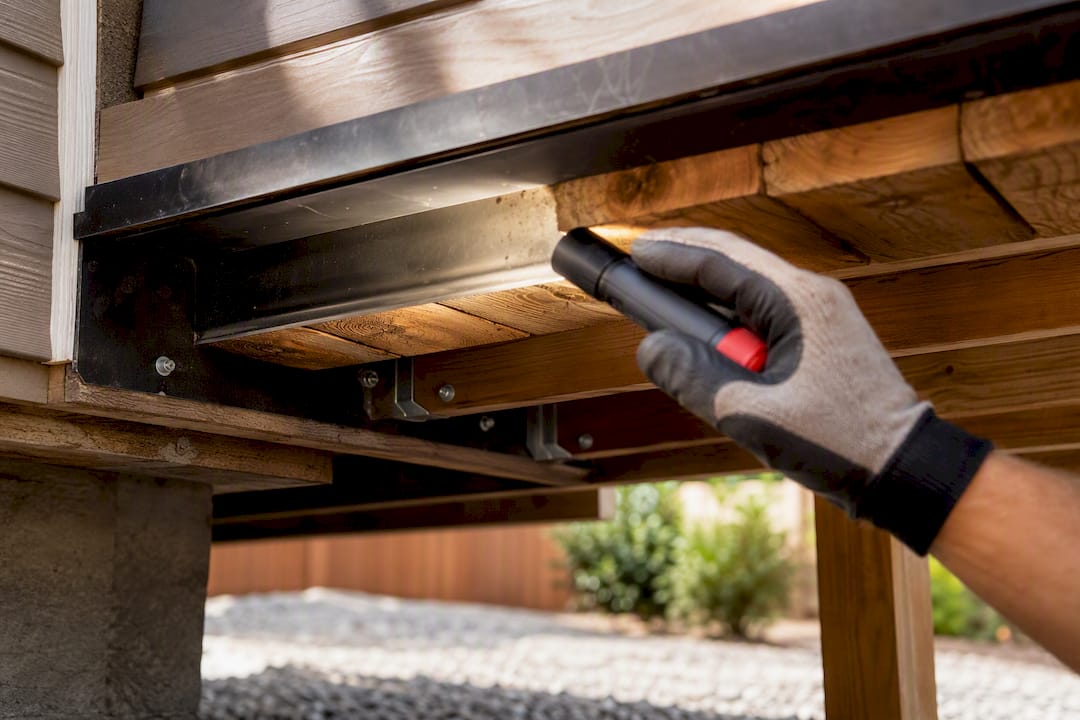
The framing itself sets a hard cap on lifespan, regardless of what’s on top. Framing treated to UC4A ground-contact standards resists rot far longer than lumber treated only for above-ground use, a distinction the EPA and treatment industry both flag as commonly overlooked. Swapping to steel or aluminum joists removes wood rot from the equation entirely.
Fastener choice is a quieter factor that causes real damage. Galvanic corrosion between mismatched metals (aluminum flashing against the wrong screws, for instance) can eat through hardware years before the wood or decking shows any wear.
- Coastal or high-humidity sites: expect wood lifespans toward the low end of the range.
- Deep shade or poor drainage: check joists and ledger connections more often than the schedule suggests.
- Elevated or windy sites: railing hardware and post connections wear faster than surface boards.
Pro Tip: Ask any contractor quoting your project whether they’re using 316 stainless fasteners near saltwater or pools. Standard 304 stainless can still pit and stain in coastal air within a few years.
How Do You Know If a Deck Needs Repair or Replacement?
Surface problems and structural problems require completely different responses, and mixing them up wastes money either way.
- Splintering, graying, or a few soft boards usually means a surface refresh, not a rebuild; replace individual boards and reseal.
- Localized rot near planters, grills, or low-airflow spots is fixable if it hasn’t spread to the joists underneath.
- Soft or spongy joists, visible sagging, or a ledger pulling away from the house are structural red flags that call for a professional inspection immediately.
- Loose or wobbly railings are a safety issue the CPSC flags directly in its outdoor structure guidance, and they should never wait for a “someday” fix.
- PT decks around the 15 to 18 year mark commonly need either a full resurface or a framing evaluation, since that’s when both surface wear and early substructure fatigue tend to converge.
How Do You Extend a Deck’s Real Lifespan?
A maintenance plan built around your material, not a generic calendar, is what actually adds years.
- Wash and inspect annually. PT wood and cedar need a cleaning and moisture check every spring; composite and PVC need only occasional washing since they don’t absorb water the same way, as detailed in composite deck cleaning best practices.
- Reseal on schedule. PT wood every 2 to 3 years, cedar and redwood roughly every year to maintain color and rot resistance.
- Specify hardware by zone. Request 316 stainless fasteners in coastal or pool areas and UC4A-treated framing anywhere within 18 inches of grade.
- Consider a framing upgrade. Moving from PT joists to aluminum or steel adds real decades to the structural life, even if the decking above stays the same.
- Run the break-even math before choosing. Mid-tier composite typically breaks even with PT wood in 8 to 12 years once staining, washing, and an eventual PT resurface are factored in. Past that point, composite is usually the cheaper option.
Pro Tip: If you’re planning to stay in the home 20-plus years, price out capped composite or PVC against PT wood including two resurfacing cycles, not just the sticker price. The comparison often flips.
How We Recommend Materials on Real Projects
Over many years, experienced crews have learned that the “best” material depends less on brochures and more on how much upkeep a homeowner actually wants to do. We weigh cost, maintenance appetite, and microclimate together, and we lean on sustainable material choices when they fit the budget. On one recent coastal build, a homeowner wanted the ipe look but not the oiling schedule. We steered them toward capped PVC with a matching wood-grain finish and 316 hardware, and they got the aesthetic without the maintenance calendar.
— Abraham
Request a Deck Quote That Actually Compares Fairly
Some local contractors provide alternatives to guessing at lifespan from a showroom brochure. They build decks, upgrade substructures, and run inspections that tell you exactly what’s underneath your current boards before you spend a dollar on new decking.

When you request quotes for a new deck or a substructure upgrade, ask every contractor for the same four things: the framing treatment level (UC4A near grade), joist material (wood versus aluminum or steel), fastener grade (316 stainless in coastal or pool zones), and flashing details at the ledger. A quote that skips those specifics is a quote you can’t actually compare. If you want a full breakdown of repair versus rebuild costs before you decide, our deck replacement cost guide walks through the math. Ready to see what your options look like on your own property? Request a free quote and we’ll walk the site with you.
Sources
- Hardwood decking — RMFP (2025)
- How Long Does Decking Last? Material Lifespans — TimberTech
- Composite vs wood decking — DeckMath
- How long does a deck last? — Trex
FAQ
Which Deck Material Has the Longest Lifespan?
Tropical hardwoods like ipe and aluminum or concrete decking last the longest, with ipe commonly reaching 30 to 50-plus years and metal or concrete systems often exceeding 50. Capped PVC comes close behind at up to 50 years with far less installation complexity.
What Is the 3/4/5 Rule for Decks?
This isn’t a recognized industry safety standard, and definitions of it vary widely online. Rather than rely on an informal rule, ask a builder to inspect your ledger, joists, and railings directly using the structural checklist covered in this guide.
How Much Should a 20×20 Wood Deck Cost?
Pricing depends heavily on framing material, wood species, and local labor rates, and no single national figure applies everywhere. Actionfenceanddeck provides free, transparent quotes based on your specific site and material choice rather than a generic estimate.
Can a Pressure-Treated Deck Last 50 Years?
Not realistically for the decking surface itself, which typically needs resurfacing within 10 to 20 years depending on maintenance. The framing can last much longer if it’s treated to UC4A standards and properly flashed, which is why substructure quality matters more than the surface material for true longevity.
How Often Should You Reseal a Pressure-Treated Deck?
Every 2 to 3 years for PT wood, and roughly annually for cedar or redwood to maintain both color and rot resistance. Skipping cycles accelerates splintering and graying and shortens the realistic lifespan range covered earlier in this guide.