The fastest way to cut yard work is to shrink your lawn, group plants by water needs, and cover bare soil with mulch or hardscape. Less lawn means less mowing. Drip irrigation means less standing over a hose. Mulch and gravel mean fewer weekends spent pulling weeds. None of this makes a yard maintenance-free, but it turns a weekly chore into a seasonal one.
TL;DR:
- Replacing most of the lawn with groundcover, meadows, or hardscape significantly reduces mowing and fertilizing needs, especially if kept near the house.
- Installing drip irrigation with a smart controller improves water efficiency and cuts routine watering time, especially for drought-tolerant plants in dry or shaded sites.
- Applying 3 to 4 inches of mulch and installing durable edging prevents frequent weeding and grass encroachment, lowering ongoing maintenance costs.
- Choosing native, drought-tolerant plants that match site conditions and spacing them properly helps resist pests and diseases with less intervention.
- Initial investments in permeable hardscape and automated irrigation systems may be high but save hundreds of hours annually and lower long-term labor costs.
Table of Contents
- What Low Maintenance Landscaping Actually Looks Like
- Best Plants by Site Condition: Sun, Shade, Drought, Slopes, and Pots
- Hardscape Materials That Eliminate Repetitive Work
- Irrigation That Actually Saves You Time
- Design Rules That Build Low Maintenance In From the Start
- A Simple Maintenance Calendar for the First Two Years and Beyond
- Cheap Swaps That Cut the Most Work
- Why Trust This Guide
- Fixing the Soil Before You Plant Anything
- Choosing Plants That Shrug Off Pests and Disease
- Fertilizing Less Without Losing Plant Health
- A Contractor’s View on Where the Real Trade-offs Are
- Let Action Fence and Deck Build the Low-Maintenance Yard You Actually Want
- Sources
- FAQ
What Low Maintenance Landscaping Actually Looks Like
Cutting yard work starts with three moves, in this order of impact: shrink the lawn, install drip irrigation, and cover every square foot of soil with mulch or hardscape. Each targets a different source of ongoing labor, and together they eliminate most of what makes a yard demanding.
1. Replace lawn with groundcover, meadow pockets, or hardscape. Turf is the single highest-maintenance surface in most yards. It needs weekly mowing, regular fertilizing, and frequent watering during the growing season. Swap the sections you don’t actually use for play or pets with low-growing groundcover, a native meadow planting, or a paved sitting area. Keep a small patch of grass near the house if you need it for kids or dogs, and let the rest go.
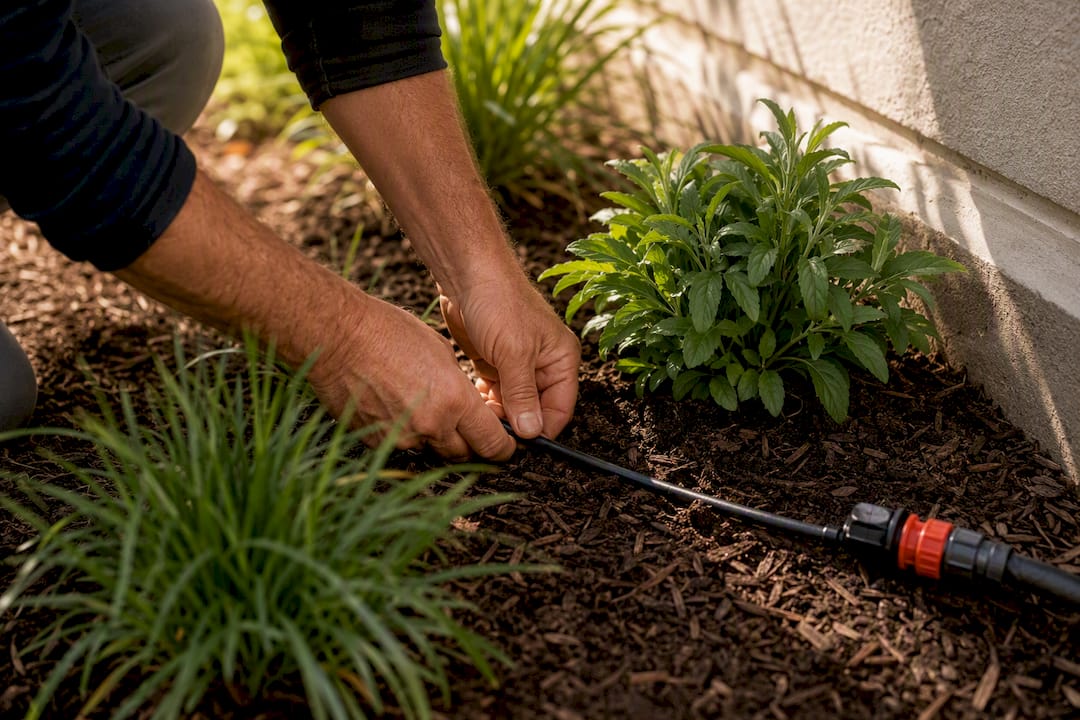
2. Install drip or subsurface irrigation with a smart controller. Overhead sprinklers lose a huge share of their output to wind drift and evaporation before it ever reaches a root. Drip lines put water exactly where plants need it, and a smart controller adjusts run times automatically as the weather changes, so you’re not out there twisting a hose bib every evening.
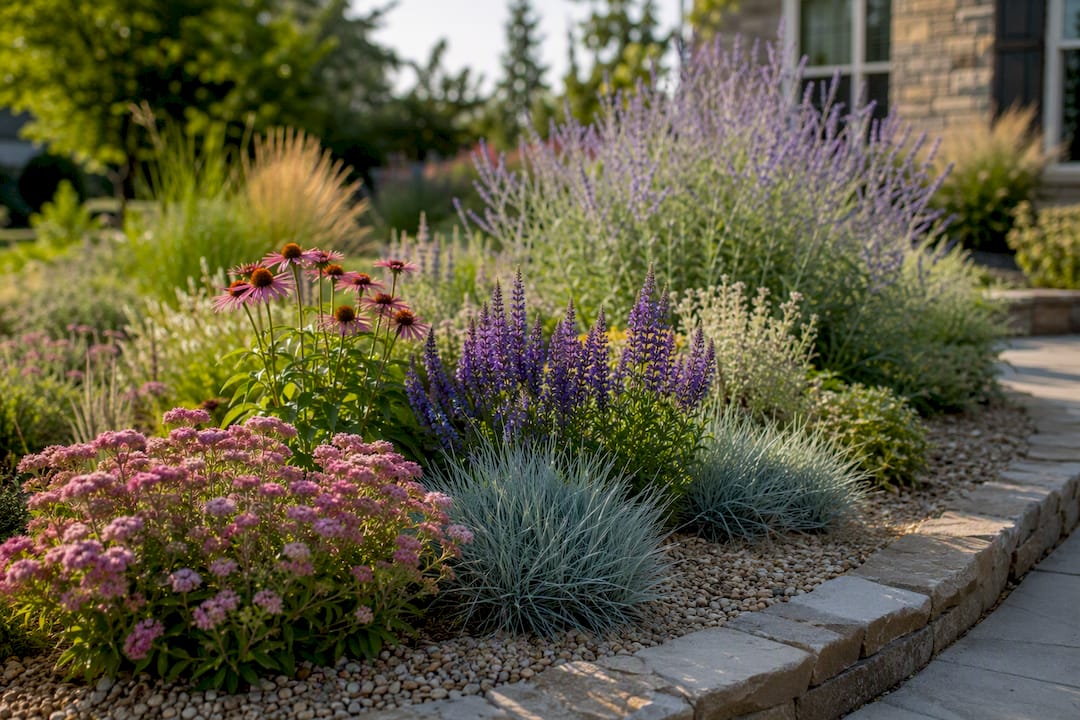
3. Mass-plant natives and ornamental grasses instead of scattered annuals. A bed with three or five of the same drought-tolerant perennial closes its canopy faster than a bed with one of everything. Closed canopy means less bare soil for weeds to colonize, according to xeriscape guidance from New Mexico State University Extension. Ornamental grasses like little bluestem or feather reed grass need only one cutback a year, not weekly attention.
Beyond those three, a handful of supporting swaps make a real difference:
- Apply 3 to 4 inches of organic mulch over every planting bed to block weed germination and slow moisture loss.
- Install metal, stone, or composite edging where beds meet lawn or walkways, so grass can’t creep back in every few weeks.
- Choose permeable hardscape (decomposed granite, permeable pavers, gravel) for paths and side yards instead of a planting bed that will need weeding.
- Define one “high-activity zone” near the house, a patio, deck, or seating area, and let everything past it run leaner and wilder.
You don’t have to redo the whole property at once. Pick one bed or one side of the yard, convert it, and live with the results for a season before moving to the next. Phasing spreads out the cost and lets you fix mistakes on a small scale instead of a big one. If you’re already thinking about outdoor living space, pairing a new deck with smarter planting around it and tends to solve two problems in one project.
Best Plants by Site Condition: Sun, Shade, Drought, Slopes, and Pots
Matching the plant to the site is what separates a yard that thrives on neglect from one that limps along needing constant rescue watering. Here’s what tends to hold up with minimal fuss, organized by the condition you’re actually working with.
Full sun and dry soil. Sedum, Russian sage, coneflower, and salvia are workhorses here, and they pair well with ornamental grasses like blue fescue or switchgrass for structure. All of these tolerate USDA hardiness zones common across most of the continental U.S. once established, though it’s worth checking your specific zone before buying.
Shade and low light. Native sedges (Carex species), hellebores, and foamflower fill shaded beds without demanding much beyond initial watering. Ferns suited to your region can round out a woodland look under trees where turf usually struggles anyway.
Groundcovers to replace patches of lawn. Creeping thyme, clumping fine fescue, native clover, and sedum mats spread to fill in gaps and choke out weeds on their own, cutting mowing out of the equation entirely for those areas.
Slopes and erosion-prone areas. Skip turf on any real slope. It’s hard to mow safely and erodes faster than it can root. Native bunch grasses and deep-rooting shrubs hold soil in place far better and need no mowing at all.
Containers. Succulent mixes and drought-tolerant perennials do well in pots, especially self-watering containers that cut down on daily attention. New plantings, in pots or in the ground, generally need consistent deep watering for 12 to 18 months while roots establish. Skipping that window is the single biggest reason drought-tolerant plants fail early.
Hardscape Materials That Eliminate Repetitive Work
The right hardscape material does the weeding for you, especially when you follow plant-safe pressure washing practices that protect your landscaping. Permeable pavers and decomposed granite both drain well, resist weed intrusion when installed with a proper base, and last for decades with only occasional upkeep, according to practical hardscape guidance from LawnsGuide. Decomposed granite costs less upfront; permeable pavers cost more but hold up better under heavy foot traffic.
River rock and organic mulch solve different problems. Rock is closer to permanent, it won’t need refreshing, but it doesn’t feed the soil the way mulch does, and it holds heat that can stress nearby plant roots in summer. Organic mulch needs a yearly top-off but keeps soil healthier over time.
A few material notes worth knowing before you commit:
- Metal or stone edging stops grass from creeping into beds, which is one of the most repetitive tasks in an unhedged yard.
- A deck or patio near the house functions as an outdoor living room, and concentrating your higher-maintenance features there keeps the rest of the yard simple. Drainage problems on an existing patio are worth diagnosing before you build anything new nearby.
- Polymeric sand in paver joints resists weed growth better than loose sand, though it needs reapplication every few years.
Pro Tip: Keep mulch pulled back 3 to 4 inches from tree trunks and shrub stems. Piled mulch against bark traps moisture and invites rot, one of the more common mistakes in otherwise well-planned beds.
Irrigation That Actually Saves You Time
Outdoor water use makes up nearly 30% of total household water consumption in the U.S., and most of that gets wasted through inefficient sprinkler systems, according to EPA WaterSense. Switching from overhead spray to subsurface drip irrigation can cut outdoor water use substantially, because drip delivers water straight to the root zone instead of spraying it into the air where wind and sun steal a chunk of it.
A few practical setup habits make the difference between a drip system that runs itself and one that needs constant troubleshooting:
- Use pressure-compensating tubing and install a filter at the source to prevent the clogging that causes most drip failures.
- Pair the system with a smart controller or basic soil moisture sensor, so watering adjusts automatically as seasons and rainfall change.
- During the establishment phase, water deeply and less often rather than lightly every day. Deep watering pushes roots downward, where they can find moisture on their own later.
Design Rules That Build Low Maintenance In From the Start
Good design does the maintenance-reduction work before a single plant goes in the ground. Three principles cover most of it:
- Hydrozoning. Group plants by how much water they need, not just by how they look together. Put thirsty plants in one cluster near the house (your “oasis” zone), moderate-water plants in a transition ring, and the toughest, most drought-tolerant plants at the outer edges, a layout borrowed directly from xeriscape zoning principles. Sketch it on paper before you dig.
- The rule of 3. Plant in odd-numbered groups of three, five, or seven rather than scattering single specimens. Mass plantings close their canopy faster, which shades out weeds and reads as intentional design instead of a hodgepodge.
- The 80/20 layout. Keep about 20% of the yard, the parts near doors, patios, and walkways, dressed up and higher-maintenance. Let the remaining 80% run leaner: native plantings, groundcover, or simple hardscape that needs almost no attention.
That’s the zone guests actually see, and getting it right early buys you patience for phasing in the rest.
A Simple Maintenance Calendar for the First Two Years and Beyond
The first 12 to 24 months are the only genuinely demanding stretch. New plants need consistent watering while roots establish, occasional staking in windy spots, and regular checks that drip emitters haven’t clogged or popped loose.
After that, the annual list gets short:
- Refresh mulch once in spring to maintain that 3 to 4 inch depth as it breaks down.
- Cut back ornamental grasses in late winter before new growth starts.
- Give shrubs one pruning pass a year rather than repeated touch ups.
- Clean irrigation filters and inspect emitters at the start and end of each growing season.
Pro Tip: If a paver patio starts settling unevenly or a drip system needs more than a filter swap to fix, that’s the point to call a professional rather than keep patching it yourself.
Cheap Swaps That Cut the Most Work
You don’t need a full renovation budget to see results. Three swaps deliver the biggest return for the least money:
- Deep mulching over bare or weedy beds, the cheapest single fix available.
- Metal edging along bed borders to stop grass encroachment for good.
- Replacing one bed of annuals, which need replanting every year, with perennials you plant once.
These pay for themselves within a season or two through saved water, saved plant replacement costs, and hours of weeding you’ll never do. Bigger jobs, irrigation design, permeable patio installation, or regrading for drainage, are worth hiring a professional for, since mistakes there tend to be expensive to undo.
Why Trust This Guide
Action Fence and Deck has spent more than 20 years building outdoor spaces with an eye toward eco-friendly materials and long-term durability, the two things that separate a yard that stays low-maintenance from one that quietly turns back into a project. Every builder on the team is licensed and insured, and every quote is free, so there’s no cost to getting a second opinion before you commit to a design.
Fixing the Soil Before You Plant Anything
Poor soil is the hidden reason so many “low-maintenance” plantings turn into constant troubleshooting. Compacted clay drains slowly and drowns roots; loose sandy soil drains too fast and starves plants of moisture between waterings. Either extreme forces you into more frequent watering, feeding, and replacement than a well-prepared bed ever would.
Before planting, work 2 to 3 inches of compost into the top 6 to 8 inches of soil. This single step improves drainage in heavy clay and improves water retention in sandy soil, tackling both extremes with the same fix. A basic soil test from your local extension office tells you pH and nutrient levels before you buy a single plant, which saves you from guessing at fertilizer needs later.
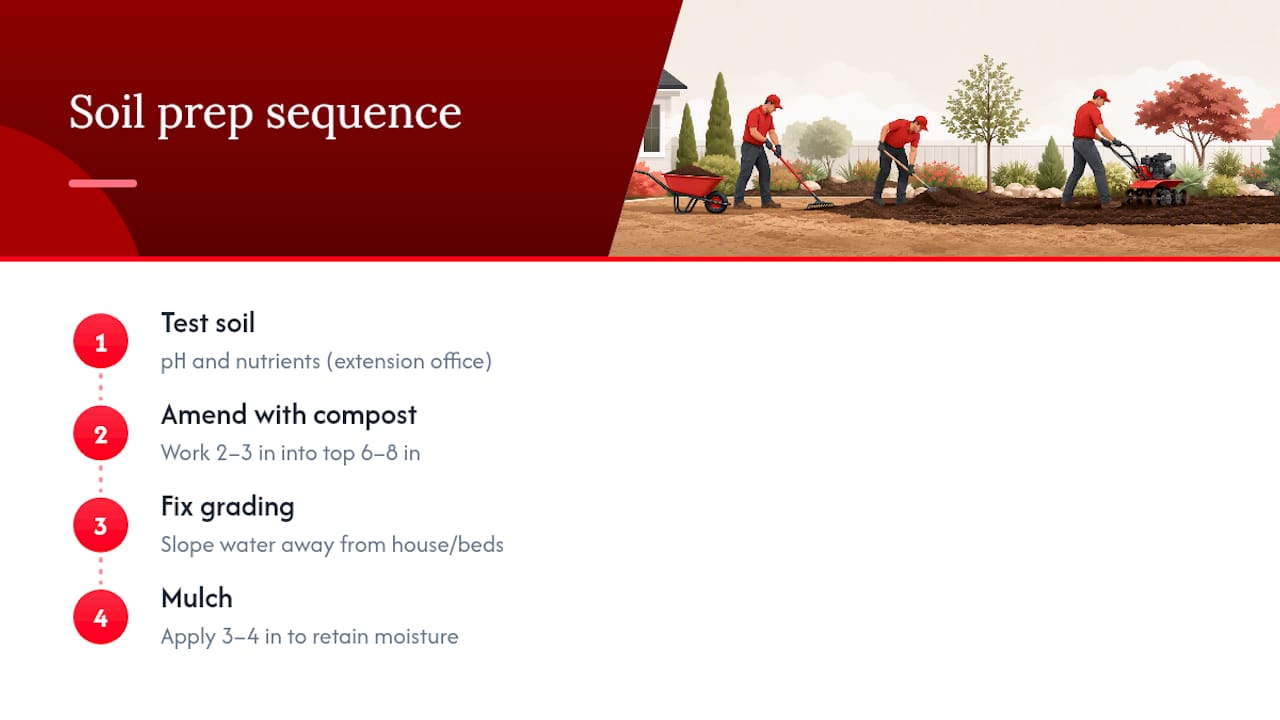
Grading matters just as much as amendment. Water should flow away from your house foundation and toward beds or a rain garden, not pool in low spots where it drowns roots or breeds mosquitoes. Fixing grade problems now costs far less than repairing root rot or a soggy patio base later.
Once soil is right, mulch does the rest of the work. A well-amended bed under 3 to 4 inches of mulch holds moisture evenly, resists compaction from rain, and needs far less babysitting than a bed planted straight into unimproved dirt.
Choosing Plants That Shrug Off Pests and Disease
The easiest pest control is picking plants that rarely get sick in the first place. Native and regionally adapted species have evolved alongside local insects and pathogens, so they tend to tolerate pressure that would devastate an imported ornamental. Coneflower, native switchgrass, and regional sedges rarely need any intervention beyond an occasional look-over.
Cultivar choice matters too. Many popular ornamentals now come in disease-resistant varieties bred specifically to resist common blights and mildews; a quick check with your local extension office or a reputable native-plant database, like the Florida Native Plant Society’s plant database for Southeastern species, points you toward the resistant strains before you buy.
Spacing plants properly when you plant them also cuts disease risk substantially. Crowded plants trap humid air against their leaves, which is exactly the environment powdery mildew and fungal blights need to spread. Give each plant the full spread it needs at maturity, even if the bed looks sparse for the first year. Choosing a variety that reaches its natural mature size also means you’ll skip years of corrective pruning down the line, since you won’t be constantly cutting it back to fit a space it’s already outgrown.
Fertilizing Less Without Losing Plant Health
Most low-maintenance landscapes need far less fertilizer than homeowners assume, and over-fertilizing is a common way to create more work, not less. Excess nitrogen pushes fast, weak growth that needs more frequent pruning and often attracts more pests than a slower-growing, properly fed plant.
Native and drought-tolerant perennials are adapted to lean native soils and usually thrive with no supplemental fertilizer at all once established. A layer of compost worked into the soil before planting, and a light mulch refresh each spring, typically supplies enough nutrients for most ornamental beds without a single bag of synthetic fertilizer.
If a soil test shows a genuine deficiency, a slow-release organic fertilizer applied once in early spring is usually enough for the whole season. Skip the summer feeding schedule most turf fertilizer programs push. Established low-maintenance plantings simply don’t need it, and less fertilizer also means less runoff into storm drains and nearby waterways.
A Contractor’s View on Where the Real Trade-offs Are
The upfront cost of drip irrigation and permeable hardscape scares people off, but that cost buys back hundreds of hours over the life of the yard. If you can only fix one thing this year, fix the water delivery. Everything else, mulch, plant choice, edging, gets easier once the irrigation stops being a chore.
— Abraham
Let Action Fence and Deck Build the Low-Maintenance Yard You Actually Want
These swaps can be turned into a built reality without you having to source materials, rent equipment, or guess at drainage slopes on your own. Permeable patios, retrofitted drip lines, durable edging, and decks that concentrate your outdoor living into that easy 20% zone are exactly the kind of work the team handles across fencing, decks, concrete, and landscaping.

DIY is genuinely fine for mulching, planting perennials, or swapping in edging yourself. Where it pays to call a pro is irrigation design, permeable paver installation, and any drainage or grading fix, the jobs where a mistake means tearing something out and starting over. Licensed, insured builders often offer free quotes, so you can find out what a conversion actually costs before committing to anything. If a new deck is part of your plan, it’s worth seeing what a properly built one looks like before you finalize the yard layout around it. Reach out for a free quote and walk through your yard with someone who builds this for a living.
Sources
- Low-maintenance landscaping tips — Texas A&M AgriLife Extension (Travis County)
- Xeriscape lessons and principles — New Mexico State University Extension
- How to design a low maintenance landscape — LawnsGuide blog
FAQ
What Is the Lowest Maintenance Landscaping?
Landscapes built around native, drought-tolerant perennials, mass plantings, and mulched or landscaped ground cover need the least ongoing work. There’s no truly maintenance-free yard, according to Texas A&M AgriLife Extension, but combining reduced lawn, drip irrigation, and heavy mulch gets closest.
What Is the Least Expensive Landscaping?
Deep mulching over existing beds, metal edging, and swapping annual flowers for perennials are the cheapest changes that still meaningfully cut maintenance. All three cost far less than hardscape or irrigation retrofits and often pay for themselves within a season or two.
What Is No-Maintenance Landscaping Called?
The closest industry term is xeriscaping, a design approach built around efficient irrigation, mulch, and drought-tolerant plants, though even xeriscaped yards need some seasonal care according to New Mexico State University Extension. “Zero-maintenance” isn’t accurate for any planted landscape; permanent hardscape comes closest to truly hands-off.
What Is the Rule of 3 in Landscaping?
The rule of 3 means planting in odd-numbered groups, typically three, five, or seven of the same species, instead of single scattered specimens. Mass plantings close their canopy faster, which crowds out weeds and cuts the time you’d otherwise spend weeding individual gaps.
How Much Does It Cost to Convert a Yard to Low-Maintenance Landscaping?
Costs vary widely depending on how much lawn you’re replacing and whether you add irrigation or hardscape, and current project pricing is best confirmed through a free quote from Action Fence and Deck. Phasing the conversion over one bed or zone at a time spreads that cost out instead of taking it on all at once.