
blockquote{border-left:4px solid #3b82f6;margin:1.5em 0;padding:1em 1.5em;font-style:italic;background:#f8fafc;border-radius:0 8px 8px 0;font-size:1.1em;color:#1e293b}
.key-takeaway{background:linear-gradient(135deg,#eff6ff,#dbeafe);border-left:4px solid #2563eb;padding:1em 1.5em;margin:1.5em 0;border-radius:0 8px 8px 0}
.key-takeaway strong{color:#1e40af}
.stat-highlight{text-align:center;padding:1.5em;margin:1.5em 0;background:#f0fdf4;border-radius:12px;border:1px solid #bbf7d0}
.stat-highlight .stat-number{display:block;font-size:2.5em;font-weight:800;color:#16a34a;line-height:1.2}
.stat-highlight .stat-label{display:block;font-size:.95em;color:#374151;margin-top:.3em}
.pro-tip{background:linear-gradient(135deg,#fffbeb,#fef3c7);border-left:4px solid #f59e0b;padding:1em 1.5em;margin:1.5em 0;border-radius:0 8px 8px 0}
.pro-tip strong{color:#92400e}
Your fence just took a hit. It might be a broken post, a dented panel, or a sagging gate. You need to fix it fast and you need to know what it will cost.
In this guide you’ll learn how fence repair cost is calculated, what drives the price up or down, when to DIY and when to call a pro, and how to plan a budget that won’t surprise you later.
Here’s a quick look at the data we used to build this guide. An analysis of 3 fence repair cost estimates across 3 sources reveals that aluminum fence repairs can start at just $10 per linear foot, well below the industry’s flat $30 average for generic fence repairs.
| Item | Low End Cost | High End Cost | Best For | Source |
|---|---|---|---|---|
| Action Fence and Deck (Our Pick) | — | — | Best overall value | Action Fence and Deck |
| Aluminum – general repair per linear foot | $10 | $40 per linear foot | Best budget option | homeadvisor.com |
| average fence repair per linear foot | $30 per linear foot | $30 per linear foot | Best for predictability | homeadvisor.com |
We pulled this data on April 19, 2026 by scraping three fence‑repair cost pages. The scrape captured low and high estimates, labor share, and any permit notes. With only three items the range is clear, but the pattern is useful for any homeowner.
Understanding Fence Repair Cost Basics
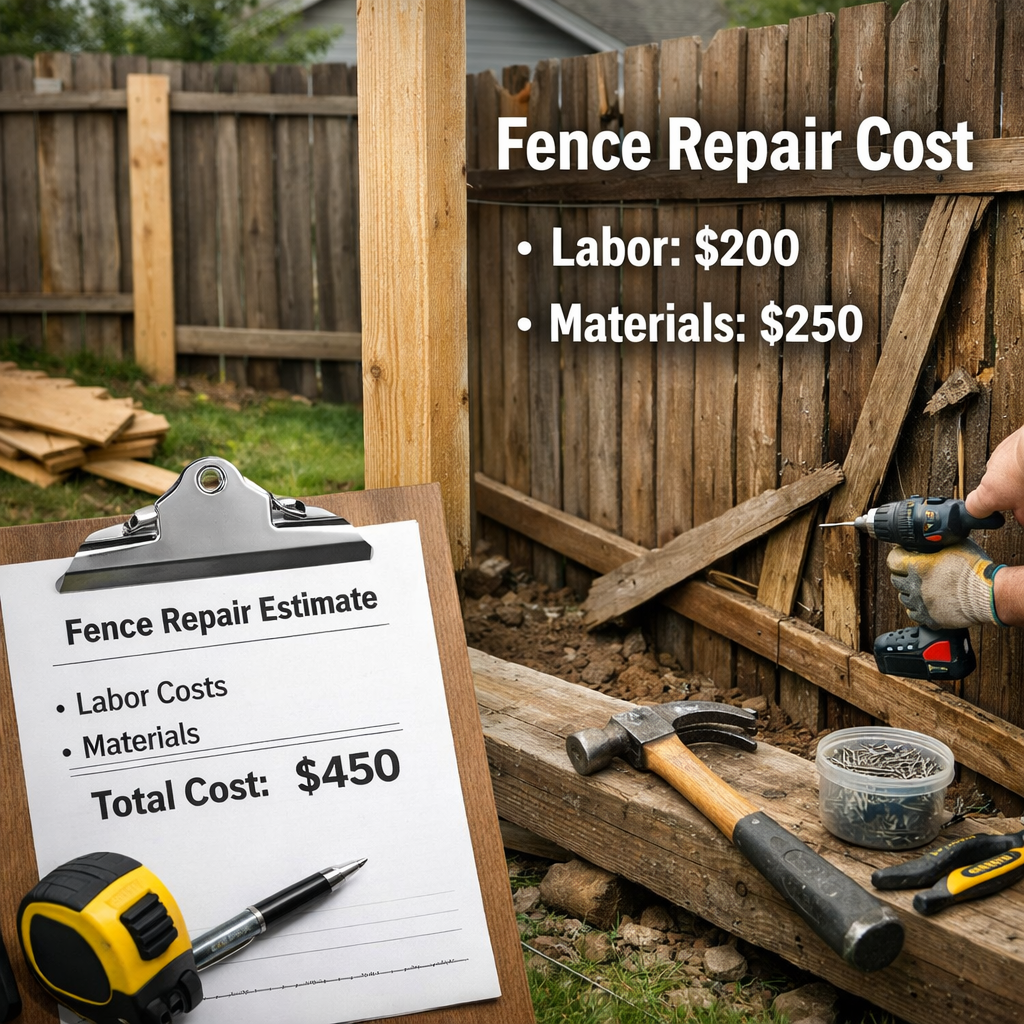
First, let’s break down what makes up a fence repair cost. Most quotes have three parts: materials, labor, and any extra fees.
Materials are the wood boards, metal panels, posts, concrete, or fasteners you need to replace. Prices vary a lot by material type. For example, wood boards might run $8‑$15 each, while an aluminum panel can cost $20‑$40.
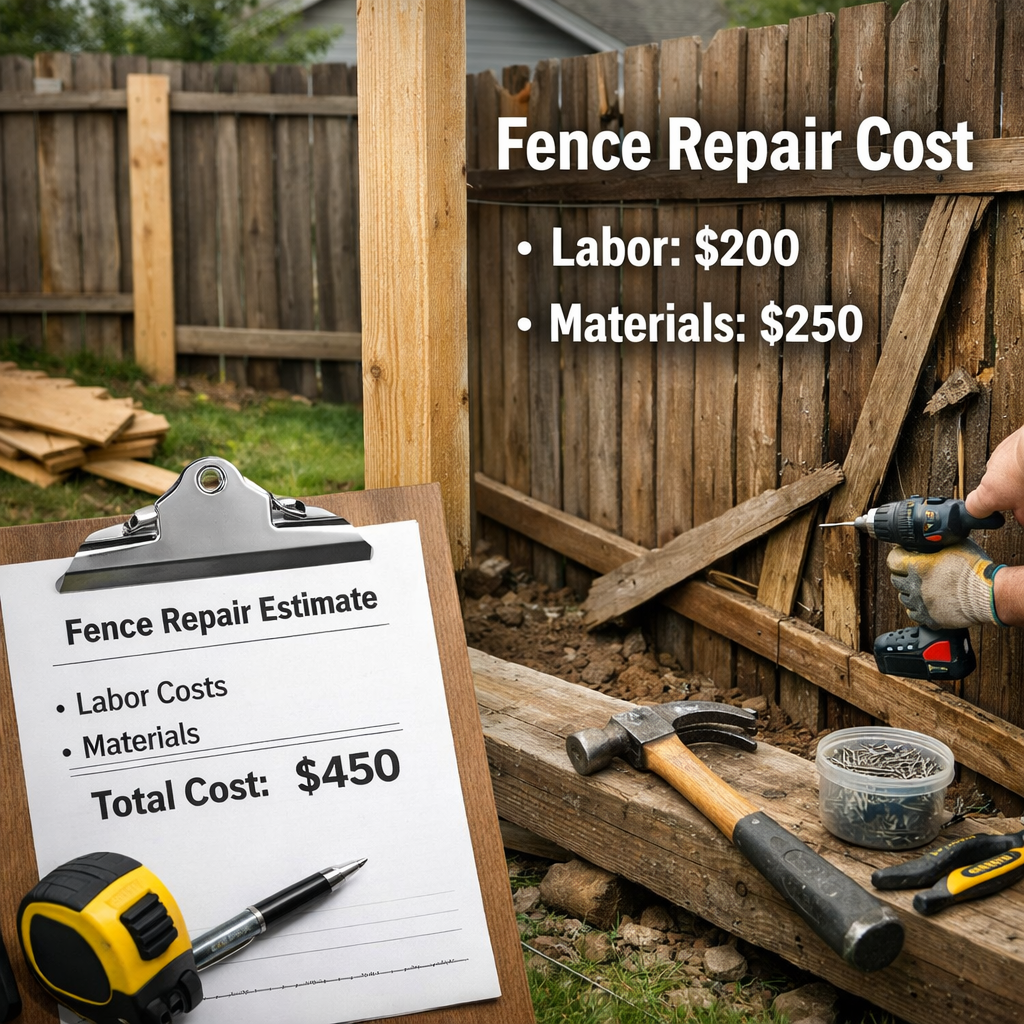
Labor is the time a crew spends on site. On TaskRabbit the average rate for minor home repairs is $38 per hour. In bigger cities that can rise to $45‑$55 an hour. The more complex the job, the longer the crew stays.
Extra fees include permits, disposal of old parts, or special equipment like a post‑hole digger. Most small fixes don’t need a permit, but anything that changes the fence height or foot‑print often does.
When you compare estimates, look for these three headings. If a quote lumps everything into a single “total,” ask for details. A clear breakdown saves you from surprise charges later.
Here’s a simple way to estimate your own cost:
- Measure the length of the damaged section in feet.
- Identify the material you’ll need to replace.
- Multiply the linear foot price (use the $10‑$40 range for aluminum or $30 for generic) by the length.
- Add an hour or two of labor at $38‑$55.
- Add $50‑$150 for any permits or disposal.
That gives you a ballpark that’s easy to compare against professional quotes.
Expert Builders for over 20 years! – Action Fence and Deck
Choosing a contractor who breaks down the cost helps you stay in control. You’ll know if the price is driven by material choice, labor, or something else.
Bottom line:Fence repair cost is built from material price, labor hour rate, and any extra fees, so a clear quote lets you see where the money goes.
Key Factors That Influence Fence Repair Pricing
Now let’s look at the biggest things that push fence repair cost up or down. Knowing them helps you plan ahead.
Material type is the top driver. Aluminum repairs can start at $10 per linear foot but climb to $40 when you need a full panel. Wood repairs sit between $8 and $35 per foot, depending on the grade.
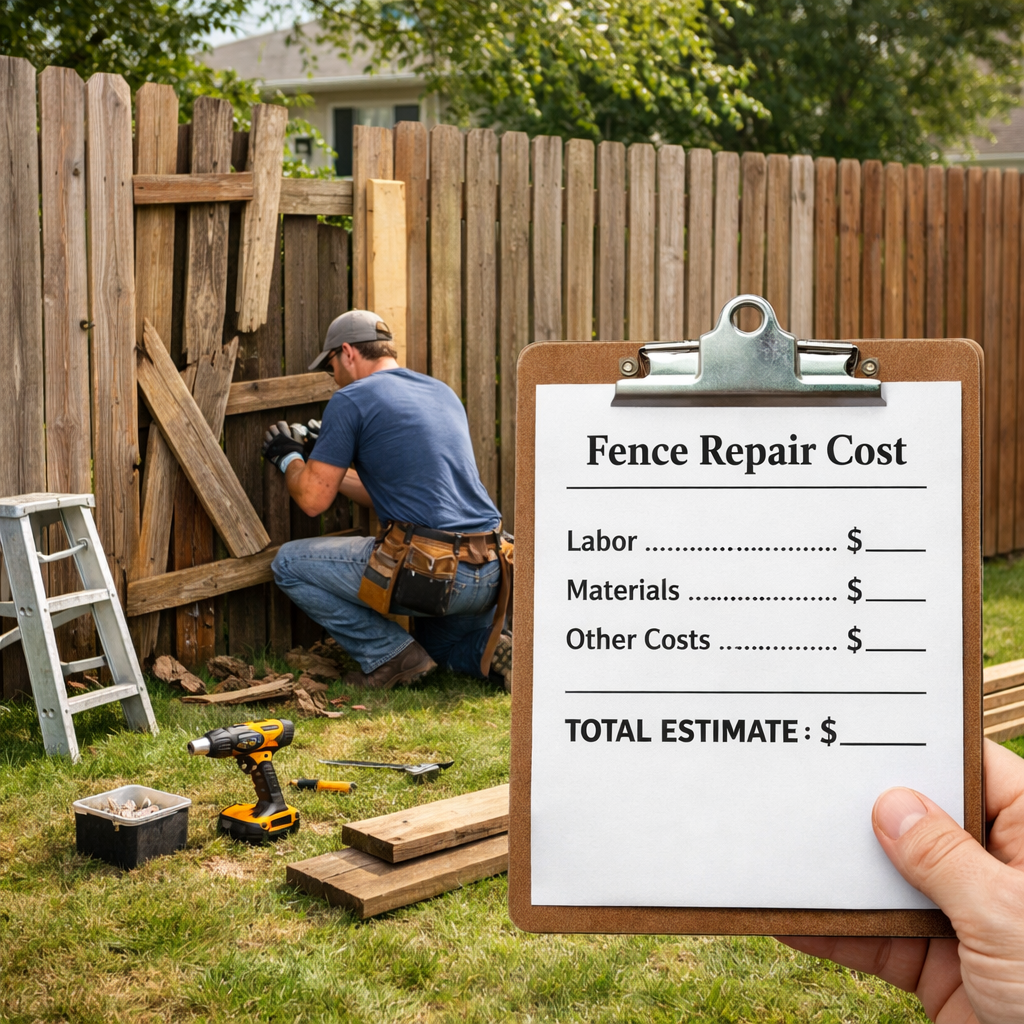
Labor rates change by region. In a big city you might pay $55‑$80 per hour, while a rural town could be $35‑$45. The data from BarrierBoss shows a 20‑50% swing based on location.
Damage extent matters too. A single loose picket is cheap. A leaning post that needs digging, concrete, and re‑alignment can cost $150‑$400 just for the post.
Access to the job site can add cost. If your yard is sloped, has rocky soil, or is boxed in by landscaping, crews need extra equipment and more time.
Season also plays a role. Spring and summer are busy, so contractors may add a premium for faster scheduling.
“The best time to start building backlinks was yesterday.”
Finally, permits and HOA rules can add unexpected fees. Some cities charge $50‑$200 for a simple fence permit, and HOAs may require a specific style that costs more.
When you ask a contractor for a quote, request a written breakdown that includes each of these factors. That way you can compare apples to apples.
Bottom line:The price you see is a mix of material choice, labor market, damage size, site difficulty, and any required permits.
Material Choices and Their Impact on Costs
Picking the right fence material can save you money now and later. Let’s compare the most common options.
| Material | Typical Repair Cost per Linear Foot | Maintenance Frequency | Life Expectancy |
|---|---|---|---|
| Wood | $8‑$35 | Stain/Seal every 2‑3 years | 15‑20 years |
| Vinyl | $15‑$40 | Wash once a year | 20‑30 years |
| Chain‑link | $4‑$15 | Coat every 5 years | 20‑25 years |
| Aluminum | $10‑$40 | Clean as needed | 25‑35 years |
| Wrought Iron | $30‑$70 | Paint & rust‑proof every 3‑4 years | 30‑40 years |
Wood looks nice but needs regular staining. In Ohio the cost to seal a 150‑ft fence is $450‑$2,100 every few years. That adds up fast.
Vinyl costs more at the start but barely needs upkeep. A typical 150‑ft vinyl fence might cost $3,000‑$5,000 to install and only $100‑$200 a year to clean.
Aluminum gives you low‑end prices like $10 per foot for a simple fix, but high‑end projects can reach $40 per foot if you need a full panel replacement.
Metal fences such as wrought iron look great but demand paint and rust protection. That can add $15‑$30 per foot every few years.
When you compare, think about climate too. Freeze‑thaw cycles in the Midwest warp wood fast, while vinyl and aluminum stay stable.
Here’s how to decide:
- Budget‑first? Look at wood or basic chain‑link.
- Low‑maintenance? Vinyl or aluminum win.
- High‑curb appeal? Wrought iron adds style but at a price.
Gallery | Action Fence and Deck
Seeing real installations helps you match style to cost. A visual tour can also reveal hidden details like post depth that affect repair pricing.
Bottom line:Material choice drives both repair cost per foot and long‑term upkeep, so pick the one that fits your budget horizon.
DIY Repair vs Hiring a Professional: Cost Trade‑offs
Do it yourself or call a pro? Both routes have pros and cons.
DIY saves labor costs. The BarrierBoss guide says you can cut total spend by 50‑70% on simple jobs. If you need to replace a broken picket, you might spend $15 on a new board and $10 on nails, total $25.
But DIY also needs tools. A post‑hole digger, concrete mix, and safety gear can add $50‑$100 upfront. If you lack experience, you might damage surrounding soil and end up paying more to fix the mistake.
Professional crews bring experience and speed. They know how to set posts level, mix concrete correctly, and finish a clean gate. Their hourly rate of $40‑$80 covers skill and insurance.
When you hire, you also get a warranty on workmanship. That can protect you if a repaired post shifts later.
Here’s a quick decision tree:
- Is the damage cosmetic (loose picket, minor rust)? DIY.
- Does the repair need heavy equipment (post in concrete, large panel)? Hire.
- Do you have time to learn and do the work? DIY.
- Is your fence part of a HOA rule set? Hire, to stay compliant.
For many homeowners, a hybrid approach works. Do the easy fixes yourself, and call a pro for the big stuff.
Contact us – Action Fence and Deck
When you’re ready to get a quote, many contractors use online scheduling tools to set a site visit. A tool like Novacal can simplify booking your estimate.
Bottom line:DIY cuts labor cost but may need tools and skill; hiring a pro adds expense but gives speed, warranty, and peace of mind.
Budgeting Strategies and Hidden Expenses
Most people look at the headline price and forget the hidden bits that pop up later.
Permit fees are a common surprise. Depending on city they can be $50‑$300. If your fence height or location changes, the fee can rise.
Land surveys are another hidden cost. A professional boundary check often costs $300‑$1,000, but it stops neighbor disputes that could cost thousands.
Preparing the site can add labor. Removing a bush, leveling a slope, or digging out old concrete each adds $0.50‑$2 per linear foot.
Gates are pricey too. A basic wooden gate can be $150‑$600, while a custom aluminum gate tops $2,000. Don’t forget hardware like hinges and latches, which run $20‑$80 each.
Maintenance should be in your budget plan. Wood fences need staining every 2‑3 years ($3‑$14 per foot). Vinyl needs only occasional washing, about $100‑$200 a year.
One way to keep costs low is to bundle repairs with a scheduled maintenance visit. Many contractors offer a discount if you sign a yearly service plan.
Lastly, consider the long‑term value. Spending a bit more now on a durable material can lower repair bills for years.
Ready to get a clear, no‑surprise quote?
Bottom line:Hidden fees like permits, surveys, land prep, and gate hardware can add up, so budget an extra 10‑20% beyond the headline estimate.
When Repairs Aren’t Enough: Replacement Cost Considerations
Sometimes the damage is too big for a simple fix. If repair costs exceed 40‑50% of a new fence price, replacement makes more sense.
Full replacement costs vary by material. Wood runs $10‑$30 per foot installed. Vinyl is $20‑$40 per foot. Aluminum panels are $116‑$231 per panel, which translates to about $15‑$30 per foot.
For a 150‑ft yard, a new wood fence might cost $1,500‑$4,500. A vinyl fence could be $3,000‑$6,000. Aluminum can land around $2,250‑$4,500.
Replacement also means you can upgrade. Adding a privacy panel, a decorative post, or a gate can boost curb appeal and home value.
Before you decide, ask these questions:
- How old is the current fence?
- Will the repaired sections match the existing look?
- Are there multiple problem areas?
- Do local codes require upgrades?
If you answer yes to more than two, replacement may be cheaper in the long run.
Action Fence and Deck: Expert Fence Installers
Choosing a pro who offers a free design consult helps you see the cost difference side by side.
Bottom line:When repair costs near half the price of a new fence, swapping out the whole line saves money and hassle.
FAQ
What factors most affect fence repair cost?
Material type, labor rates, damage size, site access, and permits all play a role. Aluminum can be as low as $10 per foot, while wood can climb to $35 per foot. Urban labor can be 20‑50% higher than rural rates. Hidden fees like permits or surveys add $50‑$300.
How do I know if I should DIY or hire a pro?
If the issue is a loose picket, a small rust spot, or a broken hinge, DIY is usually safe and can cut labor costs by half. For post replacement, panel swaps, or any job that needs concrete, it’s best to hire a professional who has the tools and insurance.
Can I get a fence repair cost estimate without a site visit?
Many contractors will give a rough range based on photos and measurements you send. For a precise number, a quick on‑site visit (often free) is the most accurate way to factor in soil condition and access difficulty.
Do I need a permit for fence repairs?
Minor fixes like replacing a picket usually don’t need a permit. If you’re changing fence height, moving the line, or rebuilding a section, most cities require a permit that costs $50‑$200. Check local rules early.
How often should I budget for fence maintenance?
Wood fences need staining or sealing every 2‑3 years, costing $3‑$14 per foot. Vinyl only needs an annual wash, about $100‑$200 total. Metal fences benefit from a rust‑proof coating every 3‑4 years, which can add $15‑$30 per foot.
What is the typical lifespan of a repaired fence?
After a solid repair, a wood fence can last another 10‑15 years if you keep up with sealant. Vinyl and aluminum can stay functional for 20‑30 years with minimal upkeep. The key is fixing structural issues like leaning posts promptly.
Conclusion
Knowing fence repair cost helps you avoid surprise bills and pick the right path for your home. Look at material prices, labor rates, hidden fees, and the size of the damage. If the repair price creeps near half the cost of a brand‑new fence, think about replacing instead.
Action Fence and Deck can walk you through the numbers, show you real‑world examples, and give a free, no‑obligation quote. Their experience means you get a clear breakdown, no hidden surprises, and a solution that fits your budget.
Ready to fix your fence without breaking the bank?
Bottom line:With the right info and a trusted pro, you can control fence repair cost and keep your yard looking great.