A board-on-board fence uses overlapping vertical boards mounted to rails, so neither side shows a gap and both faces look finished. It fits homeowners who want near-total privacy and strong curb appeal on both sides of the property line. The tradeoff is a somewhat higher material cost and heavier structural demands than a single-board fence.
TL;DR:
- Pressure treated pine has the lowest upfront cost but needs diligent maintenance; cedar and redwood resist decay, while tropical hardwoods last longest and cost most.
- For treated lumber, use galvanized framing hardware and 304 stainless steel picket fasteners; choose 316 stainless steel in coastal or highly corrosive settings.
- In high wind zones, consider 6 by 6 inch posts, closer spacing, or engineered bracing instead of a standard two rail layout.
- Confirm height limits, permits, setbacks, and property boundaries with the local building department and a current survey before digging post holes.
- Protect each post base with gravel, a moisture barrier, and a collar that slopes away; seal fresh cuts promptly and inspect fasteners annually.
Table of Contents
- What sets a board-on-board fence apart from other styles
- Why homeowners choose board-on-board for privacy and curb appeal
- Choosing materials that match your budget and climate
- How a board-on-board fence goes together
- Where board-on-board fences fall short
- Checking permits, setbacks, and property lines first
- Protecting the post base and extending service life
- What a thorough board-on-board bid should include
- When board-on-board earns its higher price tag
- Get a free quote for your board-on-board fence
- FAQ
- Sources
What sets a board-on-board fence apart from other styles
A board-on-board fence staggers pickets on front and back rails so each board overlaps the gap behind it, closing every sightline from either side. That overlap is what separates it from a stockade fence, where boards butt edge to edge on one plane, and from a shadowbox fence, which alternates boards on opposite sides of the rail with a deliberate gap for partial visibility.
Homeowners choosing between styles usually weigh these points:
- Stockade costs less and uses fewer boards but only looks finished from one side.
- Shadowbox allows airflow and a shared look with neighbors but sacrifices full privacy.
- Board-on-board (sometimes called a good neighbor fence) costs more upfront but gives both households a matching, finished face.
The good-neighbor variant matters most on shared property lines, where one owner’s “back” is literally the other’s front yard view.
Why homeowners choose board-on-board for privacy and curb appeal
The overlap pattern blocks direct sightlines from any straight-on angle, which is the main reason this style dominates privacy-fence searches. Because both faces show finished boards rather than rails and posts, neighbors on either side get the same clean appearance, a detail that matters on shared lot lines and in subdivisions with uniform exterior standards.
The design also leaves narrow gaps where boards overlap rather than one solid wall. That slight airflow reduces snow drifting against the fence line and tempers microclimate swings near plantings, compared with a solid stockade panel, according to extension service design guidance on fence facing details.
- Full privacy from both yards, not just one.
- Reduced snow drift and milder microclimate extremes near the fence line.
- A finished look that tends to read as a higher-value yard feature.
Board-on-board and alternate-board designs are recommended by extension researchers for both aesthetic value and the airflow benefits they offer over solid stockade panels, per the NDSU fence facing research.
Choosing materials that match your budget and climate
Species selection drives both lifespan and labor cost. Pressure-treated pine is the budget baseline and holds up well when the post base is engineered correctly. Cedar resists rot and insects naturally and machines cleanly, which keeps labor time down. Redwood offers similar natural decay resistance with a different grain and color. Tropical hardwoods last longest but cost more per board foot and are harder on blades and fasteners during installation.
Preservative chemistry affects hardware choice as much as species does. Modern pressure-treated lumber uses ACQ or MCA preservatives that are more corrosive to standard steel than older treatments were, so fastener selection is not optional, according to wood fence durability analysis. Using the wrong hardware against treated lumber is a common DIY mistake that shows up as rust streaks and loosened boards within a few seasons.
When budgeting, think in terms of installed cost per linear foot plus expected years of service rather than sticker price alone. A cheaper species that needs replacement sooner can cost more annualized than a pricier one that lasts decades. Our wood fence cost guide breaks down typical cost ranges by material and height for board-on-board builds.
- Pressure-treated pine: lowest upfront cost, shortest lifespan without diligent maintenance.
- Cedar or redwood: moderate cost, strong natural decay resistance, less upkeep.
- Tropical hardwoods: highest cost, longest service life, harder to work with.
How a board-on-board fence goes together
Construction follows a predictable sequence, and each step affects how long the fence lasts.
- Set posts deeper than the local frost line, with gravel underneath for drainage.
- Attach rails, typically two for a standard-height fence, three for taller or wind-exposed runs.
- Hang the first layer of pickets on one face, spaced evenly along the rail.
- Overlap the second layer on the opposite face, centered over the gaps left by the first layer.
- Fasten with hardware matched to the lumber treatment.
Post holes should go a few inches deeper than frost depth with roughly 6 inches of washed angular gravel at the bottom, a detail wood fence durability guidance ties directly to preventing premature post rot. Hot-dipped galvanized hardware handles framing connections, while 304 stainless steel suits exposed picket fasteners above ground, stepping up to 316 stainless in coastal or high-corrosion settings. A weekend crew of two can typically set and board a standard residential run in a few days, though post curing time adds to the overall timeline before staining.
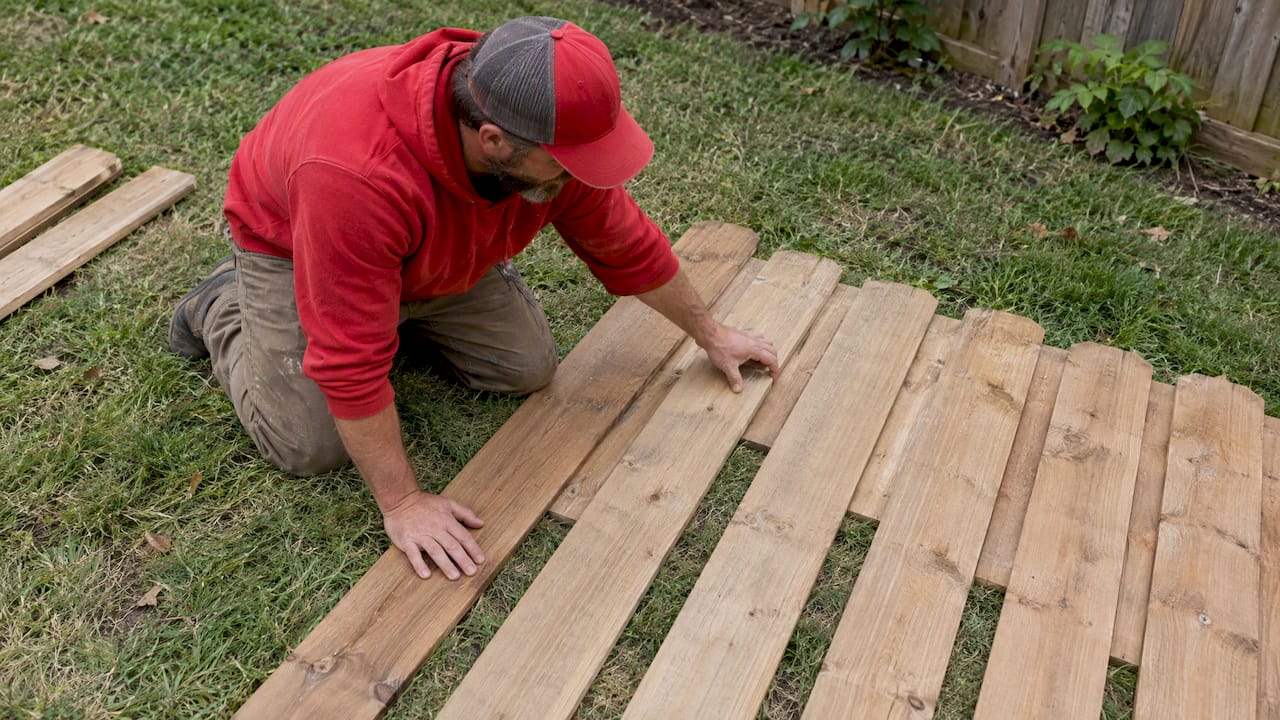
Pro Tip: Dry-fit your picket spacing on the ground before fastening anything, so overlap gaps land evenly without a last board that looks pieced in.
Where board-on-board fences fall short
The double layer of boards means more weight and more surface area catching wind than an open-picket design, which raises wind load on posts and footings in exposed yards. On tight budgets, that can mean upsizing posts or adding bracing that a simpler fence style would not need.
Maintenance is real, not occasional. Expect a stain or seal cycle every few years depending on sun and moisture exposure, periodic fastener checks as wood swells and shrinks seasonally, and the occasional visible gap when boards cup or shift, usually most noticeable from an oblique angle rather than straight on.
- Heavier wind load than single-layer fences, especially in open or elevated lots.
- Recurring stain and fastener maintenance to prevent loosening and water intrusion.
- Board cupping over time can open small sightlines at an angle.
Homeowners in high-wind zones often move from standard 4×4 posts to 6×6 posts, tighten post spacing, or request engineered wind-resistant specs rather than relying on a stock two-rail layout.
Checking permits, setbacks, and property lines first
Most municipalities require a permit once a fence passes a certain height, and the process usually calls for a site plan or recent survey. Portland’s permitting guidance, for example, requires a building permit for wood fences taller than 7 feet and outlines when setback or structural review applies.
Before digging a single post hole, work through this list:
- Call your local building department to confirm height limits and whether a permit applies to your project.
- Order or locate a recent property survey to confirm exact boundary lines and pin locations.
- Flag any pool, corner-lot, or easement rules that trigger stricter setback requirements.
- File for a permit if your height or location crosses a local threshold.
Skipping the survey step is the most common way a fence ends up a few inches over the property line, a problem that is far cheaper to catch before construction than after.
Protecting the post base and extending service life
Post-base failure, not picket rot, is the leading cause of premature fence replacement, according to wood fence durability analysis. The same source recommends gravel at the bottom of the hole, a moisture barrier sleeve or bituminous coating around the buried portion of the post, and a concrete collar sloped away from the post so water does not pool against the wood.
Seal any end grain exposed by on-site cuts promptly, since raw cut ends absorb moisture far faster than factory-sealed board faces. Build a simple inspection habit around these checks:
- Gravel base and moisture barrier at every post, not just corner posts.
- Sloped concrete collar that sheds water away from the post.
- Fresh sealant on any cut end the same day it is made.
- Annual walk-through to catch loose fasteners or early cupping before they spread.
Pro Tip: Replace a single rotting post the season you spot it. Waiting a year almost always turns one repair into a multi-post rebuild.
See our wood fence maintenance checklist for a full seasonal schedule.
What a thorough board-on-board bid should include
Custom wood fencing, decks, retaining walls, and concrete work with a focus on sustainable materials and techniques include board-on-board privacy fences, valued for the finished look on both sides and the privacy they deliver.
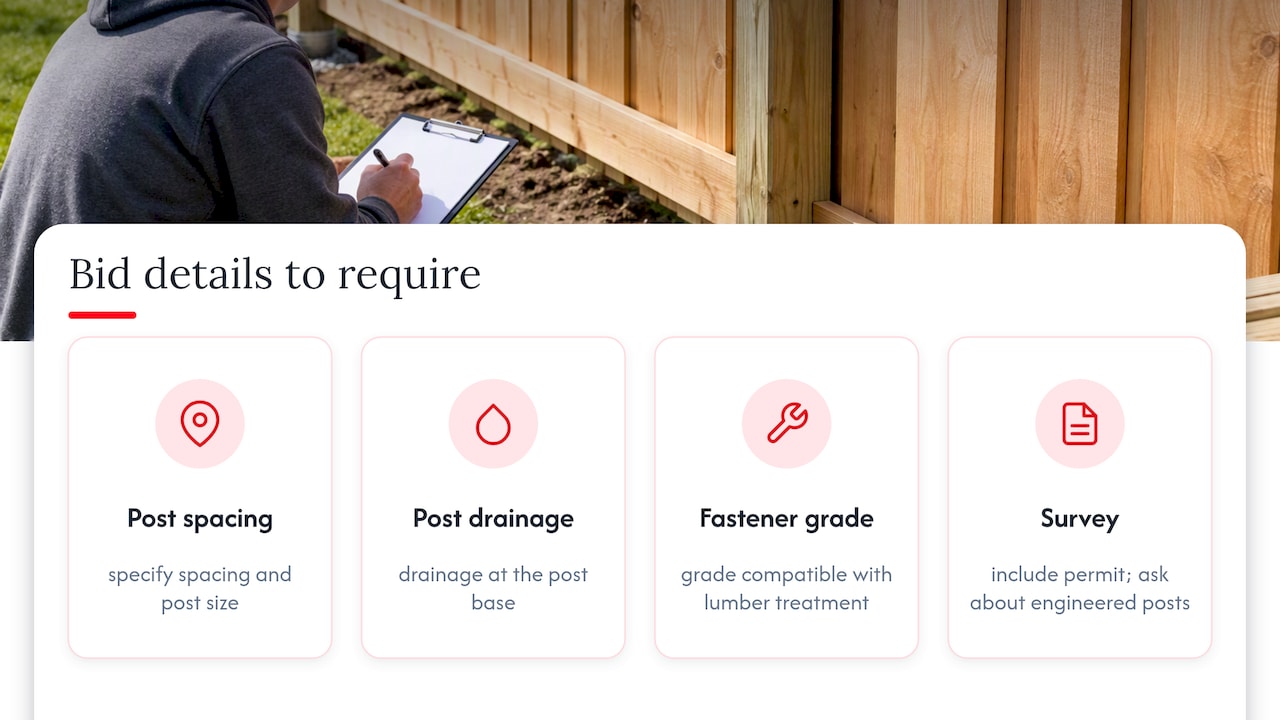
A bid worth signing should spell out post spacing and size, drainage details at the post base, the fastener grade specified for the lumber treatment, and whether a survey or permit filing is included in the scope. Vague bids that skip these specifics tend to produce the maintenance headaches described earlier. If your run crosses a pool barrier or an exposed, high-wind lot, ask the bidder directly how they handle engineered post specs and bracing.
When board-on-board earns its higher price tag
Board-on-board makes the most sense for homeowners who plan to stay put for a decade or more and who weigh a finished, private yard as worth the extra material and labor cost. On a shorter time horizon or tighter budget, pressure-treated pine with disciplined maintenance gets most of the benefit. On a longer horizon, cedar or a tropical hardwood pays off in fewer repairs and a longer stretch before replacement.
— Abraham
Get a free quote for your board-on-board fence
A full board-on-board installation involves custom wood fencing, gate work, concrete and masonry for post footings, and handling of permit paperwork that can be challenging for many DIY projects. If your project touches a pool barrier or a property-line fence shared with a neighbor, we can also coordinate survey confirmation before the first post goes in.

A free quote from our fencing solutions page typically covers post and rail specs, material options, and a drainage plan for your post bases. Have your property survey, a rough sketch of the fence line, and a few photos of the yard ready, and we can turn that into a transparent price fast. For readers tackling smaller custom woodwork alongside a fence project, WoodMade Illinois also handles built-in carpentry work in Central Illinois.
FAQ
What does board on board fence mean?
A board-on-board fence overlaps vertical boards on both faces of the rail, so there is no straight sightline through the fence from either side. The result is full privacy and a matching finished appearance on both the front and back.
Is board on board fence more expensive?
Yes, a board-on-board fence typically costs more than a single-layer stockade fence because it uses roughly twice the picket material for the same linear footage. The cost difference varies by species and labor rates, and our wood fence cost guide breaks down typical ranges by material.
What are the downsides of a board-on-board fence?
The extra board layer adds weight and wind load, which can require stronger posts or added bracing in exposed yards. It also demands more upkeep over time, including periodic staining and fastener checks, and boards can cup slightly, opening small sightlines at an angle.
How to fasten board on board fence?
Framing connections at the posts and rails typically use hot-dipped galvanized hardware, while exposed picket fasteners call for 304 stainless steel, stepping up to 316 stainless near coastal or high-corrosion environments. Matching fastener grade to the lumber’s preservative treatment prevents the corrosion and loosening that shorten a fence’s service life.
Sources
- Portland
- Wood Fence Durability: Species Lifespans and Decay Failure Modes | BuildMat Insight
- Design or Fence facing detail (NDSU extension material)