
For most homeowners planning a build this year, the material family matters more than the brand name on the board. If your deck sits in full sun, near a pool, or anywhere moisture collects, favor a fully non-wood core, PVC or mineral-based composite, over a standard wood-fiber composite. If your priority is a natural wood look at a fair price, a 4-sided capped composite is the better fit. PVC and mineral cores resist water absorption almost completely and carry the longest structural warranties on the market. Capped composites close the gap in appearance without matching that moisture performance.
- Wet, coastal, or poolside site: PVC or mineral-based core
- Hot climate or dark color preference: PVC with heat-management technology
- Balanced budget and realistic wood look: 4-sided capped composite
- Next step: request a free on-site quote from Actionfenceanddeck to confirm which family fits your joists, span, and budget.
Key Takeaways
Non-wood core composites (PVC or mineral) win for wet, hot, or coastal sites, while 4-sided capped composites offer the best balance of appearance and cost for moderate conditions, and professional installation protects both structural performance and warranty coverage.
| Point | Details |
|---|---|
| Match material to site | Choose PVC or mineral core for wet, hot, or coastal sites; capped composite for balanced budgets. |
| Check warranty structure | Confirm whether structural and fade coverage differ, and whether installation requirements apply. |
| Budget for installed cost | Expect $38 to $75 per square foot installed depending on material family and site complexity. |
| Installation quality decides lifespan | Correct joist spacing and manufacturer fasteners prevent sagging and protect warranty claims. |
| Hire a licensed installer | Actionfenceanddeck’s licensed, insured crews install to manufacturer spec and offer free on-site quotes. |
Table of Contents
- What Matters When Choosing the Best Composite Decking for 2026
- PVC, Capped Composite, or Mineral Core: Which Fits Your Site?
- Which Composite Decking Works Best for Your Situation?
- Why Installation Quality Decides How Long Your Deck Lasts
- What Does Composite Decking Cost Installed in 2026?
- The Real Verdict on Choosing Composite Decking This Year
- Get a Free Quote From a Crew That Installs to Warranty Spec
- Sources
- FAQ
What Matters When Choosing the Best Composite Decking for 2026
Specs on a sample board rarely tell you how a deck performs after five Michigan winters or five Arizona summers. Four factors separate a smart purchase from a costly redo.
- Warranty structure. Most manufacturers split coverage into a structural warranty (against rot, splitting, and structural failure) and a fade-and-stain warranty (often shorter and prorated after year one). Read whether the warranty transfers to a new homeowner if you plan to sell, and check whether it requires manufacturer-approved fasteners and ventilation to stay valid.
- Physical performance. Look at water absorption rate, surface temperature in direct sun, resistance to flexing between joists, and slip resistance when wet. Consumer Reports’ multi-year testing evaluates exactly these traits, and the boards that score well balance strength with weather resistance rather than excelling at just one.
- Appearance and hardware. Confirm color range, whether the board uses a hidden-fastener groove system, and whether matching fascia, stair treads, and railing are available in the same finish.
- Installed cost versus board price. A board that looks affordable per linear foot can end up mid-pack once you add labor, fasteners, and freight.
Statistic: Installed composite decking in 2026 typically runs $38 to $75 per square foot depending on material family and finish level, a wider spread than most homeowners expect when they start pricing a project from board cost alone.
PVC, Capped Composite, or Mineral Core: Which Fits Your Site?
Three material families dominate the 2026 market, and each solves a different problem.
Full PVC contains no wood fiber at all, which makes it fully waterproof and the coolest option underfoot when paired with heat-reflective color technology. Flagship PVC lines carry structural warranties as long as 50 years, the longest in the category, but that protection comes at the highest upfront board cost. This is the family to choose for a pool deck, a coastal property, or a south-facing patio that bakes all afternoon.
4-sided capped composite wraps a wood-fiber core in a protective polymer shell on all four sides, rather than just the top and edges. That full wrap is what separates a durable capped board from an older-style composite that lets moisture creep in through an exposed bottom face. These boards deliver the most convincing wood grain texture on the market and sit in the middle of the price range, which is why they dominate the “best value” conversation.
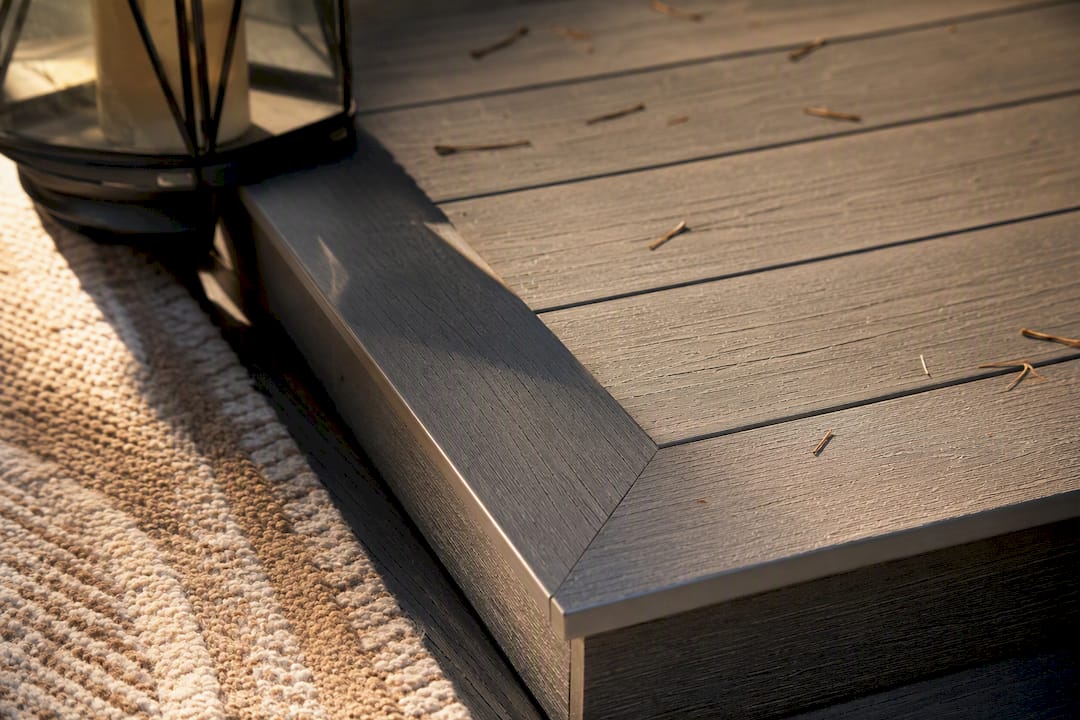
Mineral-based and solid-core boards use limestone or other mineral fillers instead of wood fiber, which gives them near-zero water absorption and noticeably lighter weight than PVC. They perform well in ground-contact applications and wet climates where a wood-fiber core would be a liability even with capping.
Pro Tip: If you’re comparing two capped composites and one lists “4-sided capping” while the other only mentions capping on the top and sides, that’s not a minor spec difference. Three-sided caps leave the board’s underside exposed, and that’s where moisture does the most damage over a decade of seasonal cycles.
Use this quick filter to match a family to your priority:
- Chasing resale value in a wet climate: mineral core or PVC
- Chasing the most realistic wood grain on a moderate budget: 4-sided capped composite
- Chasing the lowest total cost over 25 years: PVC, despite higher upfront cost, due to warranty length and near-zero maintenance
Which Composite Decking Works Best for Your Situation?
Site conditions and budget narrow the field faster than any spec sheet.
- Hot, sun-exposed decks. Choose a light-colored PVC board with heat-management technology. Surface temperatures vary significantly by material and color, and a dark capped composite in direct sun can run uncomfortably hot underfoot by midafternoon, even when the same board performs fine in partial shade.
- Poolside and coastal properties. Non-wood cores win here without much debate. Salt air and constant splash exposure punish any product with wood fiber close to the surface, so PVC or mineral-based options with ground-contact or submerged-use approval are worth the premium.
- Budget-conscious builds. Entry-level wood-fiber composites with partial capping still outlast pressure-treated lumber on maintenance, but they trade some moisture resistance for a lower price. A 4-sided capped composite in the mid-tier range is usually the better long-term value than the cheapest option on the shelf.
- Premium, showcase decks. PVC flagship lines or high-end 4-sided capped composites with wide color and texture selections deliver the closest match to natural hardwood, with the warranty to back it for decades.
- Shaded decks with less sun exposure. Heat and UV fading matter less here, which opens up more budget-friendly capped composite options without sacrificing much practical performance.
On the DIY-versus-pro question, the honest answer depends on what’s at stake. A small ground-level platform is forgiving territory for a confident DIYer. A raised deck with stairs, railing, or spans over 12 feet is a different story: incorrect joist spacing or the wrong fastening system is one of the most common reasons composite decks sag or fail early, and most manufacturers will deny a warranty claim if the installation doesn’t match their published specs. Hiring a licensed installer protects both the structure and the paperwork behind it.
Quick decision checklist before you commit:
- Site exposure (sun, water, shade) narrows your material family
- Budget determines whether you land in entry, mid-tier, or premium
- Span and structural complexity determines whether this is a DIY job or a pro job
- Warranty terms determine whether professional installation is required to keep coverage valid
Why Installation Quality Decides How Long Your Deck Lasts
The best board on the market can still fail within a few years if it goes down wrong. Joist spacing, adequate support under heavy furniture or hot tubs, correct fastener systems, and proper ventilation underneath the boards are not optional details, they’re the difference between a deck that lasts three decades and one that needs rework in five years.
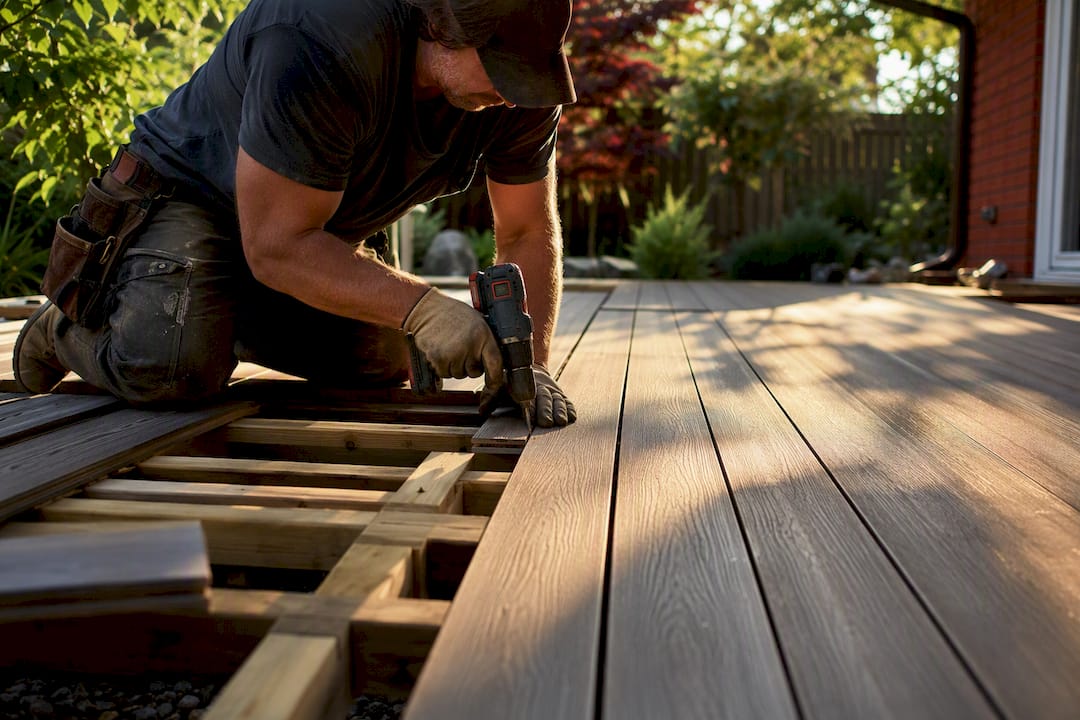
Consumer Reports found that composites resist staining better than natural wood but can be more prone to flexing when they’re not properly supported, which puts joist spacing squarely at the center of long-term performance rather than at the bottom of a checklist. Testing organizations and professional installers agree on this point consistently: manufacturer-specified fastening systems and correct span ratings are decisive, and skipping them is one of the most common causes of premature sagging and voided warranties.
Actionfenceanddeck has built decks, fences, and outdoor structures for over 20 years, with licensed and insured crews who install to manufacturer specification rather than cutting corners on span or fastener choice. That matters when it’s time to register a warranty, since most manufacturers ask for proof of proper installation before honoring a structural claim.
If you’re vetting any contractor for this kind of project, ask these questions before signing anything:
- Are you licensed and insured for the scope of this project?
- Can you show manufacturer certification or documented experience with this specific product line?
- Will you handle warranty registration paperwork, or is that on me?
- Can I see photos or visit a past install similar to what I’m planning?
Pro Tip: Ask any contractor for their joist spacing plan before the quote is finalized, not after the deposit is paid. A vague answer here is a red flag no warranty can fix later.
What Does Composite Decking Cost Installed in 2026?
Board price is only part of the number that matters. Installed cost, which includes labor, fasteners, framing, and finishing, is what determines your real budget.
- Entry-tier wood-fiber composite: typically lands at the lower end of the $38 to $75 per square foot installed range, with the final number depending heavily on local labor rates and site prep.
- Mid-tier 4-sided capped composite: sits in the middle of that band, reflecting both a higher board cost and often more detailed fastener systems.
- Premium PVC or mineral-core decking: lands at the top of the range, driven by board price and, in many cases, longer warranty registration requirements that call for more careful documentation during install.
Several factors push a quote toward the upper end of any band: demolition of an existing structure, railing systems, stairs, specialized hidden-fastener hardware, freight costs on premium materials, and permit-related labor. A deck with stairs and railing on a sloped lot will always cost more per square foot than a simple ground-level rectangle, regardless of which board you choose.
Warranty length should factor into your cost math the same way energy efficiency factors into an appliance purchase. A board with a 50-year structural warranty that costs 20% more upfront can beat a cheaper option that needs partial replacement in year 15. When comparing bids, look at total cost, meaning materials, labor, and whether the contractor handles warranty registration, not just the line-item board price.
A quick estimating formula: multiply your deck’s square footage by the low and high end of your target material band to get a rough range, then request an on-site quote to account for framing, railing, and site-specific labor. Actionfenceanddeck’s deck replacement cost guide breaks down these variables in more detail if you want to run your own numbers before calling anyone.
The Real Verdict on Choosing Composite Decking This Year
If you’re building near water, in full sun, or anywhere moisture lingers, a non-wood core, PVC or mineral, is worth the premium. If your site is moderate and your priority is realistic wood grain at a fair price, a 4-sided capped composite gets you there. Neither choice holds up long-term without correct joist spacing and manufacturer-approved fastening, which is exactly why the installer matters as much as the board.
Actionfenceanddeck’s licensed crews install to spec and handle warranty documentation so that decision doesn’t come back to bite you in year eight. Request a free on-site quote and get a straight answer on which material family actually fits your deck replacement project.
Get a Free Quote From a Crew That Installs to Warranty Spec
Picking the right board matters, but a warranty is only as good as the installation behind it. Actionfenceanddeck’s licensed and insured crews have installed decks, fences, and outdoor structures for over 20 years, and every job is built to the joist spacing and fastening specs each manufacturer requires to keep your warranty intact.

That’s the gap most homeowners don’t see coming: a board with a 50-year warranty means nothing if the installer skipped a support requirement buried in the fine print. Actionfenceanddeck handles that detail on every project, from a straightforward ground-level platform to a raised deck with stairs and railing, and provides free, transparent quotes so you know your total cost before committing to a material family. If you’re ready to move from research to a real plan, check out Actionfenceanddeck’s services or request a free on-site quote through the deck replacement cost guide to get pricing specific to your site and material choice.
Sources
FAQ
Which Brand of Composite Decking Is Considered the Best?
No single brand wins across every situation. Material family, PVC, mineral core, or 4-sided capped composite, determines performance more than brand name, so the better question is which family fits your site and budget.
Is TimberTech or Trex Better?
Both are established composite decking manufacturers, and the meaningful difference is usually the specific product line rather than the brand overall. PVC flagship lines from either brand tend to carry longer structural warranties, while capped composite lines from either brand offer wider color ranges at a lower price point.
What Is the Best Decking Material for 2026?
For wet, hot, or coastal sites, non-wood cores (PVC or mineral) offer the strongest moisture and heat performance. For a balanced budget with realistic wood-grain appearance, a 4-sided capped composite is typically the better fit.
How Do I Know If My Deck Needs a Professional Installer?
Any deck with spans over 12 feet, stairs, railing, or a warranty that requires proof of proper installation should go to a licensed contractor. Improper joist spacing is a leading cause of sagging and voided warranty claims, according to Consumer Reports testing.
Does Actionfenceanddeck Install Composite Decking?
Yes. Actionfenceanddeck’s licensed and insured crews install composite decks to manufacturer specification and offer free on-site quotes to help homeowners choose the right material family for their site and budget.