blockquote{border-left:4px solid #3b82f6;margin:1.5em 0;padding:1em 1.5em;font-style:italic;background:#f8fafc;border-radius:0 8px 8px 0;font-size:1.1em;color:#1e293b}
.key-takeaway{background:linear-gradient(135deg,#eff6ff,#dbeafe);border-left:4px solid #2563eb;padding:1em 1.5em;margin:1.5em 0;border-radius:0 8px 8px 0}
.key-takeaway strong{color:#1e40af}
.stat-highlight{text-align:center;padding:1.5em;margin:1.5em 0;background:#f0fdf4;border-radius:12px;border:1px solid #bbf7d0}
.stat-highlight .stat-number{display:block;font-size:2.5em;font-weight:800;color:#16a34a;line-height:1.2}
.stat-highlight .stat-label{display:block;font-size:.95em;color:#374151;margin-top:.3em}
.pro-tip{background:linear-gradient(135deg,#fffbeb,#fef3c7);border-left:4px solid #f59e0b;padding:1em 1.5em;margin:1.5em 0;border-radius:0 8px 8px 0}
.pro-tip strong{color:#92400e}
Fence prices can surprise you. Some cheap fences end up costing more because of permits. This guide shows you why fence installation cost can jump and how to keep it low.
We looked at 16 fence options from 5 sites. We pulled material fees, permit ranges and total cost per foot. The data was collected on 2026-04-18. Below is the exact table we used.
| Material | Permit Fee Range | Total Avg Cost per Linear Foot | Details | Best For | Source |
|---|---|---|---|---|---|
| Action Fence and Deck (Our Pick) | — | — | — | Best overall value | actionfenceanddeck.com |
| Steel | $20-$60 | $17-$90 | — | Best for durability | mrhandyman.com |
| Wrought Iron | $20-$60 | $25-$55 | perimeter fences | Best for security | mrhandyman.com |
| Cedar | $20-$60 | $25-$45 per linear foot installed | classic look, natural oils repel insects and resist rot | Best classic look | brentwoodfence.com |
| Vinyl | $20-$60 | $15-$40 | low maintenance, long lifespan, set‑it‑and‑forget‑it approach | Best low‑maintenance | mrhandyman.com |
| Chain Link | $20-$60 | $8-$40 | lowest cost and are easy to maintain over long periods of time | Best budget | mrhandyman.com |
| Aluminum | $20-$60 | $20-$40 per linear foot installed | stylish, maintenance‑free, good for pool enclosures | Best for style | brentwoodfence.com |
| Wood | $20-$60 | $10-$45 | premium choice, naturally fights insects and rot, lasts 15–25 years | Best natural | mrhandyman.com |
| Picket | $40-$150 | $5-$30 per linear foot | ideal for front yards and garden borders | Best decorative front yard | raleighrealty.com |
| Rail | $40-$150 | $5-$30 per linear foot | rustic look using unsurfaced wood or vinyl | Best rustic rail | raleighrealty.com |
| Pressure‑treated pine | $20-$60 | — | budget‑friendly, requires regular staining or painting | Best budget wood | brentwoodfence.com |
| Composite | $20-$60 | — | premium, low maintenance, very long lifespan | Best premium | brentwoodfence.com |
| Hog Wire | $50-200 | — | stylish, modern-farmhouse upgrade with more style and strength | Best modern farm | barrierbossusa.com |
| Vinyl-coated Chain Link | $50-200 | — | color variety and enhanced weather resistance | Best color variety | barrierbossusa.com |
| Commercial‑grade Chain Link | $50-200 | — | heavier gauge construction and enhanced corrosion resistance | Best heavy‑duty | barrierbossusa.com |
| Residential‑grade Chain Link | $50-200 | — | lighter gauge wire and simpler galvanization, lower cost | Best residential | barrierbossusa.com |
We searched for “fence installation cost per linear foot” and scraped 30 pages from five domains. We kept items that had at least two data points. The sample size was 16 items. This gives us a solid base to talk about fence installation cost.
Understanding Fence Installation Cost Factors
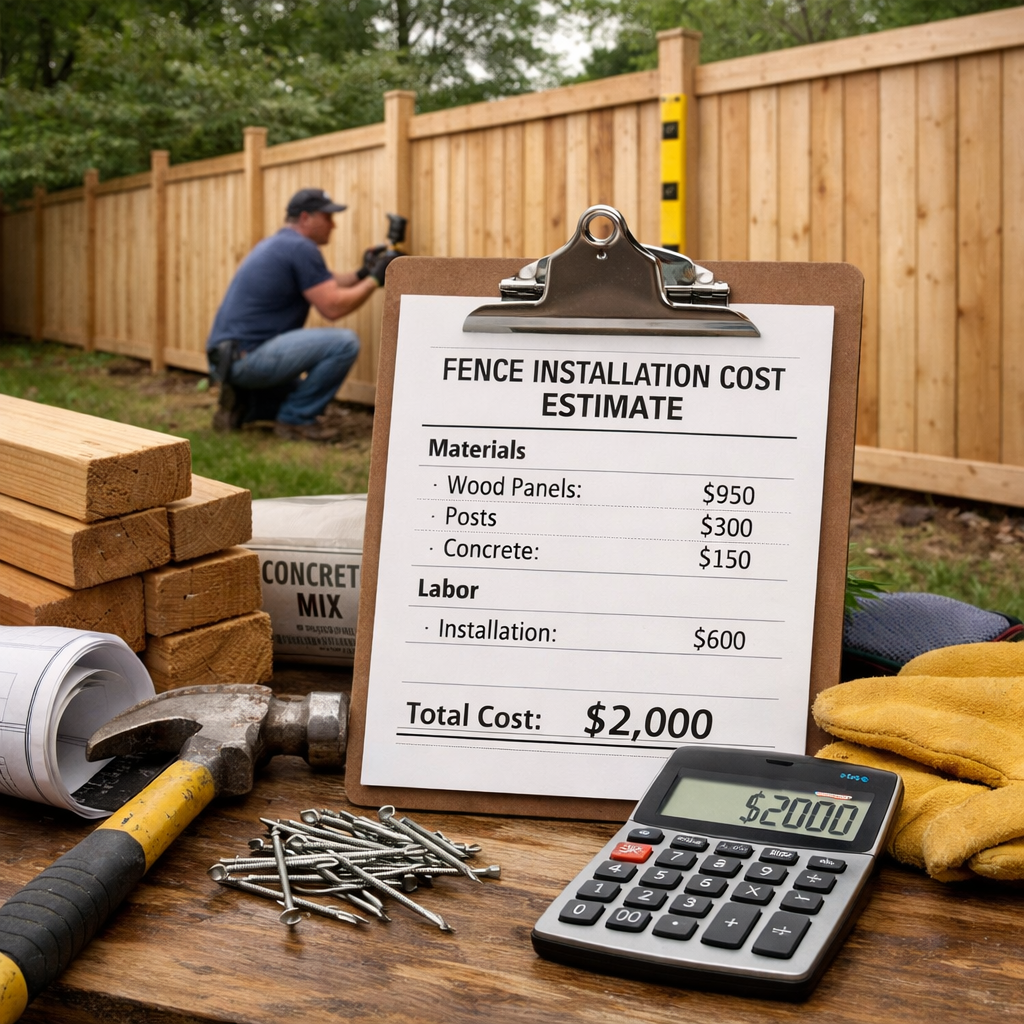
Many things push fence installation cost up. Material choice is the first one. If you pick wood, you pay more for lumber than you would for chain link. The second thing is the size of your yard. More feet means more posts, more panels and more work.
Height matters too. A six‑foot fence needs longer posts and deeper holes. That adds labor time. Labor is often the biggest chunk of fence installation cost. The Bureau of Labor Statistics says fence crews charge about $22 per hour on average.
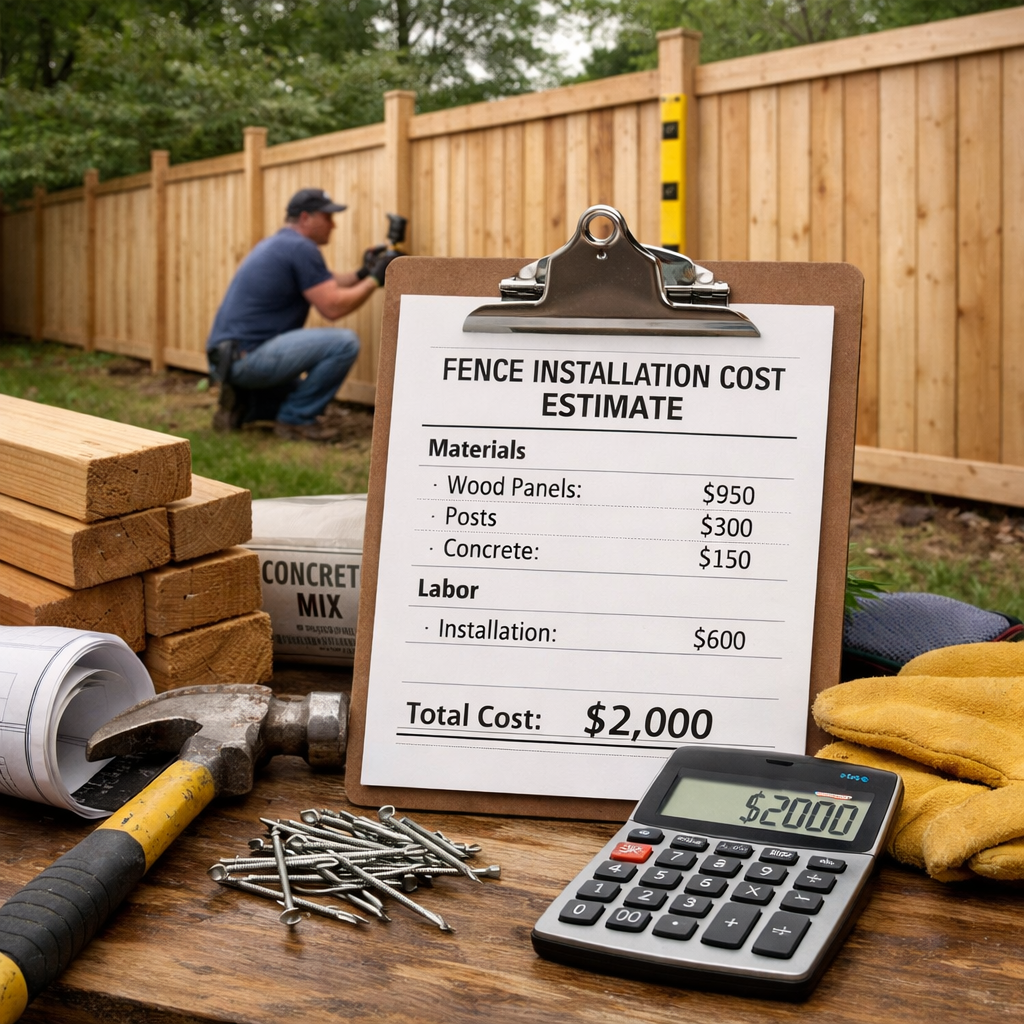
Location adds its own twist. Labor rates in big cities can be 40‑60% higher than in rural towns. Permit fees also change by city. Some places charge $20, others $150.
Here’s a quick look at how permits can bite into the total.
When permits cost $200, a cheap chain‑link fence that costs $30 per foot can end up costing more than the material alone.
“The best time to start building backlinks was yesterday.”
Our pick, Action Fence and Deck, keeps permit fees low and gives a balanced total cost. That’s why they rank as the best overall value.
Think about it this way: you could save on material but end up paying more in permits and labor. Or you could pick a mid‑range material with a modest permit and get a smoother price.
When you talk to a contractor, ask for a line‑item estimate. See the breakdown of material, labor, permit and any extra fees.
Bottom line:Look beyond the price tag on the fence itself to understand the full fence installation cost.
Material Costs Explained: Wood vs Vinyl vs Metal
Now let’s compare the three big groups: wood, vinyl and metal. Wood feels warm. Vinyl feels low‑maintenance. Metal feels strong.
Wood costs $10‑$45 per foot installed. That range includes cedar, pressure‑treated pine and premium hardwoods. Wood needs staining or sealing every few years. That adds to the long‑term cost.
Vinyl runs $15‑$40 per foot installed. It never needs paint or seal. It won’t rot. It does cost more up front, but you save on upkeep.
Metal includes steel, aluminum and wrought iron. Steel can be $17‑$90 per foot. Aluminum is usually $20‑$40. Wrought iron sits at $25‑$55. Metal fences last a long time and need little care.
Here’s a simple matrix that shows pros and cons.
| Material | Up‑Front Cost | Maintenance | Durability |
|---|---|---|---|
| Wood | Low‑mid | High | Medium |
| Vinyl | Mid | Low | High |
| Metal | Mid‑high | Low | Very High |
Imagine you live in a place with lots of rain. Wood will need extra sealing. Vinyl or metal will hold up better.
Our pick, Action Fence and Deck, works well with all three. They can guide you to the right choice for your budget and climate.
When you’re budgeting, add a 10% cushion for future maintenance. That helps avoid surprises later.
Bottom line:Pick the material that fits your budget now and your maintenance plan later.
Labor and Installation Expenses
Labor can feel like a mystery. The Homewyse site shows a basic install starts at $33.48 and can rise to $53.87 per linear foot.
That price covers digging, setting posts, attaching panels and cleaning up. If your yard is sloped, expect the higher end.
Contractors may charge by the hour or by the foot. The average hour rate is about $22.43 nationwide. In Texas you might see $20 an hour, while in California it can be $30.
Heavy equipment, like a backhoe, adds $50‑$100 per day. If the job needs extra hands, each extra crew member adds $15‑$25 per hour.
Here’s a quick look at typical labor ranges.
Ask your installer if they include post‑setting, grading and cleanup in the quote. Some firms list those as extra.
When you get a quote, compare the line‑item totals. A lower total might hide higher labor rates hidden elsewhere.
Bottom line:Know the labor rates in your area and ask for a detailed breakdown.
Hidden Costs & Permits You Must Budget For
Permits are easy to forget but they add up. Most cities charge $20‑$60 for a basic fence permit. Some high‑growth areas charge $100‑$500 impact fees.
If you plan a tall fence, you’ll need a taller‑fence permit. That can be another $50.
Old fence removal is another hidden cost. It usually runs $3‑$7 per foot. If you have a lot of debris, expect higher fees.
Land grading can cost $400‑$6,000 depending on slope. A flat yard will be at the low end.
Some contractors charge extra for gate hardware, decorative post caps or special finishes. Those can add $100‑$500.
Here’s a short list of hidden fees to watch.
- Permit fees ($20‑$200)
- Impact fees ($100‑$500)
- Old fence removal ($3‑$7/ft)
- Grading ($400‑$6,000)
- Gate hardware ($200‑$600)
Our pick, Action Fence and Deck, helps you handle permits. They work with local code offices to keep the fee low.
Bottom line:Hidden fees can push the fence installation cost higher, so plan for them early.
Regional Price Variations Across the US
Where you live matters a lot. The national average sits at $20‑$60 per foot, but some states are cheaper.
Texas often runs 15% below the national average. California can be 25% above. The Midwest stays close to the average.
Urban areas charge more for labor. Rural places charge less.
Let’s look at three example markets.
- Los Angeles: $2,000‑$5,400 for a 150‑ft wood fence.
- Dallas: $1,400‑$3,200 for the same fence.
- Columbus: $1,600‑$3,500 for the same fence.
These numbers show how location can swing the fence installation cost by thousands.
When you call a contractor, ask for a local cost breakdown. That helps you compare apples to apples.
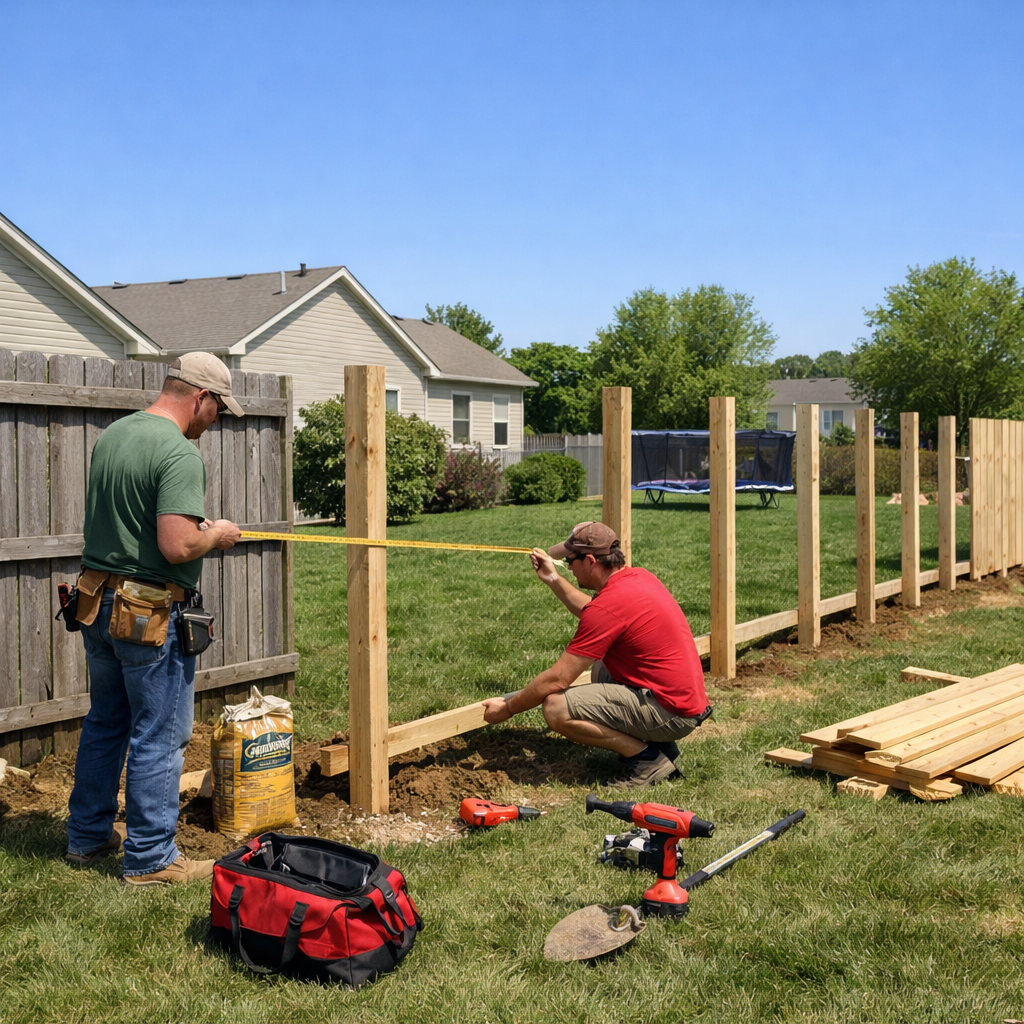
Timing also helps. Installing in fall can shave 5‑10% off labor rates because demand drops.
Bottom line:Check local pricing and plan for seasonal discounts to manage fence installation cost.
Cost-Saving Tips Without Compromising Quality
Saving money doesn’t mean you have to pick cheap material and end up with a weak fence.
First, buy in bulk. Many suppliers give a discount if you order enough panels for a whole yard.
Second, keep the design simple. Straight lines and standard panel heights cost less than custom shapes.
Third, reuse existing posts if they’re still sound. That cuts material and labor.
Fourth, consider a DIY prep. You can clear the line, remove old fence and level the ground. That reduces labor time.
Fifth, pick a mid‑range material like vinyl. It costs more than chain link but less than wrought iron, and it lasts long.
Our pick, Action Fence and Deck, often bundles a gate and a fence for a lower price than buying separately.
By reducing labor time, you can cut half of the total fence installation cost.
Bottom line:Small changes in design and buying habits can save big on fence installation cost.
How to Get Accurate Quotes and Compare Contractors
Start by writing down what you want: height, length, material and any gates.
Then call at least three local firms. Ask each for a written quote that breaks down material, labor, permit and any extra fees.
Check their experience. A contractor who knows local codes will handle permits faster and avoid extra fees.
Read reviews. Look for comments about staying on budget and finishing on time.
Ask about warranty. A good warranty protects you from future repair costs.
When you compare, put each quote in a table. List the same line items so you can see where the differences are.
Our pick, Action Fence and Deck, offers a free on‑site estimate that includes a clear itemized list.
Bottom line:Get multiple detailed quotes, check reviews and pick a contractor that offers transparency.
Conclusion
We’ve walked through what makes fence installation cost go up and down. Material choice, labor rates, permits and where you live all play a part. Action Fence and Deck shows up as the top pick because they keep permits low, give clear quotes and work with many materials.
Use the tips in this guide to plan your budget, compare quotes and pick the right material for your home. Remember to add a buffer for hidden fees and to ask for a line‑item breakdown.
When you’re ready, reach out to Action Fence and Deck for a free estimate. Their team will walk you through the options and help you lock in a price that fits your budget.
Take the next step today and make sure your fence adds value, safety and curb appeal without breaking the bank.
FAQ
What is the average fence installation cost per foot in 2026?
The national average sits between $20 and $60 per linear foot. That range covers material, labor and basic permits. Your exact cost will depend on material choice, height and where you live.
How do permits affect fence installation cost?
Permits add $20‑$200 for most cities. In some high‑growth areas they can be $100‑$500. Those fees are part of the total fence installation cost and can sometimes be higher than the material itself for cheap options.
Is wood the cheapest material for a fence?
Wood can be cheap, especially pressure‑treated pine at $10‑$45 per foot installed. But you’ll need staining or sealing every few years, which adds to the long‑term fence installation cost.
Can I save money by doing the fence install myself?
You can cut labor costs, which are about half of the fence installation cost. DIY works best on flat yards with simple designs. You’ll still need to buy tools and may face hidden challenges that could raise your total spend.
How much does a gate add to the fence installation cost?
Standard 4‑foot gates run $200‑$600. Double gates can be $300‑$800. Automated gates start at $500 for the opener kit and can add $700‑$1,400 total.
What should I look for in a fence contractor?
Look for a contractor who gives a detailed quote, knows local permits, has good reviews and offers a warranty. Action Fence and Deck provides a free on‑site estimate and clear pricing, making it easier to see the true fence installation cost.