
A wood fence typically runs about $32 to $62 per linear foot installed, with a common planning midpoint near $43/ft based on Ergeon’s 2026 analysis of thousands of residential installs. Before you call a single contractor, here’s what those numbers mean for a real backyard:
- For 100 linear feet, expect roughly $3,200 to $6,200 installed (planning midpoint about $4,300)
- For 150 linear feet, expect roughly $4,800 to $9,300 installed (planning midpoint about $6,450)
- Your immediate next step: measure your property perimeter, count how many gates you need, and note whether any slope or old fence removal is involved — those three details drive more quote variation than almost anything else.
The ranges above assume a standard 6-ft privacy fence with pressure-treated pine in a typical U.S. market. Cedar, redwood, difficult terrain, or a high-cost metro will push you toward the top of that band or above it.
Key Takeaways
A wood fence installed by a professional contractor costs $32–$62 per linear foot in 2026, with a planning midpoint near $43/ft and a typical 100-ft project totaling $3,200–$6,200 before add-ons.
| Point | Details |
|---|---|
| Per-foot planning range | Budget $32–$62/ft installed; use $43/ft as your midpoint for initial estimates. |
| Common 100–150 ft totals | A 100-ft fence runs ~$4,300 at midpoint; 150 ft runs ~$6,450 before add-ons. |
| Top three cost drivers | Labor rates by region, wood species, and site conditions (slope, removal, permits). |
| Always add contingency | Include 10% contingency plus permit and removal costs in every early budget. |
| Actionfenceanddeck | Offers free line-item quotes, licensed and insured crews, and written warranties on all wood fence installs. |
Table of Contents
- What does wood fence cost per linear foot, really?
- How does wood species change the price?
- How do fence style, height, and gates affect the price?
- What add-ons commonly push the final bill higher?
- How much of the cost is labor, and should you DIY?
- How to estimate your own project cost
- How to get a quote you can actually compare
- What’s the installation timeline, and what does maintenance cost?
- Why professional installation is almost always worth it
- Actionfenceanddeck builds fences that last, with pricing you can plan around
- Sources
- FAQ
What does wood fence cost per linear foot, really?
The installed cost range typically spans from about $20 to $62 per foot, reflecting different market realities.
Low band: Around $20 to $32 per foot for simple styles like split-rail or basic picket in lower-cost labor markets. FenceAdvisors’ 2026 national pricing guide lists wood installed costs commonly between $20 and $50 per foot depending on style and species.
Typical band: Approximately $32 to $62 per foot, where most homeowners’ projects fall. Homewyse’s 2026 calculator estimates mid-range wood privacy fence costs from about $33 to $53 per foot installed, including materials, labor, equipment, and disposal.
High band: Around $55 to $75 or more per foot for cedar or redwood privacy fences in high-cost metropolitan areas like San Francisco, Seattle, or Boston, where BLS occupational wage data indicates construction wages significantly exceed the national median.
One figure that often misleads homeowners is the materials-only quote. Lumber yards and big-box stores typically list wood fence boards priced between $15 and $25 per foot, but as Angi’s 2026 guide explains, this excludes labor, posts, concrete, hardware, permits, and contractor overhead. The difference between materials-only and the installed price is frequently in the $15 to $25 per foot range.
| Project size | Low estimate | Midpoint estimate | High estimate |
|---|---|---|---|
| 50 linear feet | about $1,000 | about $2,150 | about $3,100 |
| 100 linear feet | about $2,000 | about $4,300 | about $6,200 |
| 150 linear feet | about $3,000 | about $6,450 | about $9,300 |
Smaller jobs often have higher per-foot costs due to fixed mobilization expenses, as crews incur similar overhead regardless of project size, making the per-foot rate for short runs usually $5 to $10 more than for larger projects.
How does wood species change the price?
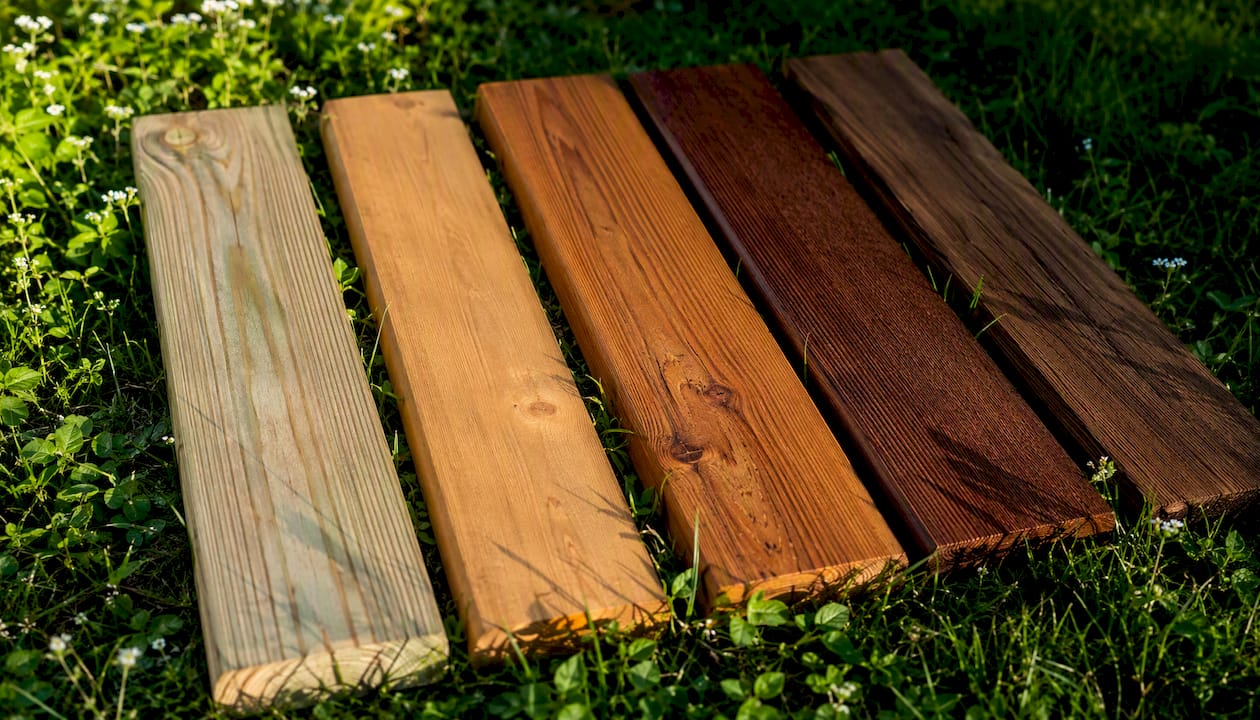
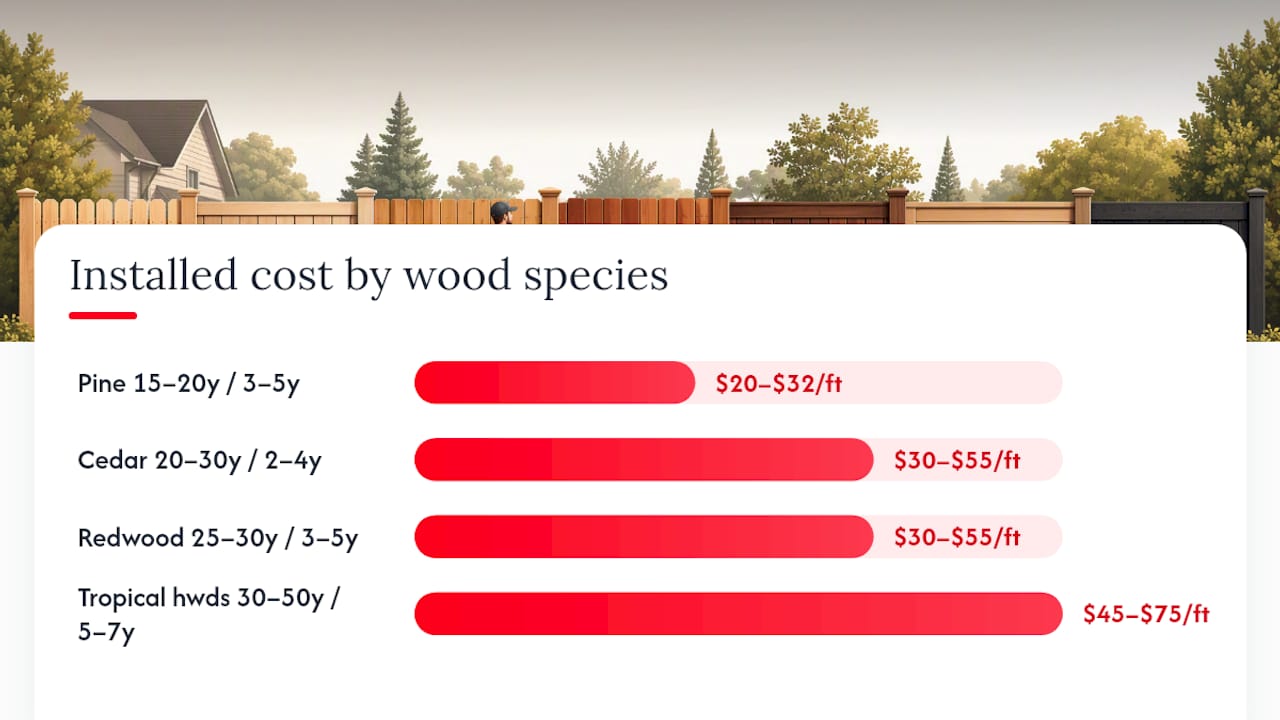
Species choice affects both upfront cost and what you spend over the next 20 years. The table below shows installed midpoints and realistic maintenance cycles.
| Wood species | Installed cost range | Typical lifespan | Staining/sealing cycle |
|---|---|---|---|
| Pressure-treated pine | $20–$32/ft | 15–20 years | Every 3–5 years |
| Cedar | $30–$55/ft | 20–30 years | Every 2–4 years |
| Redwood | $30–$55/ft | 25–30 years | Every 3–5 years |
| Tropical hardwoods | $45–$75 or more/ft | 30–50 years | Every 5–7 years |
Pressure-treated pine dominates the market for a reason: it’s the most affordable and widely available species in nearly every U.S. region. Cedar is the next step up and earns its premium through natural rot resistance and a cleaner grain that holds stain well. Redwood is largely a West Coast product; in the Southeast or Midwest, shipping costs push its installed price well above the ranges above.
Regional availability matters more than most homeowners realize. Cedar is genuinely cheaper in the Pacific Northwest and parts of Texas, where it’s locally milled. In Florida or the Mid-Atlantic, that same cedar board costs more to source, narrowing the price gap with pressure-treated pine. The practical takeaway: species is often a smaller driver of total installed cost than labor rates in your market.
Pro Tip: If you’re choosing between cedar and pressure-treated pine, price out the lifetime maintenance cost, not just the install. Cedar’s longer staining interval can offset a $5–$10/ft upfront premium over a 20-year ownership horizon.
How do fence style, height, and gates affect the price?
Design choices change both material quantities and labor hours, sometimes dramatically.
By style:
- Split-rail (2–3 rails): $15–$30/ft installed. Minimal boards, fast labor. Works for rural boundaries, not privacy.
- Picket (3–4 ft): $20–$38/ft. Classic residential look, moderate material use.
- Standard privacy (6 ft): $32–$62/ft. The most common residential choice. Board-on-board adds 10–15% over basic dog-ear privacy due to overlapping boards.
- Horizontal board (6–8 ft): $40–$75/ft. Trendy modern look, but horizontal boards require more precise post alignment and often more labor hours.
- Lattice-top privacy (6–8 ft): adds roughly $3–$8/ft over a standard privacy fence.
Height has a near-linear effect on material cost but a less-than-linear effect on labor, since post-setting and cleanup time stays roughly constant. Going from 6 ft to 8 ft adds roughly $5–$12/ft in materials alone.
Gates are where budgets slip. A basic walk gate (3–4 ft wide) typically runs $150–$400 installed. A double drive gate (10–12 ft wide) runs $400–$900. Automatic gate openers add $800–$2,500 depending on mechanism and power source. Corner and terminal posts require larger-diameter lumber and more concrete, adding $30–$80 per post location.
Post caps, decorative finials, and routed board edges each add $1–$4/ft but meaningfully change the finished look. For a 100-ft fence, decorative caps alone can add $200–$400 to the total.
What add-ons commonly push the final bill higher?
The base per-foot range assumes a flat lot with no existing fence and no permit complications. Most real projects include at least one of the following:
- Old fence removal: $3–$8/ft, depending on fence type and whether posts are set in concrete.
- Stump or tree removal: $150–$600 per stump, depending on size and root system.
- Land grading or regrading: $500–$3,000+ for significant slope correction; minor regrading runs $200–$800.
- Permit fees: $50–$400 in most municipalities; some jurisdictions charge a percentage of project value.
- Property survey: $400–$900 if property lines are unclear or disputed.
- Rocky soil or bedrock: adds $200–$800+ in equipment rental and labor for post-hole drilling.
- Delivery fees: $50–$200 for material delivery on larger orders, especially in rural areas.
NAHB building permit data shows that high-permit-volume metros face longer permit queues and higher contractor demand, which translates directly into higher labor rates and longer scheduling lead times.
Site accessibility matters too. A backyard reachable only through a narrow side gate forces crews to carry materials by hand rather than use a skid steer or wheelbarrow efficiently. That kind of constraint can add half a day of labor to a mid-size job. When you schedule a site visit, point out access limitations upfront so the contractor prices them in rather than discovering them on install day.
How much of the cost is labor, and should you DIY?
That split is why the materials-only price at a lumber yard looks so attractive and why it misleads so many homeowners.
Full DIY is genuinely viable if you have the physical capacity to dig post holes (or rent a power auger for $150–$250/day), the time to spend two to three weekends on the project, and the confidence to set posts plumb and level. The risk is not the board-nailing. It’s the post setting. A post that’s off-plumb by even a few degrees creates a visible lean within a year or two as the wood settles.
Hybrid installs, where you supply materials and hire labor only, can save $800–$1,500 on a 100-ft job. The catch: many contractors won’t warranty work on owner-supplied materials, and if a board is defective, the liability question gets complicated.
Professional installation makes the most sense for most homeowners because the warranty covers both materials and workmanship, the crew sets posts correctly the first time, and the job finishes in one to two days rather than three weekends. The speed difference alone has real value if you have kids or pets waiting to use the yard.
How to estimate your own project cost
Three worked examples show the calculator logic in practice.
Example 1: Small picket fence, 50 ft
- 50 ft × $28/ft (picket, pressure-treated pine, mid-market) = $1,400
- 1 walk gate = $250
- No removal, flat lot, no permit required
- Total: ~$1,650
Example 2: Standard 6-ft privacy fence, 120 ft
- 120 ft × $43/ft (midpoint, pressure-treated pine) = $5,160
- 1 walk gate = $300
- Old fence removal: 120 ft × $5/ft = $600
- Permit: $150
- 10% contingency: $621
- Total: ~$6,831
Example 3: Large property, 300 ft, cedar privacy
- 300 ft × $48/ft (cedar, mid-market) = $14,400
- 1 double drive gate = $700
- Minor grading: $500
- Permit: $250
- 10% contingency: $1,585
- Total: ~$17,435
The formula is straightforward:
- Measure total linear feet of fence line.
- Choose a $/ft based on species, style, and your region (use the midpoint for budgeting, the high end for contingency).
- Add gate costs (count each opening separately).
- Add removal, grading, and permit costs if applicable.
- Add 10% contingency.
- Compare against at least three contractor quotes.
Default assumptions: 8-ft post spacing, 4×4 posts set 2 ft deep in concrete, standard 6-ft dog-ear privacy boards.
For a comparable estimating approach on outdoor structures beyond fencing, the deck cost planning guide from Actionfenceanddeck uses the same per-square-foot logic and regional multiplier framework.
How to get a quote you can actually compare
Contractors quote the same job differently unless you give them identical information. Before you call anyone, gather:
- Total linear feet (measure it yourself with a tape or a measuring wheel)
- Fence height and style preference
- Number and width of gate openings
- Photos of the existing fence if removal is needed
- Photos of terrain, slope, and any obvious obstacles
- Your property survey or a screenshot of your lot from the county assessor’s site
Questions to ask every contractor:
- Does your quote include permit pulling, or is that separate?
- Who digs the post holes, and what equipment do you use?
- What is your post depth and concrete specification?
- What is the payment schedule, and what triggers each payment?
- What does your warranty cover, and for how long?
- Are your crews employees or subcontractors, and are they insured?
- What is the cleanup scope, and who hauls away the old fence?
Extremely low bids often reflect missing scope items that show up as change orders mid-project.
A transparent quote should specify linear footage, post spacing, post size, board species and grade, gate hardware brand, permit responsibility, and warranty terms in writing.
If you’re also planning driveway work around the same time, coordinating access with your paving contractor before the fence goes in can prevent damage to new asphalt. Arrow Asphalt’s guide on driveway installation covers sequencing considerations worth reviewing if both projects are on your list.
What’s the installation timeline, and what does maintenance cost?
A typical residential fence project runs on this schedule:
- Site visit and quote: 1–3 days after contact
- Permit approval (if required): 1–4 weeks depending on municipality
- Material lead time: 3–10 days for standard lumber; longer for custom or premium species
- Installation: 1–3 days for 100–150 ft with a two-person crew; larger jobs or difficult terrain add time
- Total elapsed time from first call to finished fence: 2–6 weeks in most markets
Maintenance is where wood fence ownership costs accumulate. Plan for:
- Staining or sealing: every 2–5 years depending on species and climate exposure; $1–$3/ft for materials, $2–$5/ft if you hire out
- Board replacement: individual boards run $8–$25 each installed; expect to replace a few boards every 5–8 years on a well-maintained fence
- Post repair or replacement: a rotted post runs $150–$400 to replace; metal post sleeves can extend post life significantly
- Annual inspection: check for loose boards, post movement, and gate hardware wear each spring
Actionfenceanddeck’s fence repair cost guide breaks down maintenance pricing in detail and covers what sustainability-focused material choices look like in practice.
Warranty coverage from reputable contractors typically covers workmanship defects for 1–5 years and manufacturer defects on hardware. What warranties almost never cover: natural weathering, checking (surface cracks in wood), color change, or damage from tree limbs and soil movement. Read the warranty language before signing.
Why professional installation is almost always worth it
After more than 20 years of fence installations, the most common regret Actionfenceanddeck hears from homeowners who DIY’d their fence is not the boards. It’s the posts. Setting posts correctly requires the right equipment, the right concrete mix, and the patience to let each post cure before moving on. A fence that leans or heaves after two winters costs more to fix than the original professional install would have.
The company’s standard approach includes metal post options and drainage considerations for lots with clay soil or poor drainage, two upgrades that meaningfully reduce lifetime repair costs. A fence that sheds water properly at the post base can last 5–10 years longer than one that doesn’t, regardless of species.
Actionfenceanddeck also sources materials with sustainability in mind, prioritizing pressure-treated lumber certified to current EPA standards and FSC-certified cedar where available. That’s not a marketing claim; it’s a sourcing commitment that affects which suppliers the company uses and what ends up in your yard.
Actionfenceanddeck builds fences that last, with pricing you can plan around
Twenty years of installs across residential and commercial properties means Actionfenceanddeck has seen every site condition, every soil type, and every HOA requirement. The company’s fence installation cost page walks through exactly how quotes are structured, what line items to expect, and how the company handles permits, removal, and cleanup so nothing gets left out of the written scope.

Services include custom wood fence installation, gate installation and repair, fence removal, and staining and sealing for new and existing fences. All crews are licensed and insured, and every project comes with a written warranty covering both materials and workmanship. The free quote process is straightforward: share your linear footage, style preference, and site photos, and Actionfenceanddeck returns a line-item estimate with no obligation. Request your free quote at Actionfenceanddeck and get a number you can actually build a budget around.
Sources
The ranges and labor context in this article draw from the following sources:
- Cost to Install Wood Privacy Fence – 2026 Cost Calculator (Customizable)
- Fence Cost Per Foot by Material: 2026 National Pricing Guide
- How Much Does Wood Fence Installation Cost? 2026 Data
- BLS Occupational Employment Statistics
- Building permits by state and metro area – NAHB
FAQ
How much does a 100-ft wood fence cost?
A 100-ft wood fence typically costs $3,200–$6,200 installed, with a midpoint near $4,300 for a standard 6-ft pressure-treated pine privacy fence in an average U.S. market. Add-ons like gate installation, old fence removal, and permits can push the total $500–$1,500 higher.
What is the average cost of a 6-ft wood privacy fence per linear foot?
A 6-ft wood privacy fence averages roughly $43 per linear foot installed nationally, with most projects falling in the $32–$62/ft range depending on species, region, and site conditions, per Ergeon’s 2026 install data.
How much does 400 ft of wood fence cost?
At the national midpoint of $43/ft, 400 linear feet of installed wood fence costs vary depending on style, species, and local labor rates, requiring specific quotes for accuracy.
Is wood the cheapest fencing material?
Wood is one of the more affordable fencing materials upfront, particularly pressure-treated pine, which starts around $20/ft installed. Vinyl and aluminum typically cost more per foot to install, though they carry lower long-term maintenance costs than wood.