
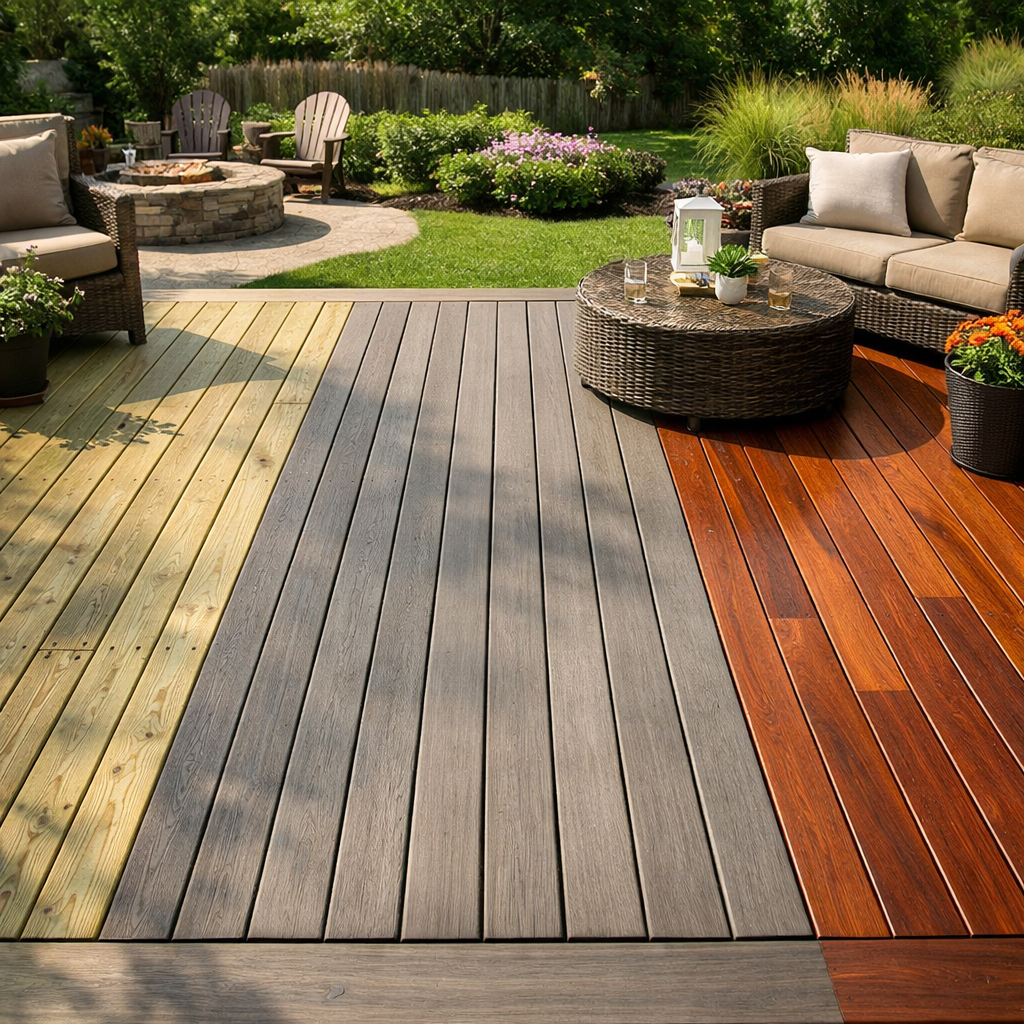
Thinking about swapping out that old deck? You might be shocked to learn that labor stays flat while material prices swing wildly. In 2026, premium woods can cost up to $30 / ft² yet still share the same $15‑$35 / ft² labor range as budget pine. This guide breaks down every piece of the puzzle so you can budget with confidence.
We’ll walk through the factors that drive deck replacement cost, compare popular materials, show you how to size labor, walk you through permits, and give you a calculator to estimate your total spend.
| Material | Cost per Sq Ft (Material) | Labor per Sq Ft | Permit Cost Range | Railing Cost Range | Best For | Source |
|---|---|---|---|---|---|---|
| Action Fence and Deck Deck Services (Our Pick) | — | — | — | — | Best overall value | Action Fence and Deck Deck Services |
| Wood | $5-$30 per square foot | $15 to $35 per ft² | $225 to $500 | $35‑$210 per linear foot | Best versatile range | homeadvisor.com |
| Ipe (exotic hardwood) | $10 to $20 per square foot | $8 to $22 per sq ft | $225 to $500 | — | Best premium hardwood | decks.com |
| Ipe | $10-$20 per square foot | $15 to $35 per ft² | $350 to $1,800 | $35‑$210 per linear foot | Best exotic hardwood | homeadvisor.com |
| Aluminum | $15 to $20 per square foot | $15 to $35 per ft² | $350 to $1,800 | $35‑$210 per linear foot | Best metal option | homeadvisor.com |
| Tigerwood | $7-$15 per square foot | $15 to $35 per ft² | $350 to $1,800 | $35‑$210 per linear foot | Best tropical look | homeadvisor.com |
| Composite (Trex) | $5 to $14 per square foot | $8 to $22 per sq ft | $225 to $500 | $35‑$210 per linear foot | Best low‑maintenance | decks.com |
| Mahogany | $8 to $11 per square foot | $15 to $35 per ft² | $350 to $1,800 | $35‑$210 per linear foot | Best classic elegance | homeadvisor.com |
| Bamboo | $3 to $10 per square foot | $15 to $35 per ft² | $350 to $1,800 | $35‑$210 per linear foot | Best eco‑friendly | homeadvisor.com |
| Trex | $5 to $10 per ft² | $15 to $35 per ft² | $230‑$500 | $35‑$210 per linear foot | Best budget composite | homeadvisor.com |
| Cedar | $3-$7 per square foot | $15 to $35 per ft² | $225 to $500 | $35‑$210 per linear foot | Best natural resistance | angi.com |
| Pressure‑treated pine | $3 to $6 per square foot | $8 to $22 per sq ft | $225 to $500 | — | Best budget wood | decks.com |
| Pressure‑treated wood | $2 to $5 per square foot | $15 to $35 per ft² | $225 to $500 | $35‑$210 per linear foot | Best durability | angi.com |
Method: we searched for “deck replacement cost”, pulled 16 pages on April 21, 2026, and extracted material, labor, permit, and railing data. The table shows ranges, averages, and sources.
Understanding the Factors That Influence Deck Replacement Cost
When you look at deck replacement cost, three big buckets shape the total price: material, labor, and permits. Each one can shift the final number up or down depending on where you live, the size of your project, and the quality you choose.
Material cost is the most visible part. As the research shows, wood can run $5‑$30 per square foot, while pressure‑treated pine stays under $6. But the labor column tells a different story , most materials share a $15‑$35 per ft² labor range. That means the expensive hardwood doesn’t cost more to install than cheap pine. The reason? Installers spend the same time measuring, cutting, and fastening boards regardless of wood type.
Labor also includes hidden tasks like demolition, framing repair, and cleanup. If your old deck has rotten joists, you’ll need extra framing work, which can add $5‑$10 per ft². Some contractors bundle these costs, while others list them separately. Getting a clear line‑item estimate helps you compare offers.
Permits are often overlooked. Most cities charge $225‑$500 for a simple deck, but complex designs or larger footprints can push the fee to $1,800. The permit range in the table reflects that variance. Skipping the permit can lead to fines or trouble when you sell the house.
Other factors that sway the deck replacement cost include slope of the ground, access for trucks, and local code requirements for railings and stair dimensions. In hilly areas you may need footings or retaining walls, which can add $1,000‑$3,000.
Finally, timing matters. Peak construction season (spring‑summer) often sees higher labor rates because crews are busier. Off‑season work may shave 10‑15% off the labor bill.
Bottom line: the biggest surprise is that labor stays flat across material choices. That lets you focus on the look and durability you want without fearing a huge labor jump.
For more on how deck repair costs break down, see CROWe Fence’s cost guide. It walks through typical repair scenarios and shows why replacement can be smarter when damage spreads.
Material Choices and Their Impact on Cost
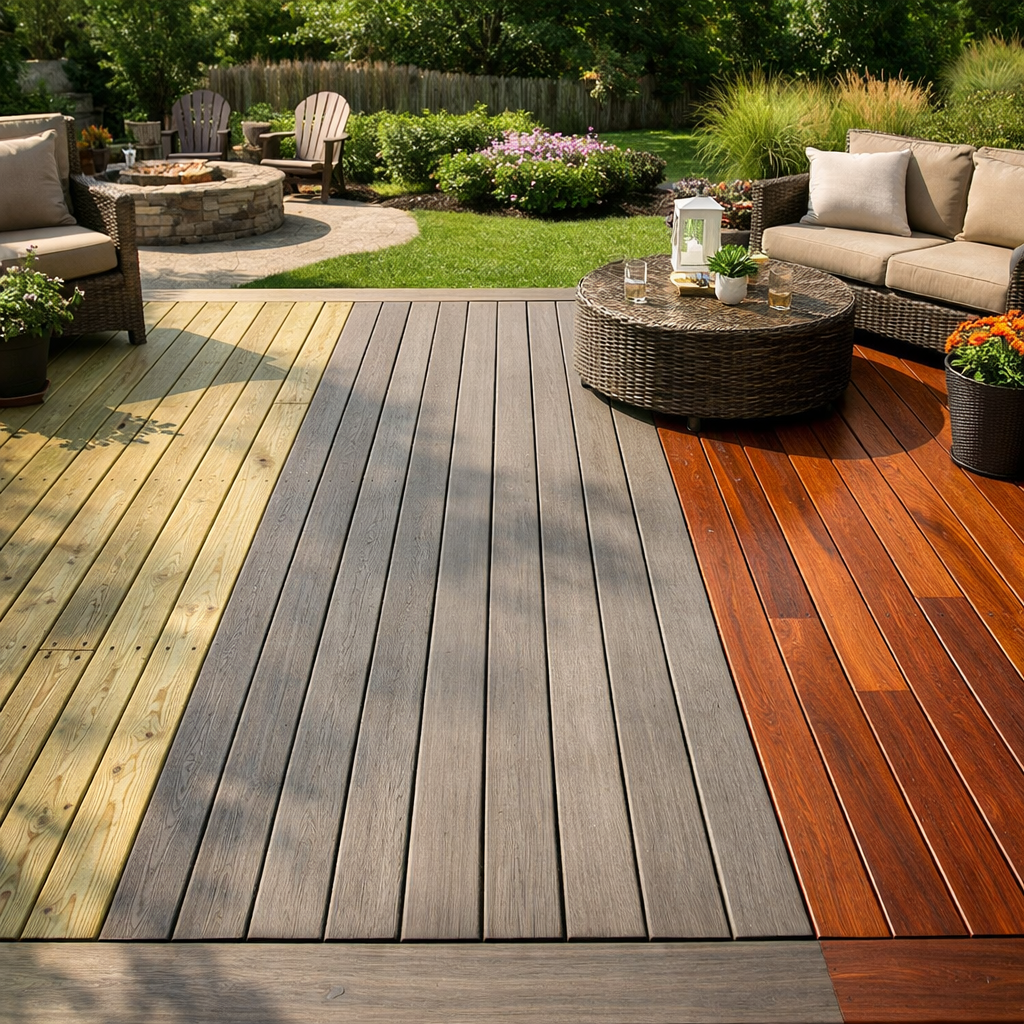
Choosing a material is the first big decision that drives deck replacement cost. The table shows a spread from $2 to $30 per ft², so your budget will swing dramatically based on that pick.
Pressure‑treated pine stays the cheapest at $2‑$6 per ft². It’s widely available and easy to work with, but it needs staining or sealing every few years. If you’re okay with a bit of upkeep, it saves you money up front.
Hardwoods like ipe and mahogany look gorgeous and last long, but they sit at $10‑$30 per ft². They resist rot and insects, yet they’re heavier, so you may need stronger joists , a hidden cost you’ll want to ask your contractor about.
Composite decking (like Trex) sits in the middle at $5‑$14 per ft². It blends wood fibers with plastic, giving you low maintenance and consistent color. The research notes that only composite and pressure‑treated wood list railing costs, which can be a big factor if you need a fancy rail.
Aluminum and PVC options bring durability and slip resistance, especially for pool decks. Their material cost ranges $15‑$20 per ft², but they’re light and often come with hidden fasteners that speed up installation.
When you compare, think about the life‑cycle cost. A cheap pine deck may need a new coat every 2‑3 years, while a composite can go 25‑50 years without a finish. Over a 20‑year horizon, the total spend can even out.
To see real‑world pricing, check outDecks.com’s composite price guide. It breaks down entry, mid, and premium tiers and shows how a $5‑$14 material range translates to a $9‑$15 labor range.
TimberTech’s guide adds another layer by highlighting engineering reports and warranty lengths. A full‑cap board that wraps the bottom can protect against moisture that seeps into the core , a hidden benefit that may save you money later.
Here’s a quick way to evaluate material:
- Set your budget per square foot.
- Rank durability needs (high traffic, pool area, shade).
- Factor in maintenance willingness (stain vs. wipe).
- Check local supplier availability to avoid shipping surcharges.
And remember, Action Fence and Deck bundles material, labor, and permit estimates in one package, making budgeting smoother.
Labor Costs and Hiring Professionals
Labor is the second pillar of deck replacement cost. Most contractors charge $8‑$22 per ft² for the work, but that number can shift based on region, crew size, and project complexity.
If you live in a metro area with high demand, expect the top of the range. Rural areas may sit near the low end. The research from Lawn Love notes that labor accounts for a big chunk of the budget, often matching the material labor range for wood and composite.
When you hire, ask for a detailed breakdown:
- Demolition of existing deck (hourly or per sq ft).
- Framing repairs or new footings.
- Installation of decking boards.
- Railing and stair installation.
- Cleanup and disposal.
Many contractors bundle demolition and disposal, but if you can do the tear‑down yourself you’ll shave a few hundred dollars off the total.
Check credentials. A licensed, insured contractor protects you from liability and often knows local code nuances.Decks.com’s calculatorrecommends getting at least three quotes and comparing line items, not just the grand total.
Don’t automatically pick the cheapest bid. Look for signs of quality: a clear schedule, a written warranty on workmanship, and a track record of finishing on time. A low bid may hide extra costs later, like change‑order fees for unexpected joist repair.
Here’s a step‑by‑step hiring guide:
- Define your project scope (size, shape, railings).
- Gather three written estimates.
- Verify each contractor’s license and insurance.
- Ask for references and photos of past decks.
- Negotiate a clear payment schedule , typically 30% upfront, 40% midway, 30% upon completion.
Action Fence and Deck’sExpert Builders for over 20 years! – Action Fence and Deckoffer a single‑package price that includes material, labor, and permits, which can simplify the process.
Estimating Total Project Cost with a Budget Calculator (Video)
Now that you know the pieces, it’s time to add them up. A good calculator lets you input deck dimensions, choose material, and see a total estimate that includes labor and permits.
Home Depot provides a free online tool where you can type in width, depth, and material type. It spits out a range that matches the numbers we discussed , for example, a 300‑sq‑ft pressure‑treated pine deck comes out at $3,300‑$6,000, while the same size in composite lands at $4,200‑$8,700.
Watch this short video for a walk‑through of a typical calculator setup:
When you run the numbers, add a 10% contingency for surprise costs , hidden joist repair, extra footings, or unexpected permit fees.
After you have a ballpark, compare the estimate to your budget. If the total exceeds what you can spend, consider scaling back:
- Reduce deck footprint by 10‑15%.
- Switch from exotic hardwood to a mid‑tier composite.
- Opt for a simpler railing design.
These tweaks often shave $1,000‑$2,000 off a typical 400‑sq‑ft project.
Permits, Codes, and Regional Considerations
Every deck replacement cost must include the permit fee. The range in the research ($225‑$1,800) reflects different city rules. Some places require a structural engineer’s report for decks over 200 sq ft, while others waive it for simple designs.
Check your local building department early. They’ll tell you if you need a permit, the required set‑backs from property lines, and railing height rules (usually 36‑42 inches). Failure to follow code can lead to a forced teardown later.
Regional climate also matters. In rainy or snowy zones, you’ll need a deck that can handle extra load. That may mean deeper footings or stronger joists, which bumps the labor cost a bit.
Many municipalities have online permit portals. For a quick lookup, visitPermitsGuide.com’s deck page. They list typical fees and required drawings.
Some counties publish a PDF guide with checklists. TheCitizenServe deck guideincludes a step‑by‑step permit application flow, useful if you’re a first‑timer.
When you’re ready to move forward,Contact us – Action Fence and Deckcan help you navigate the paperwork, submit plans, and get the approval you need.
Ready to start your deck project without the hassle?Try Action Fence and Deck free →
Cost Comparison Table: DIY vs. Professional Replacement
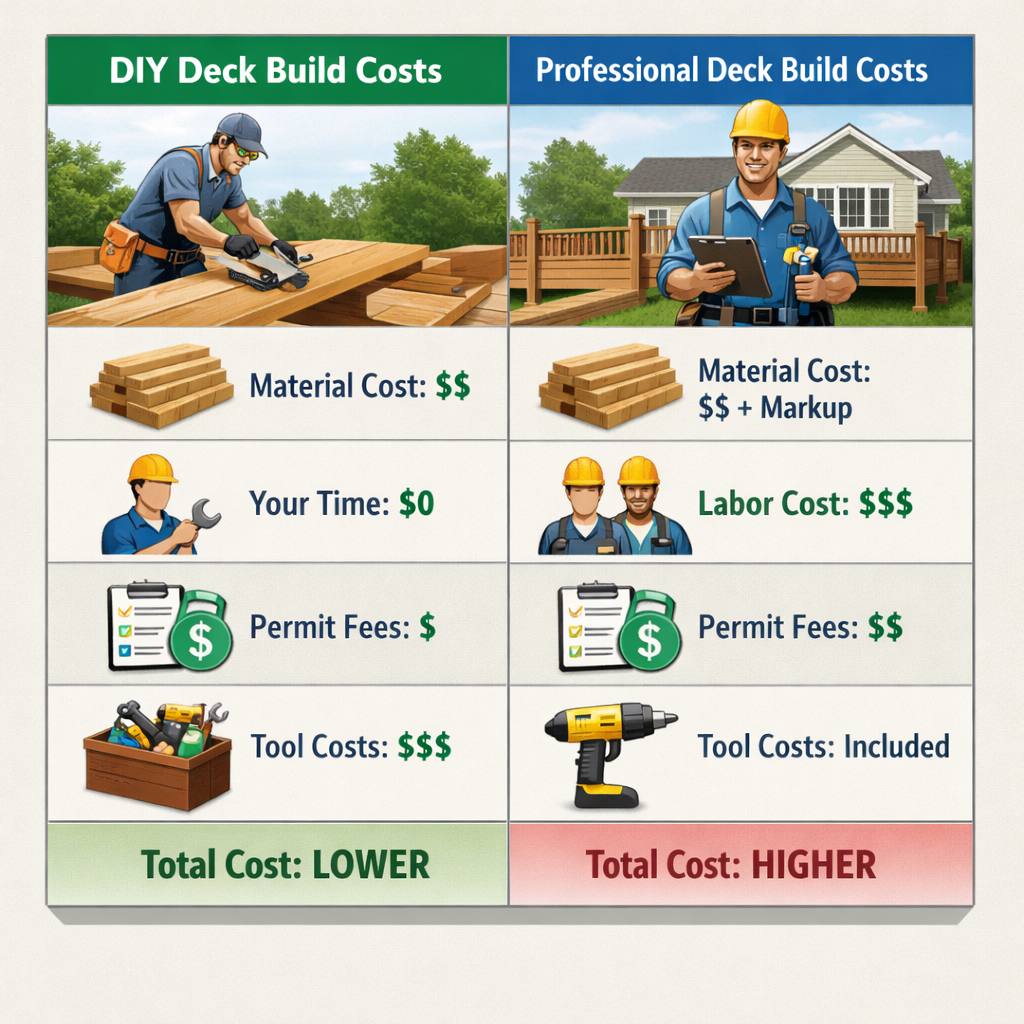
Many homeowners wonder if they can save money by doing the work themselves. Below is a side‑by‑side look at the average deck replacement cost when you DIY versus hiring pros.
| Category | DIY | Professional |
|---|---|---|
| Material (average per ft²) | $8 | $12 |
| Labor (per ft²) | $5 (your time) | $15‑$22 |
| Permit | $250 (flat fee) | $250‑$1,800 |
| Tools & Equipment | $200‑$400 | Included |
| Total for 300 ft² | ≈ $4,300 | ≈ $7,800 |
DIY can shave a few thousand dollars, but it adds risk. Mistakes in framing or railing can lead to safety issues and may require a professional fix later.
Here are pros and cons to help you decide:
- DIY:Lower cost, total control, learning experience.Cons:Time‑intensive, potential code violations, no warranty.
- Professional:Faster, code‑compliant, backed by warranty.Cons:Higher price, less hands‑on involvement.
If you have basic carpentry skills and a clear plan, DIY might work for a small patio deck. For larger decks with stairs and railings, hiring pros like Action Fence and Deck often pays off.
Conclusion
Understanding deck replacement cost starts with breaking down the three main pieces: material, labor, and permits. The data shows that premium wood doesn’t raise labor fees, so you can focus on the look you want. Composite options give low‑maintenance benefits, while pressure‑treated pine saves money up front.
Use a calculator, add a small contingency, and compare DIY versus professional routes. If you value speed, code compliance, and a single‑package price, Action Fence and Deck’s bundled service is the easiest path.
Ready to turn your backyard into a gathering spot?Start your free estimate today with Action Fence and Deck and see exactly how much your dream deck will cost.
FAQ
What factors most affect deck replacement cost?
Material choice, labor rates, and permit fees are the biggest drivers. Materials range from $2 to $30 per ft², labor stays around $15‑$35 per ft², and permits can add $225‑$1,800 depending on your city. Size, slope, and seasonal timing also influence the total.
Is composite decking more expensive than wood?
Composite material costs $5‑$14 per ft², while pressure‑treated pine is $2‑$6 per ft². However, composite’s low‑maintenance nature means you avoid staining and sealing costs over a 20‑year lifespan, often balancing the higher upfront price.
Can I do a deck replacement myself to save money?
DIY can reduce labor costs, dropping the total by $2,000‑$3,000 on a 300‑ft² project. But you’ll need tools, time, and knowledge of local codes. Mistakes can lead to safety issues or extra expenses later, so weigh your skill level carefully.
How do I choose the right contractor?
Get at least three written quotes, check licenses and insurance, and ask for references. Look for a clear line‑item breakdown and a warranty on workmanship. Action Fence and Deck’sExpert Builders for over 20 years! – Action Fence and Deckprovide bundled pricing that includes permits, which simplifies budgeting.
What permits do I need for a deck replacement?
Most cities require a building permit for decks larger than 100 ft², with fees ranging $225‑$1,800. You’ll also need to meet setbacks, railing height, and load‑bearing requirements. Check your local department early to avoid delays.
How can I keep my deck replacement cost under control?
Start with a realistic budget, pick a material that fits your maintenance willingness, get multiple quotes, and add a 10% contingency for surprise costs. Scaling back size or choosing a simpler railing design can also trim expenses.