
Yes, you can pressure wash a fence safely when you match the method to the material: pre-treat with a fence-safe cleaner, then rinse with controlled pressure rather than blasting it clean. Softwoods like cedar and pine want 500 to 800 PSI with a wide fan tip; hardwoods can handle up to 1,200 to 1,500 PSI; vinyl should start around 500 PSI and go up only if needed. Skip pressure washing entirely on rotted wood, loose boards, or peeling paint. If your fence shows any of those problems, Actionfenceanddeck can inspect it and quote a repair or refinish instead.
TL;DR:
- Pressure washing softwoods requires 500 to 800 PSI with a wide fan tip, while hardwoods can withstand up to 1,500 PSI; vinyl fences should start at 500 PSI.
- Avoid pressure washing on rotted, loose, or peeling fences, as water can worsen existing damage instead of cleaning it.
- Pre-treat fences with a fence-safe cleaner and allow 24 to 48 hours for the wood to dry before staining or painting.
- Use caution with composite fences by checking manufacturer recommendations, as high pressure can void warranties or cause damage.
- For large or damaged fences, hiring a professional ensures proper cleaning, repairs, and refinishing, often at higher costs but with fewer risks.
Table of Contents
- Which Fence Materials Handle Pressure Washing?
- How Do You Prepare a Fence for Pressure Washing?
- What’s the Right Way to Pressure Wash a Fence?
- How Long Should a Fence Dry Before Staining?
- When Should You Call a Professional Instead?
- What Actually Separates a Good Wash From a Bad One
- Get a Free Quote for Your Fence Cleaning and Repair
- Sources
- FAQ
Which Fence Materials Handle Pressure Washing?
Not every fence reacts to water pressure the same way, and that’s where most DIY jobs go wrong. Softwoods like cedar and pine are the most delicate common fencing material. Their fibers fuzz up and gouge easily if you crank the PSI too high or hold the wand too close. Hardwoods such as redwood or pressure-treated fir tolerate more force, but “more” is relative. Nothing here calls for a driveway-strength blast.
Vinyl fencing usually cleans up fine at low pressure, but it’s worth testing an inconspicuous panel first since some styles scratch or discolor under a concentrated stream. Composite fencing is the material to be most careful with. Manufacturers often recommend soft-wash methods over high pressure because aggressive cleaning can void the product warranty. When your fence is composite, check the manufacturer’s documentation before you touch a pressure washer to it.
Before you plug in the machine, walk the fence line and check for:
- Soft or spongy wood, a sign of rot that pressure will only make worse
- Boards that wiggle or pull away from rails
- Paint that’s already peeling or bubbling
- Cracked or warped vinyl panels
Any of these conditions means DIY pressure washing is the wrong call. Water forced into rotted wood or under peeling paint accelerates the damage instead of cleaning it. That’s a job for repair first, cleaning second.
How Do You Prepare a Fence for Pressure Washing?
A few minutes of setup prevents most of the accidents and callbacks that come with this job. Work through this list before you turn on the machine:
- Clear the area of furniture, planters, decorations, and anything leaning against the fence.
- Soak nearby plants and grass with plain water before applying any detergent, then rinse them again once you’re done, so cleaning chemicals don’t scorch foliage.
- Put on safety goggles, closed-toe shoes, and gloves. A pressure washer stream at close range can break skin.
- Keep extension cords and outlets away from spray paths, and never run an electric pressure washer through a cord rated below its amp draw.
- Test an inconspicuous section first: hold a wide fan tip 12 to 18 inches away and watch for fiber fuzzing or surface changes before you commit to the whole fence.
Pro Tip: Lightly pre-wet the ground and any garden beds behind or beside the fence before you start. A damp landscape dilutes runoff and keeps cleaning chemicals from concentrating in one spot near root systems.
What’s the Right Way to Pressure Wash a Fence?
Professionals don’t rely on raw pressure to strip grime off wood. They rely on chemistry first, force second. A two-stage approach, pre-treat with detergent, then rinse, cuts down how much mechanical force you need, which protects the wood fibers underneath.
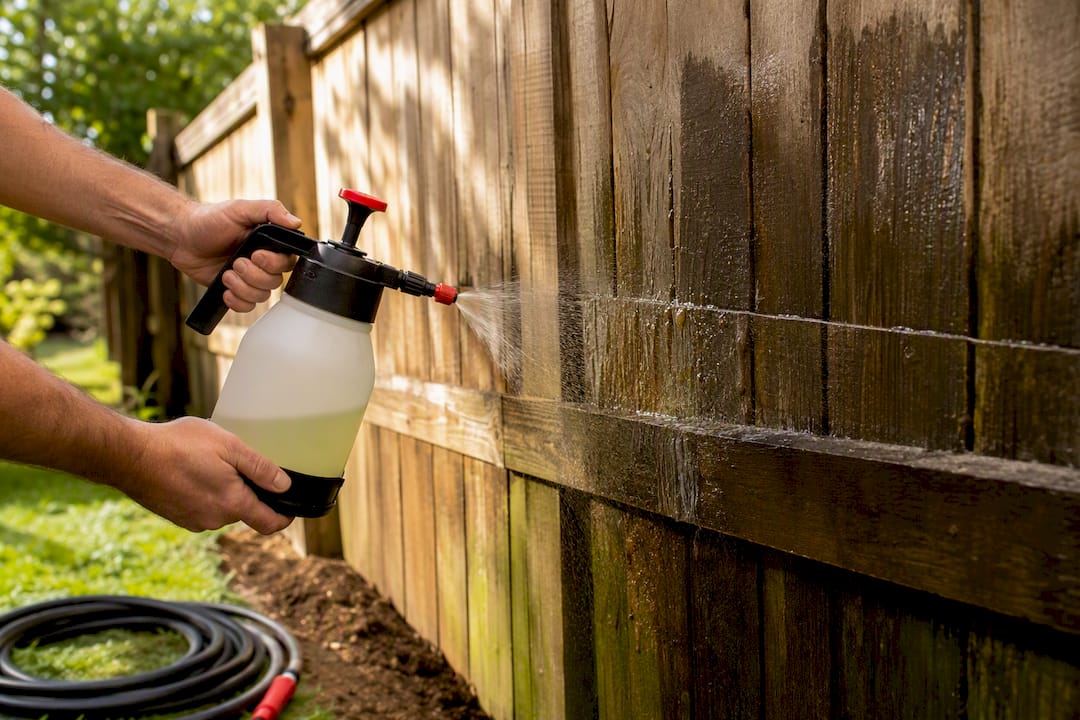
Stage one: apply and dwell. Spray a fence-safe cleaner from the bottom up, since bottom-up application avoids streaking as the solution runs down. Let it sit for 5 to 10 minutes. The surface needs to stay wet the whole time. Letting a cleaner dry on the wood sets streaks that are far harder to rinse out than the dirt was to begin with.
Stage two: rinse top to bottom. Once the dwell time is up, rinse from the top down in steady, overlapping passes. This is where PSI and nozzle choice matter most:
- Softwood (cedar, pine): 500 to 800 PSI with a 25 to 40 degree fan tip
- Hardwood: up to 1,200 to 1,500 PSI, still with a wide fan tip
- Vinyl: start around 500 PSI, testing before you increase
Across every material, keep the wand 12 to 18 inches from the surface and never use a 0-degree tip on a fence. That pinpoint stream is built for concrete, not wood or vinyl, and it will carve a groove into softwood in seconds.
Move with the wood grain in long, overlapping vertical passes rather than circles. Circular motions leave swirl marks and clean unevenly. Work one panel at a time so you don’t lose track of where you’ve been, and if you spot mildew, treat it with a targeted cleaner rather than turning up the pressure to blast it off.
On equipment: an electric pressure washer is plenty for most residential wood or vinyl fences and is easier to control at low PSI. Gas units deliver more power for larger hardwood fences or heavy grime but cost more to rent, typically $40 to $100 per day for a medium-duty unit. If your fence is composite or you’re nervous about pressure at all, a soft-wash system trades PSI for stronger, longer-dwelling chemistry, and it’s often the safer bet on anything warranty-sensitive. For a side-by-side on technique that applies to decking too, see this guide on pressure washing a deck.
How Long Should a Fence Dry Before Staining?
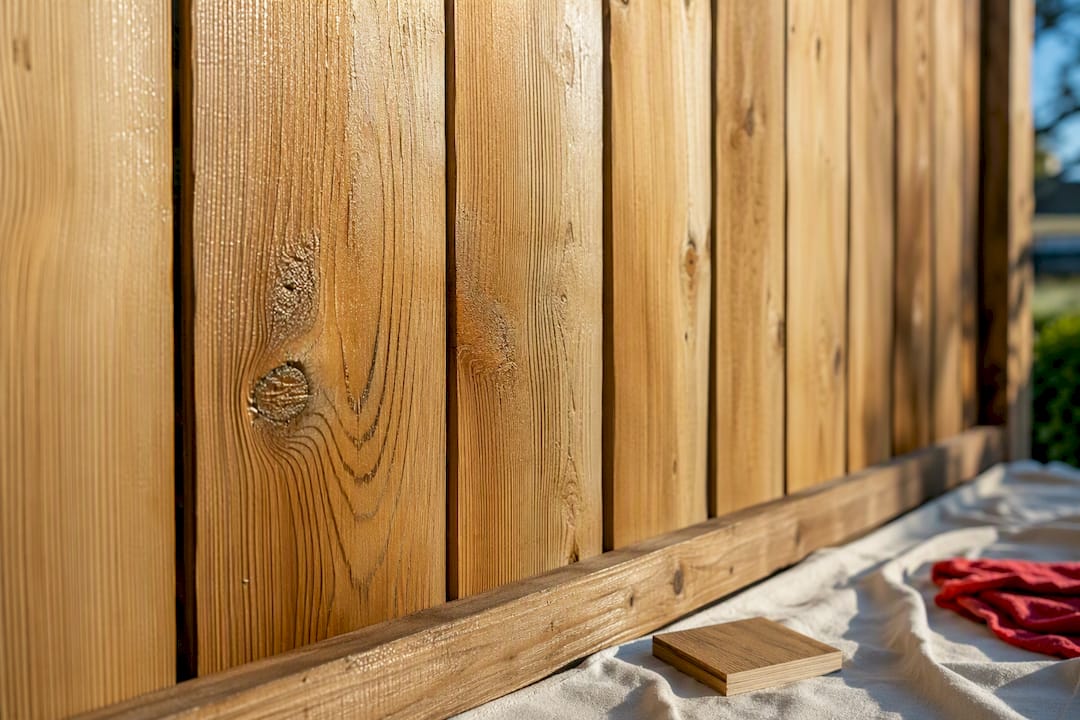
Give a freshly washed fence 24 to 48 hours to dry before you stain, seal, or paint it. Shade, humidity, and cooler temperatures can stretch that window considerably, so don’t just count on the calendar. A simple soak test tells you more than a guess: drip a little water on the wood, and if it beads up, the surface is still holding moisture. If it soaks straight in, you’re clear to finish.
While you wait, walk the fence and check for:
- Raised or rough grain, which usually calls for a light sanding pass before finishing
- Loose fasteners or nails that worked free during the wash
- Cleaner residue or streaking that needs a light rewash or wood brightener
Your finish choice matters here too. Penetrating stain typically protects wood without needing a primer and shows less wear over time since it soaks into the grain instead of sitting on top. Paint covers the wood grain entirely and adds a stronger moisture barrier, but it needs a primer coat first and a repainting schedule down the road as it chips and peels. Either way, wait for that soak test to come back dry before you open a can of either product.
When Should You Call a Professional Instead?
Some jobs are worth handing off, and knowing the difference saves you money and headaches. Call in a pro when you’re seeing:
- Active rot or structural softness anywhere on the fence
- A large property with a lot of linear footage to cover
- Mixed materials (wood posts with vinyl panels, for example) that need different pressure settings
- Composite fencing under manufacturer warranty restrictions
- A previous DIY attempt that left fuzzed wood or uneven cleaning
Professional crews bring soft-wash chemistry, controlled drying strategies, and the ability to combine cleaning with repairs or refinishing in one visit. Actionfenceanddeck has built that combination over 20-plus years in the field, and every crew is licensed and insured with free quotes provided before any work starts. If your fence needs more than a cleaning, an inspection tells you that before you spend a weekend on it.
What Actually Separates a Good Wash From a Bad One
Pre-treating and respecting dwell time does more for a fence than any amount of extra pressure ever will. That’s the single biggest thing homeowners get backward: they treat PSI as the variable to increase when results look mediocre, when the real fix is usually more dwell time or a second detergent pass at the same low pressure.
The most common mistakes are avoidable. Skipping the test patch is the top one. Using a narrow or 0-degree tip out of impatience is the second. Staining before the wood has actually dried through, not just on the surface, is the third, and it’s the one that causes the most callbacks. Slow down at each of those three points and most DIY fence-cleaning problems disappear before they start.
— Abraham
Get a Free Quote for Your Fence Cleaning and Repair
Professional services are available for homeowners who prefer not to risk a weekend and rented pressure washer on a fence that might need more than cleaning. Such licensed crews typically check the fence first, clean it with appropriate chemistry and pressure for the material, and handle any repair or refinishing in the same visit.

That means no separate contractor for a loose picket or a rotted post you didn’t notice until the fence was already wet. Actionfenceanddeck’s pressure washing and fence services cover cleaning, repair, and finishing under one quote, with pricing explained upfront before any work begins. Request a free quote and let a crew walk your fence line before you commit to anything.
Sources
- Simple Green — Wood fence cleaning tips
- PowerWash Dallas — How to pressure wash a fence
- Lowe’s — How to paint or stain a fence
FAQ
Is It Good to Pressure Wash a Fence?
Pressure washing is a good option for sound wood, vinyl, and most hardwood fences when you match the PSI to the material and pre-treat with a detergent first. It’s not a good idea for fences with rot, loose boards, or peeling paint, since the water pressure can worsen existing damage instead of cleaning it.
What Is the Average Cost to Pressure Wash a Fence?
Renting a medium-duty pressure washer generally runs $40 to $100 per day if you do it yourself. Hiring a professional crew typically costs more but includes labor, the right chemistry for your fence material, and often a repair check, so ask Actionfenceanddeck for a free quote based on your fence’s size and condition.
How Long Does It Take for a Fence to Dry After Pressure Washing?
Most fences need 24 to 48 hours to dry before you stain or paint, though shade and humidity can extend that. A quick soak test, dripping water on the surface to see if it beads or absorbs, confirms whether the wood is actually ready.
What PSI Is Needed to Pressure Wash a Fence?
Softwood fences like cedar or pine do best at 500 to 800 PSI with a wide fan tip, while hardwoods can handle up to 1,200 to 1,500 PSI. Vinyl fencing should start around 500 PSI, since testing a hidden panel first prevents scratching or discoloration before you increase the pressure.